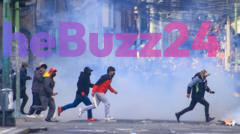
Bolivia Erupts: Tear Gas Fills La Paz as Protests Intensify Over Economic Woes
La Paz, Bolivia – The capital city of La Paz has become a focal point of escalating civil unrest, as law enforcement deployed tear gas to disperse large crowds protesting against severe economic pressures and government policies. These demonstrations, which have been ongoing for several weeks, reflect deep-seated frustration among various sectors of Bolivian society.
A broad coalition of citizens, encompassing farmers, miners, teachers, and indigenous community members, has mobilized in the streets. Their primary demands include substantial wage increases and an immediate cessation of the privatization of state-owned enterprises, which they argue will further exacerbate economic hardship.
Visuals from the protests depict intense scenes of civil disobedience, with participants vocalizing their grievances through chants, igniting fires, and engaging with police blockades. In response to the growing dissent, Attorney General Roger Mariaca announced that an arrest warrant has been issued for Mario Argollo, the prominent leader of the COB, Bolivia’s largest labor union. Authorities have formally charged Argollo with terrorism and inciting anti-government activities, framing the protests as a coordinated campaign of destabilization.
The government’s firm stance against the organized labor movement highlights a critical standoff. As the administration seeks to quell the widespread protests, the conflict between state authorities and the workforce appears poised to continue, with little immediate prospect of de-escalation.
Key Takeaways
- Protests have intensified in La Paz, Bolivia, with law enforcement using tear gas against demonstrators.
- Key demands include wage increases and a halt to the privatization of state-owned companies.
- The Bolivian government has issued an arrest warrant for the leader of the country's largest union, accusing him of terrorism.
Editor’s Analysis & Impact
The escalating protests in Bolivia underscore a growing global trend of public discontent fueled by economic inequality and concerns over state asset privatization. The government’s forceful response, including the arrest warrant for a major union leader, signals a hardening stance that could further inflame tensions. This situation poses significant risks to Bolivia’s economic stability and social cohesion. The outcome of this standoff will likely influence future labor relations and government policy regarding state-owned assets, potentially impacting foreign investment and the nation’s economic trajectory.
Frequently Asked Questions
Q: What are the main reasons for the protests in La Paz?
A: The protests are driven by widespread frustration over severe economic pressures and government policies. Demonstrators are demanding significant wage increases and are opposing the privatization of state-owned enterprises.
Q: Who is Mario Argollo and why has an arrest warrant been issued for him?
A: Mario Argollo is the leader of the COB, Bolivia's largest labor union. An arrest warrant has been issued for him, with authorities accusing him of terrorism and inciting anti-government activities in connection with the ongoing demonstrations.
Q: What is the government's response to the protests?
A: The government has responded by deploying law enforcement, including the use of tear gas, to disperse crowds. They have also initiated legal action against protest leaders, such as issuing an arrest warrant for Mario Argollo.
AI Disclosure: This article is based on verified data and official reports. Our Team and AI have cross-referenced every financial detail with primary sources to ensure total accuracy.
More from this Category