Brazil’s Amazon Records Historic Drop in Wildfire Damage Throughout 2025
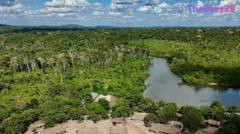
The expanse of land scorched by fires in Brazil’s Amazon experienced a dramatic reduction in 2025, dropping to levels not seen in decades. Data compiled by the monitoring group MapBiomas reveals that approximately 3.1 million hectares suffered fire damage last year. This represents a massive decrease from the record-breaking 15.8 million hectares affected during the severe fires of 2024, marking the smallest burned area recorded since tracking began in 1985.
This positive environmental shift offers a political boost to President Luiz Inácio Lula da Silva, whose foundational campaign promises included rigorous protection of the world’s largest rainforest. The dramatic improvement across the region was partially assisted by a transition from warming El Niño weather patterns to cooler La Niña conditions, which helped mitigate extreme drought and subsequent fire risks.
Despite the encouraging figures, environmental experts urge caution, noting that weather anomalies and historical land-clearance pressures continue to pose long-term threats. While the administration has championed conservation efforts compared to the previous leadership under Jair Bolsonaro, challenges remain, particularly concerning simultaneous government approvals for industrial activities near the sensitive Amazon basin.
Key Takeaways
- Only 3.1 million hectares burned in the Amazon in 2025, down significantly from 15.8 million hectares in 2024.
- The 2025 burn area represents the lowest figure recorded since MapBiomas began tracking data in 1985.
- Experts attribute the decline to a combination of cooler La Niña weather conditions and ongoing prevention efforts, though future climate risks remain.
Editor’s Analysis & Impact
The sharp decline in 2025 Amazon wildfire metrics underscores the volatile interplay between natural climate phenomena like La Niña and localized conservation policies. While President Lula’s administration benefits politically from these improved environmental statistics, the underlying vulnerabilities of the rainforest—driven by historical land clearance, agricultural pressures, and shifting global temperatures—mean that long-term ecological stability is far from guaranteed. Industrial pressures, such as resource extraction and infrastructure projects, continue to challenge strict preservation goals, highlighting the need for sustained, systemic climate policy rather than reliance on favorable weather cycles alone.
Frequently Asked Questions
Q: How much land burned in the Brazilian Amazon in 2025 compared to 2024?
A: In 2025, about 3.1 million hectares were burned in the Amazon, a drastic decrease from the 15.8 million hectares recorded in 2024.
Q: What caused the reduction in wildfires during 2025?
A: The reduction was partly driven by an easing of climate extremes, specifically transitioning from the warmer El Niño weather pattern to cooler La Niña conditions, alongside ongoing monitoring and prevention efforts.
Q: When did MapBiomas begin recording deforestation and fire data in Brazil?
A: MapBiomas has been tracking and recording land burn data in Brazil since 1985.
AI Disclosure: This article is based on verified data and official reports. Our Team and AI have cross-referenced every financial detail with primary sources to ensure total accuracy.
More from this Category