Navigating the Impasse: Four Paths Forward After Israel’s Undecided Election
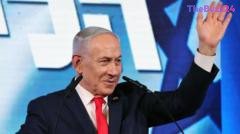
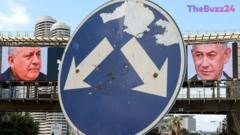
Following a closely contested general election that left neither Prime Minister Benjamin Netanyahu nor key challenger Gadi Eisenkot with a clear parliamentary majority, Israeli politics faces a familiar deadlock. With the vast majority of votes tallied, the path to forming a stable government remains obstructed, raising the specter of yet another round of national elections in a country already fatigued by political instability.
The first potential scenario involves a national unity government led by Netanyahu, which would require Eisenkot to dramatically reverse his campaign promises centered on unseating the incumbent prime minister. While ideological divides run deep—particularly regarding Netanyahu’s current alliances with far-right and ultra-Orthodox factions—external pressures, such as regional security tensions, could theoretically force political rivals to temporarily set aside their animosities for the sake of stability.
Alternatively, an unprecedented coalition led by Eisenkot incorporating Arab political parties represents a seismic shift for the nation’s governance. Arab voter turnout surged to historic highs, positioning these parties to potentially secure a record number of seats. Although the opposition bloc would gain a numerical path to a majority through this alliance, overcoming entrenched opposition from most Jewish political leaders regarding Arab integration into the government remains a formidable hurdle.
A third possibility entails Netanyahu peeling away right-wing figures from the opposition, such as Naftali Bennett or Avigdor Lieberman, to bolster his ranks. However, these figures campaigned explicitly on removing Netanyahu and reforming military conscription, placing them at loggerheads with the ultra-Orthodox elements of the current ruling coalition.
Should all coalition-building efforts collapse, the default recourse will be a fresh cycle of elections. While prolonged campaigning carries heavy economic and social costs, Netanyahu might calculate that shifting demographics, voter fatigue among high-turnout groups, and the potential elimination of smaller factions failing to meet electoral thresholds could ultimately work in his favor.
Key Takeaways
- Neither Benjamin Netanyahu's bloc nor Gadi Eisenkot's alliance secured a definitive parliamentary majority after the latest election.
- Forming a national unity government or an Arab-backed opposition coalition remain mathematically possible yet politically volatile pathways.
- Without a successful coalition agreement, Israel risks falling back into a cycle of repeated general elections similar to the political gridlock seen between 2019 and 2022.
Editor’s Analysis & Impact
The persistent deadlock in Israeli governance underscores profound structural and societal fractures within the nation’s political ecosystem. The rise in Arab voter participation signals a shifting demographic landscape that traditional Zionist parties can no longer easily sideline without sacrificing coalition math. Economically and diplomatically, prolonged uncertainty dampens investor confidence and stalls crucial legislative reforms at a time of acute regional volatility. If political leaders fail to forge pragmatic compromises, the continuous return to the ballot box will likely deepen public cynicism, further entrenching polarization and diminishing Israel’s capacity for long-term strategic planning.
Frequently Asked Questions
Q: Why is forming a government so difficult after the recent election?
A: Neither Prime Minister Benjamin Netanyahu's coalition nor the bloc led by challenger Gadi Eisenkot secured the necessary majority of seats to govern alone, forcing parties to contemplate unprecedented and ideologically difficult alliances.
Q: What role do Arab parties play in the current political landscape?
A: Arab parties achieved a record turnout and are projected to secure a historic number of seats, positioning them as potential kingmakers in the opposition, though most Jewish-led parties have historically resisted including them in governing coalitions.
Q: What happens if no coalition can be formed?
A: If negotiations fail to yield a functioning government, the default outcome will be new elections, extending Netanyahu's tenure as caretaker prime minister.
AI Disclosure: This article is based on verified data and official reports. Our Team and AI have cross-referenced every financial detail with primary sources to ensure total accuracy.
More from this Category