Israel’s Election Deadlock: High Turnout, No Clear Victor
Israel’s recent general election witnessed a historic level of voter participation, yet the outcome has plunged the nation into political uncertainty, with no single party or bloc securing a decisive majority. The fragmented results indicate a challenging path ahead for forming a stable government.
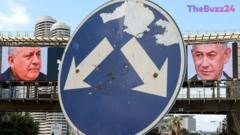
Incumbent Prime Minister Benjamin Netanyahu’s Likud party is projected to emerge as the largest faction within the Knesset, Israel’s parliament. Following the preliminary counts, Netanyahu has publicly called for the formation of a “strong” right-wing government, signaling his intent to lead the next coalition.
However, this ambition faces significant opposition. Gadi Eisenkot, a prominent rival and former army chief, has asserted that the electorate’s vote was a clear mandate to conclude Netanyahu’s long tenure as prime minister. The deep division reflected in the ballot boxes means that neither Netanyahu’s bloc nor the opposition has achieved the necessary seats to govern outright.
The absence of a clear majority sets the stage for potentially protracted and complex coalition negotiations. Political analysts suggest that the inability of either side to secure a decisive victory could lead to a period of intense political maneuvering, as various parties vie for influence and attempt to forge alliances to break the current deadlock, raising questions about the future direction of Israeli policy.
Key Takeaways
- Israel's recent election saw a significant voter turnout but failed to produce a clear majority for any single party or bloc.
- Prime Minister Benjamin Netanyahu's Likud party emerged as the largest in the Knesset, with Netanyahu advocating for a strong right-wing government.
- Despite Likud's lead, rival Gadi Eisenkot asserts the vote signals a desire to end Netanyahu's leadership, highlighting the deep political division and potential for prolonged coalition negotiations.
Editor’s Analysis & Impact
The inconclusive outcome of Israel’s election signals a period of significant political instability and complex coalition negotiations. The inability of either the right-wing bloc led by Benjamin Netanyahu or the opposition to secure a decisive majority means that forming a stable government will be an arduous task, potentially leading to further political deadlock or even another election. This uncertainty could impact domestic policy-making, particularly on economic reforms and security matters. Internationally, a fragmented government might struggle to project a unified foreign policy stance, affecting regional diplomacy and relations with key allies. The prolonged political limbo could also dampen investor confidence and create headwinds for Israel’s economy, as critical decisions may be delayed.
Frequently Asked Questions
Q: What was the main outcome of Israel's recent election?
A: The election resulted in no clear winner, despite a high voter turnout, leaving both the incumbent Prime Minister Benjamin Netanyahu's Likud party and the opposition without a decisive majority to form a government.
Q: Which party emerged as the largest in the Knesset?
A: Benjamin Netanyahu's Likud party is projected to be the largest single party in the Knesset, Israel's parliament.
Q: What are the immediate challenges following the election results?
A: The primary challenge is the formation of a stable coalition government, as neither major bloc secured a clear majority, necessitating complex negotiations and potential compromises among various political factions.
AI Disclosure: This article is based on verified data and official reports. Our Team and AI have cross-referenced every financial detail with primary sources to ensure total accuracy.
More from this Category