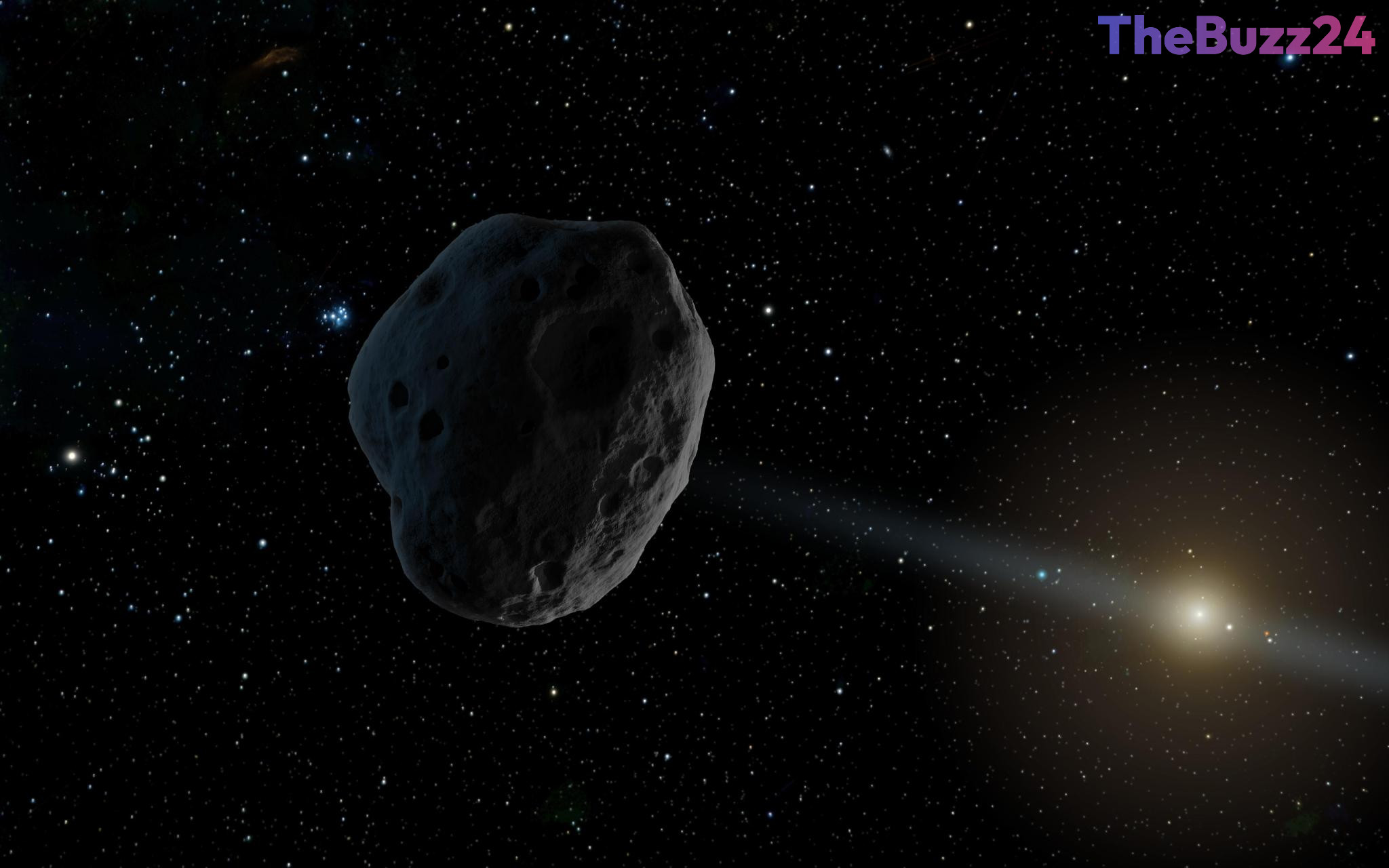
Celestial Identity Crisis: Scientists Reclassify Near-Earth Asteroid as a Comet
A long-standing mystery surrounding a near-Earth object has been resolved, revealing that what was once classified as an asteroid is actually a comet. The object, previously known as 1998 SH2, had been tracked for decades, but its erratic orbital behavior recently signaled to researchers that it was being influenced by forces beyond simple gravity. By analyzing its trajectory, scientists determined that the object was likely venting gas into space, a hallmark characteristic of cometary activity.
The discovery occurred after the object failed to appear at its predicted coordinates during a close approach to Earth in August 2025. Researchers utilized high-precision optical astrometry and powerful ground-based observatories, including the Canada-France-Hawaii Telescope and the European Southern Observatory’s Very Large Telescope, to capture images of the object. These observations confirmed the presence of a faint tail and coma, providing definitive evidence that 1998 SH2 is a comet, now designated as P/1998 SH2.
This finding has significant implications for planetary defense and the study of so-called ‘dark comets’—objects that exhibit comet-like orbital perturbations but lack visible tails. By identifying these objects more accurately, researchers can better predict their paths and assess potential impact risks. The study underscores the necessity of continuous monitoring and advanced imaging technology in cataloging the diverse population of objects sharing space with our planet.
Key Takeaways
- The object 1998 SH2 was reclassified as a comet after researchers observed a faint tail and coma, confirming it was venting gas.
- The reclassification was prompted by 'nongravitational perturbations' in the object's orbit that could not be explained by asteroid physics alone.
- This discovery aids planetary defense efforts by helping scientists distinguish between asteroids and comets, which have different orbital evolution patterns.
Editor’s Analysis & Impact
The reclassification of 1998 SH2 highlights a critical evolution in planetary science: the move from static classification to dynamic behavioral analysis. As our observational capabilities improve, the distinction between ‘dead’ asteroids and ‘active’ comets is becoming increasingly blurred, particularly with the identification of dark comets. This shift is vital for the field of planetary defense. Because comets experience nongravitational thrust from outgassing, their future trajectories are inherently more difficult to predict than those of inert asteroids. By refining our ability to detect these subtle perturbations, the scientific community is significantly enhancing its capacity to model long-term Earth impact risks. Future missions, such as the NEO Surveyor, will be instrumental in expanding this catalog, ensuring that we are not blindsided by objects that masquerade as asteroids while harboring the volatile characteristics of comets.
Frequently Asked Questions
Q: Why was 1998 SH2 originally thought to be an asteroid?
A: For years, the object did not display the characteristic tail or coma associated with comets, leading astronomers to categorize it as a standard near-Earth asteroid.
Q: What is a 'dark comet'?
A: A dark comet is an object that follows an irregular, comet-like orbit but lacks the visible signs of outgassing, such as a tail or coma, making it difficult to distinguish from an asteroid without precise motion tracking.
AI Disclosure: This article is based on verified data and official reports. Our Team and AI have cross-referenced every financial detail with primary sources to ensure total accuracy.
More from this Category