Chandra Observatory Reveals Stunning Multi-Wavelength View of Messier 94 Galaxy
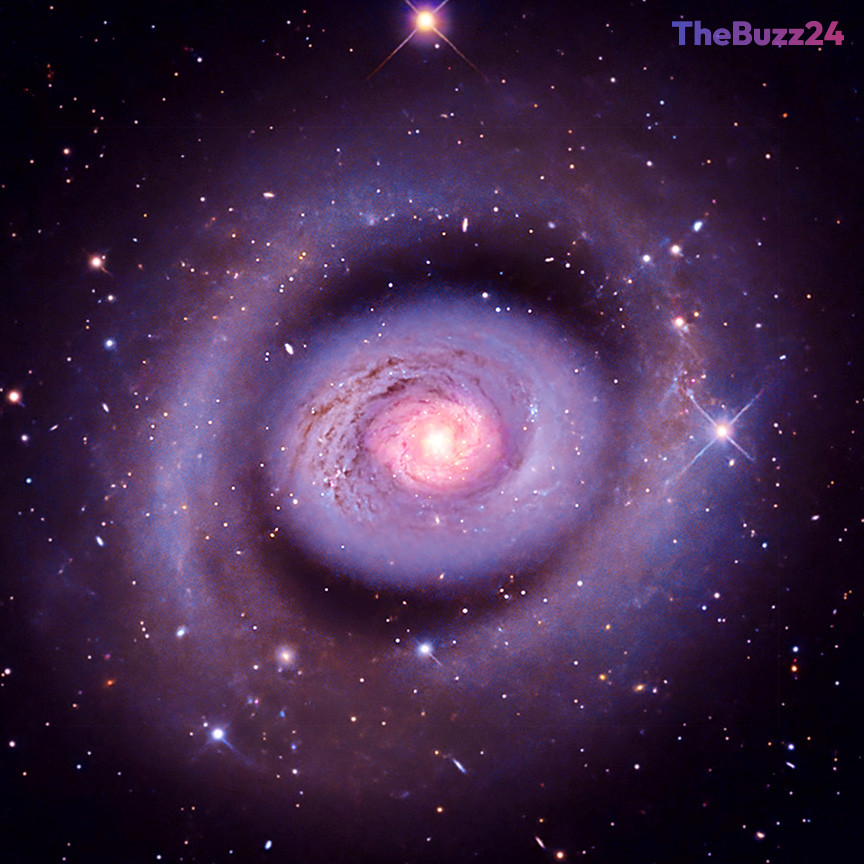
NASA’s Chandra X-ray Observatory has released a sophisticated new composite image of the spiral galaxy NGC 4736, widely recognized as Messier 94. Unveiled on June 30, 2026, the visualization offers a detailed look at the galaxy’s complex structure, specifically highlighting a vibrant inner ring known as a starburst ring. This region is currently a hotbed of stellar activity, where intense star formation is occurring, likely sustained by gas currents circulating within the galaxy’s distinct oval-shaped framework.
The final image is a technical synthesis of data collected from multiple sources. X-ray emissions captured by the Chandra observatory—represented in shades of red, orange, and blue—have been meticulously layered over high-resolution visible light imagery. This optical data was contributed by ground-based astrophotographers, providing a comprehensive view that combines the high-energy phenomena detected in space with the traditional light spectrum visible from Earth.
Beyond the visual representation, the project also incorporates an auditory component, allowing observers to experience the data through sound. This multi-sensory approach aims to provide a deeper understanding of the galactic dynamics at play within Messier 94, offering both researchers and the public a unique perspective on the life cycle of stars and the structural evolution of spiral galaxies.
Key Takeaways
- NASA's Chandra X-ray Observatory released a new composite image of the spiral galaxy Messier 94 (NGC 4736).
- The image highlights a 'starburst ring' where intense star formation is fueled by gas moving through an oval-shaped structure.
- The visualization combines X-ray data with ground-based optical photography and includes an auditory interpretation of the data.
Editor’s Analysis & Impact
The release of the Messier 94 composite underscores the ongoing evolution of astronomical data visualization. By integrating multi-wavelength X-ray data with ground-based optical imagery, researchers can better map the relationship between high-energy galactic processes and visible stellar structures. The inclusion of sonification—converting light data into sound—represents a growing trend in scientific communication, designed to make complex astrophysical phenomena more accessible to a broader audience, including those with visual impairments. From a scientific standpoint, the study of starburst rings in galaxies like Messier 94 is critical for understanding how gas dynamics influence star formation rates over cosmic time. As imaging technology continues to improve, these collaborative efforts between space-based observatories and amateur astrophotographers will likely become a standard for public outreach and scientific discovery.
Frequently Asked Questions
Q: What is a starburst ring in a galaxy?
A: A starburst ring is a region within a galaxy where there is an exceptionally high rate of star formation, often triggered by the influx of gas into a specific area.
Q: How was the image of Messier 94 created?
A: The image is a composite created by layering X-ray data from NASA's Chandra X-ray Observatory with visible light data captured by ground-based telescopes.
AI Disclosure: This article is based on verified data and official reports. Our Team and AI have cross-referenced every financial detail with primary sources to ensure total accuracy.
More from this Category