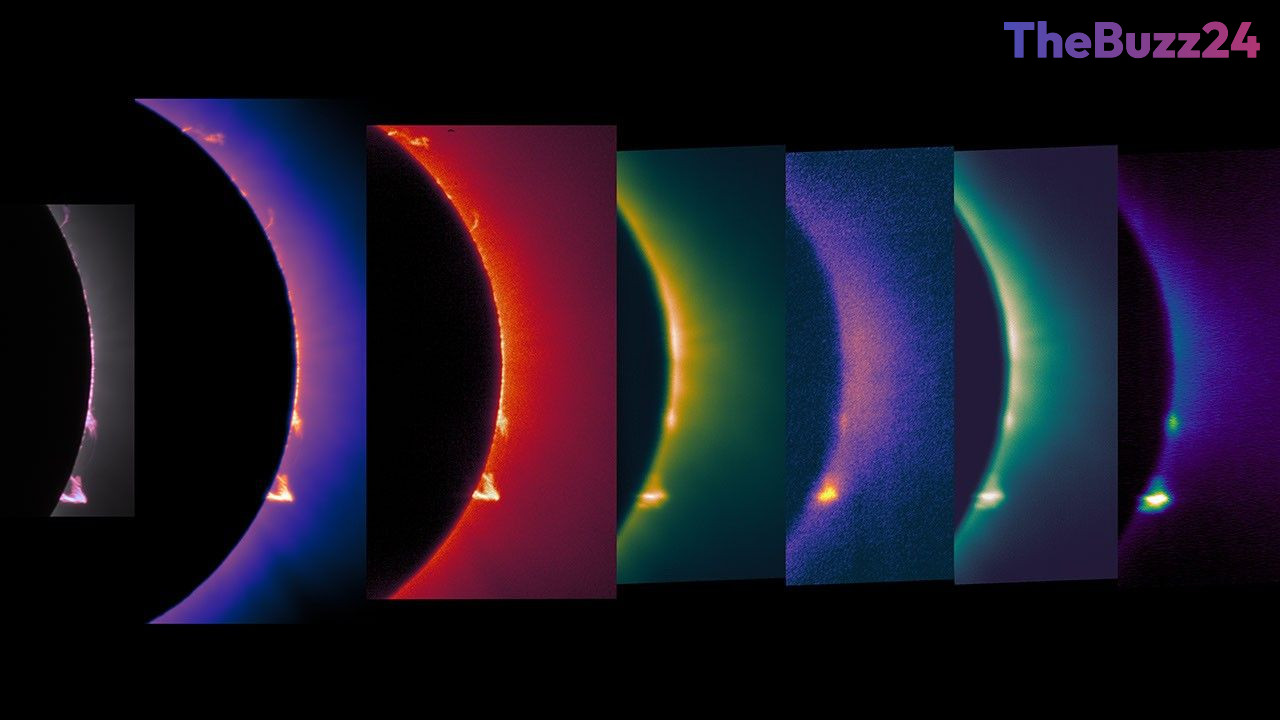
Chasing Shadows: NASA Deploys High-Altitude Jets and Balloons for Upcoming Total Solar Eclipse
As the Moon prepares to obscure the Sun during the upcoming total solar eclipse on August 12, 2026, scientific teams are mobilizing to capture unprecedented data from the skies over Greenland, Iceland, and Spain. By utilizing high-altitude research aircraft and specialized scientific balloons, researchers aim to gain deeper insights into the Sun’s elusive corona and the subsequent reactions within Earth’s atmosphere caused by the sudden onset of darkness.
A centerpiece of this mission involves a WB-57 high-altitude jet equipped with the SCIFLI Multispectral Airborne Imager (SAMI). Flying at 50,000 feet, the aircraft will soar above cloud cover to track the Moon’s shadow. This strategic positioning allows the onboard camera suite to extend the observation window of the corona to nearly three minutes—significantly longer than the two minutes and 18 seconds available to ground-based observers. The high-resolution imagery will focus on solar prominences and the thermal dynamics of the corona, which reaches temperatures of nearly a million degrees.
Simultaneously, the Nationwide Eclipse Ballooning Project is deploying student-led teams to conduct atmospheric research. In Iceland, researchers will launch dozens of balloons to monitor the Earth’s boundary layer, investigating how the rapid transition from day to night affects atmospheric thickness. Meanwhile, teams in Spain will utilize balloons to measure ozone levels and capture 360-degree imagery of the eclipse shadow from the stratosphere. These efforts build upon data collected during previous eclipses, refining our understanding of how solar activity influences our planet’s environment.
Each solar event offers a unique opportunity to observe the Sun’s ever-changing nature. By iterating on technology and methodology—such as adjusting exposure settings and utilizing advanced data processing software—scientists hope to uncover new details about solar wind and the complex relationship between the Sun and the solar system. This mission underscores the ongoing commitment to heliophysics and the importance of leveraging rare celestial events to advance space science.
Key Takeaways
- NASA is deploying a WB-57 high-altitude jet to capture high-resolution imagery of the solar corona during the August 12, 2026, total solar eclipse.
- Scientific balloon teams are launching experiments in Iceland and Spain to study changes in Earth's atmospheric boundary layer and ozone levels during the eclipse.
- The mission aims to improve our understanding of solar dynamics, including how the Sun heats its corona and how solar wind impacts the broader solar system.
Editor’s Analysis & Impact
The 2026 solar eclipse mission represents a critical advancement in heliophysics, demonstrating how mobile, high-altitude platforms can overcome the limitations of ground-based observation. By capturing data in infrared and visible wavelengths that are typically absorbed by the lower atmosphere, researchers are effectively expanding the ‘observational window’ of the Sun. The industry impact is significant; the iterative improvements in sensor technology and data processing software developed for these campaigns have direct applications for satellite monitoring and space weather forecasting. As we become increasingly reliant on space-based infrastructure, understanding the Sun’s influence on our atmosphere and satellite communications is no longer just academic—it is a matter of national and global security. Future missions will likely continue to prioritize these ‘chase’ strategies to mitigate the risks posed by solar variability.
Frequently Asked Questions
Q: Why does NASA use high-altitude jets to observe solar eclipses?
A: High-altitude jets like the WB-57 can fly above cloud cover and reach altitudes where the atmosphere is thin enough to allow cameras to capture infrared wavelengths that are usually blocked from reaching the ground.
Q: What is the 'boundary layer' and why is it studied during an eclipse?
A: The boundary layer is the lowest part of the atmosphere that interacts directly with the Earth's surface. Scientists study it during an eclipse to see how the sudden loss of solar heat causes this layer to collapse or change in thickness.
AI Disclosure: This article is based on verified data and official reports. Our Team and AI have cross-referenced every financial detail with primary sources to ensure total accuracy.
More from this Category