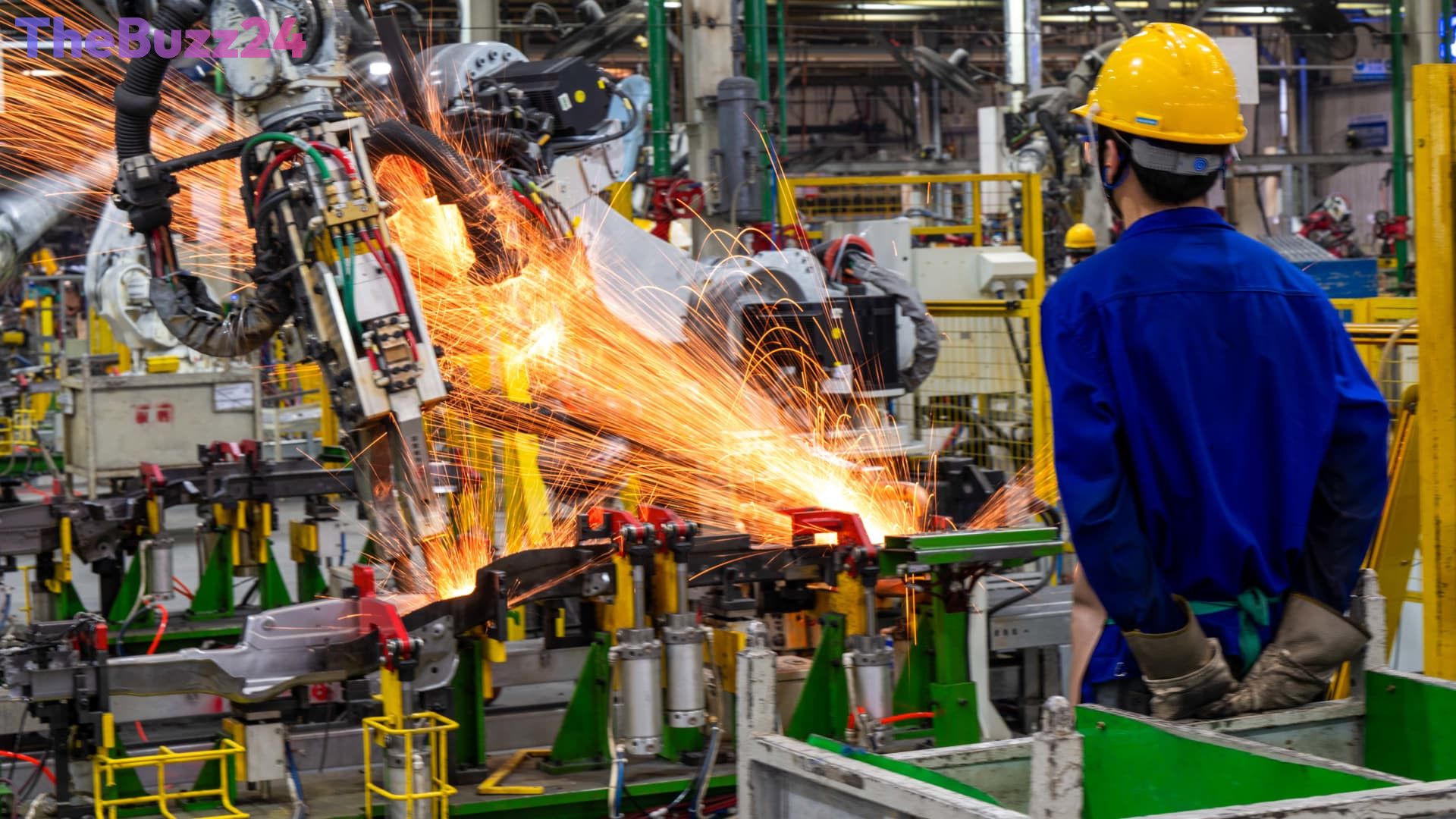
China’s Manufacturing Sector Shrinks Unexpectedly as Demand Falters
China’s manufacturing sector experienced an unexpected contraction in July, marking the first downturn since February. The official Purchasing Managers’ Index (PMI) dropped to 49.2, falling below the crucial 50-point threshold that separates expansion from contraction. This decline signals a significant shift from the previous four months, during which the index remained at or above 50, partly buoyed by exporters accelerating shipments in anticipation of potential U.S. tariff increases.
The slump was primarily driven by a sharp decrease in domestic orders, with the new orders sub-index hitting a 38-month low. While export orders also softened, the domestic market appears to be the main source of weakness. Adding to the disruption, a series of typhoons impacted production and halted numerous projects, contributing to the overall slowdown.
The downturn extended beyond manufacturing, with the construction PMI reaching a record low and the services sector index falling to its weakest point since the initial COVID-19 lockdowns. The composite PMI, which encompasses manufacturing, services, and construction, also declined to its lowest level since the end of the pandemic in 2022. Despite these downbeat readings, businesses generally maintained optimistic expectations for future output, possibly anticipating government stimulus measures.
This contraction occurs as Chinese policymakers acknowledge significant economic challenges, pledging to increase fiscal spending and implement new policies to support growth in the latter half of the year. The economy’s second-quarter growth of 4.3% was the slowest in over three years, raising concerns about meeting the annual target. The weakening performance in manufacturing, coupled with a slowdown in retail sales and strained export growth, underscores the mounting pressures on Beijing to stimulate domestic demand.
Key Takeaways
- China's manufacturing PMI fell to 49.2 in July, indicating an unexpected contraction for the first time since February.
- A significant slump in domestic orders, coupled with disruptions from typhoons, contributed to the manufacturing downturn.
- The weakness has spread to other sectors, including construction and services, raising concerns about China's overall economic growth and prompting calls for government stimulus.
Editor’s Analysis & Impact
The unexpected contraction in China’s manufacturing PMI is a significant indicator of the growing economic headwinds the nation faces. The sharp decline in new domestic orders suggests that internal demand is faltering, a critical issue for an economy increasingly reliant on its own consumption. While external factors like potential tariffs played a role in earlier months, the current weakness points to deeper domestic challenges. The broad-based slowdown across manufacturing, construction, and services, coupled with the slowest quarterly growth in years, puts considerable pressure on the government to deliver effective stimulus. The market will be closely watching for concrete policy actions beyond general pledges, as the effectiveness of fiscal and monetary support will be crucial for stabilizing growth and restoring confidence in the second half of the year.
Frequently Asked Questions
Q: What is the significance of the PMI falling below 50?
A: A Purchasing Managers' Index (PMI) below 50 indicates a contraction in the manufacturing sector. It suggests that the economy is shrinking rather than expanding, with factors like decreased new orders, lower production, and reduced employment contributing to the decline.
Q: What are the main reasons cited for the contraction in July?
A: The primary reasons cited are a significant slump in domestic demand, evidenced by a sharp drop in the new orders sub-index, and disruptions to production caused by a series of typhoons. Weakening export orders also contributed to the downturn.
Q: What is China's government likely to do in response to this data?
A: Following this disappointing data, Chinese policymakers have acknowledged economic difficulties and pledged to accelerate fiscal spending and introduce 'incremental policies' to bolster growth. The market anticipates measures aimed at stimulating domestic demand and supporting key industries.
AI Disclosure: This article is based on verified data and official reports. Our Team and AI have cross-referenced every financial detail with primary sources to ensure total accuracy.
More from this Category