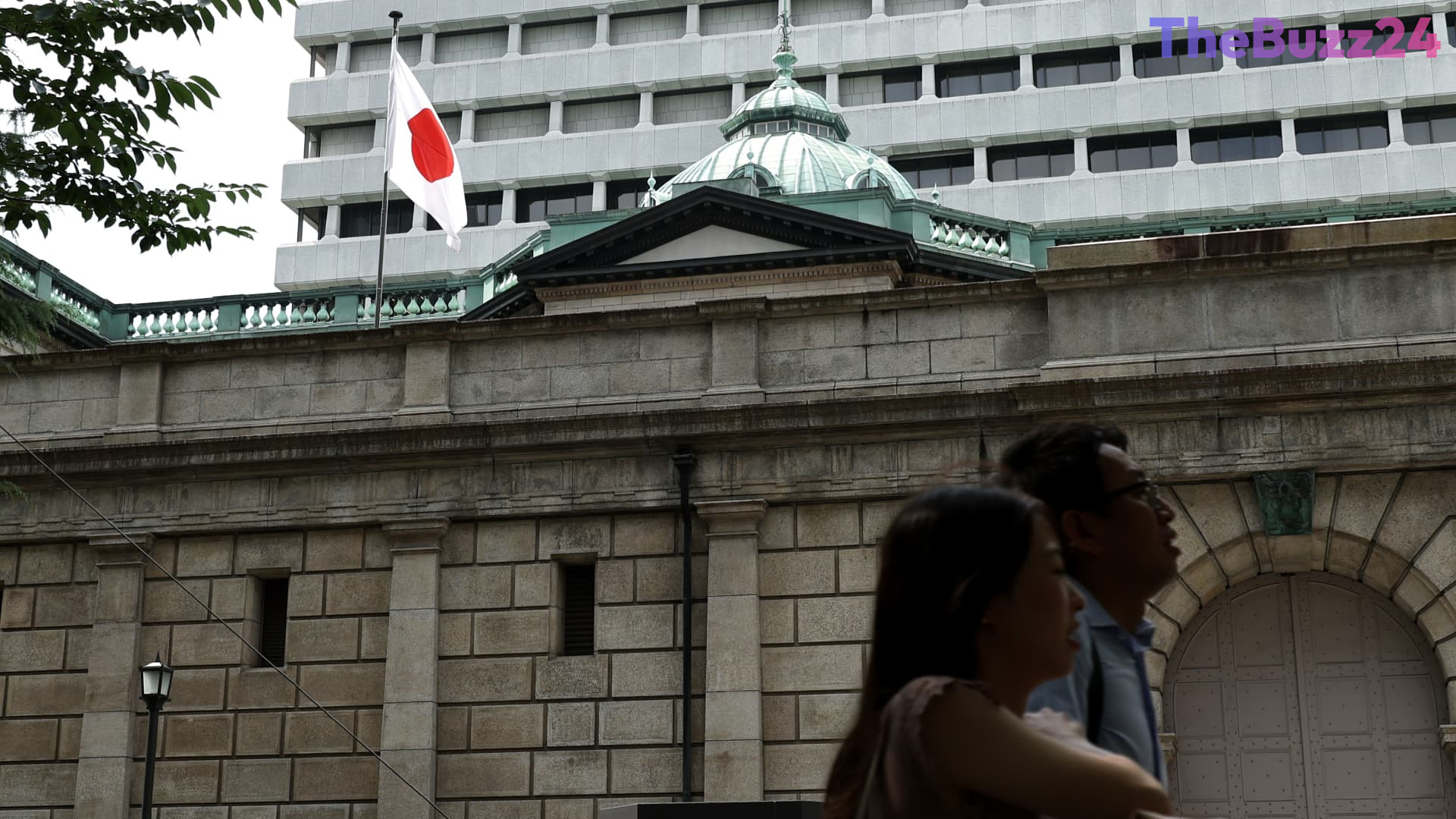
Bank of Japan Maintains Interest Rates Amid Inflation Concerns and Currency Volatility
The Bank of Japan has opted to keep its benchmark interest rate steady at 1%, following an 8-1 board vote. While the majority favored maintaining the current policy, board member Hajime Takata advocated for a hike to 1.25%. This decision arrives as the central bank signals that core inflation is expected to climb clearly above its 2% target starting in the second half of the 2026 fiscal year.
Central bank officials identified several drivers for this inflationary pressure, including the pass-through of wage increases into consumer prices, rising crude oil costs, and the recent depreciation of the yen. Although the bank anticipates inflation will eventually moderate as oil prices stabilize, the current outlook suggests a period of heightened price growth. The bank emphasized its commitment to raising rates if necessary to prevent inflation from deviating significantly above the 2% target, which could negatively impact the broader economy.
The policy announcement follows a period of intense currency market activity, during which the yen experienced significant volatility. After trading near the 163 level against the U.S. dollar, the currency saw a sharp rally to approximately 157.96. Market observers suggest that this movement reflects a concerted effort to address excessive yen weakness, with many analysts now looking toward Governor Kazuo Ueda for further guidance on whether the bank intends to accelerate its rate-hike schedule beyond the current six-month interval.
Key Takeaways
- The Bank of Japan held interest rates at 1% while warning that core inflation is likely to exceed the 2% target by late 2026.
- The decision follows significant volatility in the yen, which saw a sharp rally after trading near 163 against the U.S. dollar.
- Market analysts are closely monitoring Governor Kazuo Ueda for signals regarding a potential acceleration in the pace of future interest rate hikes.
Editor’s Analysis & Impact
The Bank of Japan is currently navigating a delicate balancing act between managing persistent inflationary pressures and supporting a fragile economic recovery. By signaling that inflation may exceed its 2% target, the bank is laying the groundwork for a more hawkish monetary policy stance. The market’s focus has shifted from the current rate hold to the potential for a faster tightening cycle, which is essential for stabilizing the yen. If the bank chooses to accelerate rate hikes in the coming months, it could provide much-needed support for the currency but risks cooling domestic consumption. Investors should expect heightened sensitivity to Governor Ueda’s communications, as any deviation from the current six-month hike cadence will likely trigger significant volatility in both the bond and currency markets.
Frequently Asked Questions
Q: Why did the Bank of Japan decide to keep interest rates at 1%?
A: The bank chose to maintain the current rate while signaling that it is prepared to raise rates in the future to prevent inflation from exceeding its 2% target, balancing current economic conditions with long-term price stability.
Q: What is the significance of the recent yen volatility?
A: The sharp rally in the yen suggests that authorities are uncomfortable with excessive currency weakness, viewing specific exchange rate levels as a trigger for intervention to protect the economy from imported inflation.
AI Disclosure: This article is based on verified data and official reports. Our Team and AI have cross-referenced every financial detail with primary sources to ensure total accuracy.
More from this Category