ASML Raises 2026 Revenue Outlook as AI Infrastructure Demand Surges
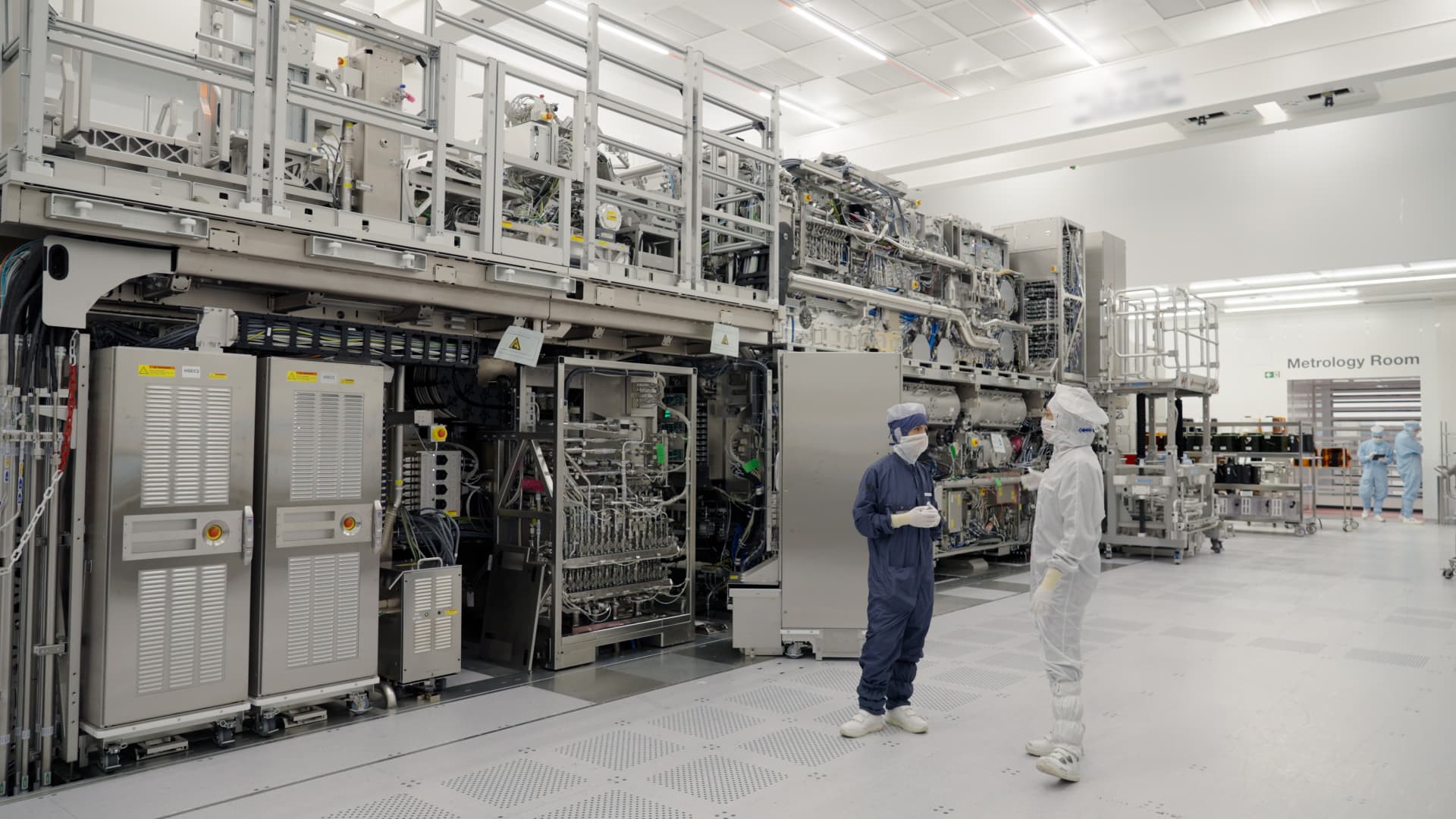
ASML, the critical manufacturer of advanced semiconductor lithography systems, has officially revised its 2026 revenue forecast upward, signaling a sustained period of growth fueled by the global artificial intelligence boom. The company now projects annual sales to fall between 36 billion and 40 billion euros, a notable increase from its previous guidance of 34 billion to 39 billion euros. This adjustment reflects the company’s confidence in the long-term capital expenditure plans of major chipmakers.
The optimistic outlook follows a robust financial performance in the first quarter, where ASML outperformed market expectations with 8.8 billion euros in net sales and 2.8 billion euros in profit. CEO Christophe Fouquet highlighted that the semiconductor sector is experiencing a structural shift, with AI infrastructure investments driving an urgent need for advanced manufacturing capacity. As chip demand continues to outpace supply, ASML’s clients are accelerating their expansion timelines to meet the requirements of next-generation data centers and AI systems.
ASML’s role as a bellwether for the chip industry is underscored by its recent sales distribution, which shows a significant pivot toward the memory sector. In the first quarter, memory-related equipment accounted for 51% of new tool sales, up from 30% in the previous quarter. This surge is largely attributed to major players like Samsung and SK Hynix ramping up production to address the global shortage of high-performance memory chips. While the company faces headwinds from evolving export restrictions—particularly concerning shipments to China, which dropped to 19% of total sales—the broader demand from other regions remains strong enough to bolster the company’s long-term financial trajectory.
Key Takeaways
- ASML has increased its 2026 revenue forecast to a range of 36-40 billion euros, citing sustained AI-driven demand.
- The company saw a major shift in its order book, with 51% of new tool sales now coming from the memory chip sector.
- Despite geopolitical export restrictions impacting sales to China, the company's overall growth remains supported by global capacity expansion.
Editor’s Analysis & Impact
ASML’s upward revision serves as a definitive indicator that the AI-driven semiconductor supercycle is far from peaking. By acting as the primary gatekeeper for advanced chip manufacturing, ASML’s financial health provides a clear window into the capital expenditure strategies of the world’s largest foundries. The shift in sales toward memory manufacturers suggests that the industry is moving beyond just logic processors and into the critical infrastructure needed for high-bandwidth memory, which is essential for AI training. While export controls in China present a persistent regulatory risk, the company’s ability to pivot its supply chain toward other markets demonstrates significant operational resilience. Investors should view ASML’s outlook as a bullish signal for the broader semiconductor equipment ecosystem, as it confirms that the current AI investment wave is translating into tangible, long-term hardware orders.
Frequently Asked Questions
Q: Why is ASML considered a 'barometer' for the semiconductor industry?
A: ASML produces the essential lithography machines required to manufacture the world's most advanced semiconductors. Because their equipment is a prerequisite for chip production, their order book reflects the future capacity plans of major global chipmakers.
Q: How are export restrictions affecting ASML's business?
A: Export restrictions, particularly those involving China, have limited ASML's ability to ship its most advanced machinery to the region. This has caused a decline in the percentage of sales originating from China, though the company has successfully offset this through increased demand in other markets.
AI Disclosure: This article is based on verified data and official reports. Our Team and AI have cross-referenced every financial detail with primary sources to ensure total accuracy.
More from this Category