Citizen Scientists Needed to Solve the Mystery of Vanishing ‘Clumpy’ Galaxies
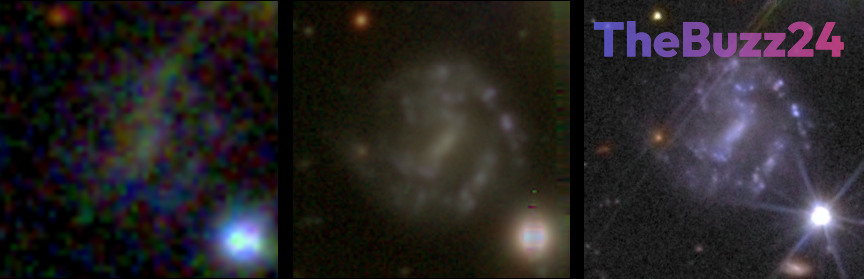
Astronomers are calling on the public to assist in a groundbreaking cosmic investigation into the nature of ‘clumpy’ galaxies. These celestial structures, characterized by massive, bright blobs that serve as intense stellar nurseries, were significantly more prevalent in the early universe than they are today. Despite their importance to star formation, the reasons behind their eventual disappearance remain one of the most compelling mysteries in modern astrophysics.
The Euclid space telescope, a collaborative mission between the European Space Agency and NASA, is currently generating an unprecedented volume of high-definition imagery. This massive influx of data provides a unique opportunity to study the internal structure of these star-forming regions in greater detail than ever before. However, the sheer scale of the data exceeds the capacity of professional research teams to process manually, necessitating a new approach to data analysis.
To bridge this gap, researchers are launching ‘Galaxy Zoo: Clump Scout II,’ a project designed to refine machine learning algorithms. Volunteers will act as human supervisors for an artificial intelligence tool, verifying its findings by identifying, adjusting, or removing markers on galaxy images where the machine suspects star-forming clumps exist. By correcting the algorithm’s errors—often caused by distant stars or technical artifacts—participants directly contribute to training a more accurate digital assistant.
This initiative offers a unique opportunity for anyone with a smartphone or laptop to contribute to professional-grade astronomical research. By participating, volunteers are helping scientists map the evolution of star formation across cosmic time, potentially unlocking the secrets of why these once-common stellar nurseries faded from the modern universe.
Key Takeaways
- The Euclid space telescope is capturing vast amounts of data on 'clumpy' galaxies, which are regions of intense star formation that were more common in the early universe.
- The 'Galaxy Zoo: Clump Scout II' project invites the public to help train machine learning algorithms by verifying and correcting the AI's identification of these stellar nurseries.
- Public participation is essential for processing the massive volume of astronomical data that exceeds the capacity of professional research teams alone.
Editor’s Analysis & Impact
The integration of citizen science with machine learning represents a significant shift in how large-scale astronomical data is processed. As telescopes like Euclid provide increasingly high-resolution imagery, the bottleneck for discovery is no longer data acquisition, but data interpretation. By leveraging human intuition to train AI, researchers are creating a scalable model for future deep-space exploration. This project not only accelerates the timeline for understanding galactic evolution but also democratizes scientific discovery. The broader implication is that the future of astrophysics will rely heavily on human-AI collaboration, where the public plays a critical role in ‘teaching’ machines to recognize complex patterns. This methodology could eventually be applied to other fields, such as climate modeling or medical imaging, where massive datasets require both computational speed and human oversight to ensure accuracy.
Frequently Asked Questions
Q: Do I need a background in astronomy to participate in Clump Scout II?
A: No, the project is designed for the general public. You only need a laptop or smartphone and a willingness to follow the provided guidelines to help identify star-forming clumps.
Q: Why is the machine learning algorithm not accurate enough on its own?
A: Machine learning models often struggle to distinguish between genuine star-forming clumps and 'noise' such as distant foreground stars or camera glitches. Human volunteers provide the necessary verification to improve the algorithm's precision.
AI Disclosure: This article is based on verified data and official reports. Our Team and AI have cross-referenced every financial detail with primary sources to ensure total accuracy.
More from this Category