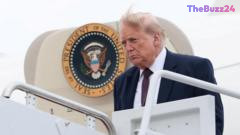
Congress Delivers Symbolic Rebuke to Trump on Iran War Powers
The US Senate has approved a measure calling for President Donald Trump to cease military actions in Iran or secure explicit congressional authorization for continued engagement. This bipartisan vote, however, is largely symbolic, as the resolution is not legally binding and will not be presented to the President for his signature. It serves primarily as an expression of congressional sentiment.
The resolution passed the Senate with a 50-48 vote, following its earlier approval by the US House of Representatives. This marks the first instance since the 1973 War Powers Resolution that both chambers of Congress have passed a concurrent resolution instructing a president to end military action. A notable number of Republicans joined Democrats in supporting the measure, including Senators Rand Paul, Lisa Murkowski, Susan Collins, and Bill Cassidy, while Democratic Senator John Fetterman was the sole dissenter from his party. President Trump swiftly condemned the vote on his Truth Social platform, labeling it “poorly timed and meaningless” and asserting that it complicated his efforts to resolve the situation with Iran.
The passage of this resolution underscores growing congressional unease and public dissatisfaction with the ongoing conflict, which is nearing its fifth month and has coincided with rising petrol prices. While Middle East analyst Laura Blumenfeld described the measure as “more of a slap on a wrist than a handcuff” due to its lack of legal enforceability, she acknowledged its reflection of American public sentiment. Conversely, a White House official contended that there are no active hostilities from which to withdraw forces, citing a ceasefire agreed upon on April 7. The administration also suggested the resolution’s passage was influenced by the absence of two Republican senators, Mitch McConnell and Dave McCormick.
Despite the congressional push, the US and Iran recently signed a memorandum of understanding, agreeing to maintain a ceasefire and work towards a broader cessation of hostilities. This agreement provides both nations 60 days to negotiate a comprehensive deal concerning Iran’s nuclear program. The legal framework surrounding military engagement dictates that federal law requires congressional approval for actions extending beyond 60 days, though the Trump administration has argued the April ceasefire effectively reset this clock, and the White House retains the option to extend the deadline by an additional 30 days for national security reasons. This legislative action highlights ongoing tensions between the executive and legislative branches over war powers, particularly in the lead-up to the November midterm elections.
Key Takeaways
- The US Senate passed a symbolic resolution demanding President Trump halt military action in Iran or seek congressional approval, reflecting bipartisan concern.
- This marks the first time since 1973 that both chambers of Congress have approved a concurrent resolution instructing a president to end military action.
- Despite the congressional action, the US and Iran have agreed to a ceasefire and are negotiating a broader agreement on Iran's nuclear program, while the White House disputes the need for withdrawal.
Editor’s Analysis & Impact
The symbolic nature of this congressional vote means no immediate direct market impact. However, continued political instability or uncertainty regarding US foreign policy could subtly influence global oil markets, as evidenced by past petrol price spikes, and impact defense sector sentiment. The Pentagon’s substantial $80 billion request for the Iran conflict indicates significant financial commitment, which will factor into federal spending and budget discussions.
Looking ahead, this vote signals persistent tension between the executive and legislative branches over war powers, a dynamic likely to continue regardless of the specific administration. It also highlights internal divisions within the Republican party, which could affect future legislative agendas and the upcoming midterm elections. The ongoing negotiations with Iran, despite congressional pressure, suggest a diplomatic path is being pursued, but its success remains uncertain.
Broader implications include the resolution, though symbolic, reflecting a public desire for de-escalation and congressional reassertion of its constitutional role in declaring war. It sets a precedent for future challenges to presidential military authority, particularly in prolonged conflicts lacking clear congressional mandates. The outcome of the US-Iran nuclear negotiations will have significant geopolitical implications for the Middle East.
Frequently Asked Questions
Q: What is the significance of a "concurrent resolution" in this context?
A: A concurrent resolution expresses the sentiment or will of both chambers of Congress but does not carry the force of law and is not sent to the President for signature. Unlike a joint resolution, it cannot become law.
Q: Why did President Trump call the resolution "meaningless"?
A: President Trump likely referred to it as "meaningless" because, as a concurrent resolution, it lacks legal binding power and cannot compel him to change his military policy. He also argued it was "poorly timed" given his ongoing efforts with Iran.
Q: Does federal law require congressional approval for military actions?
A: Yes, the War Powers Resolution of 1973 generally requires congressional approval for military actions extending beyond 60 days. The Trump administration, however, has argued that a recent ceasefire with Iran reset this clock.
AI Disclosure: This article is based on verified data and official reports. Our Team and AI have cross-referenced every financial detail with primary sources to ensure total accuracy.
More from this Category