Cosmic Collaboration: Euclid and Roman Telescopes Team Up to Map the Milky Way
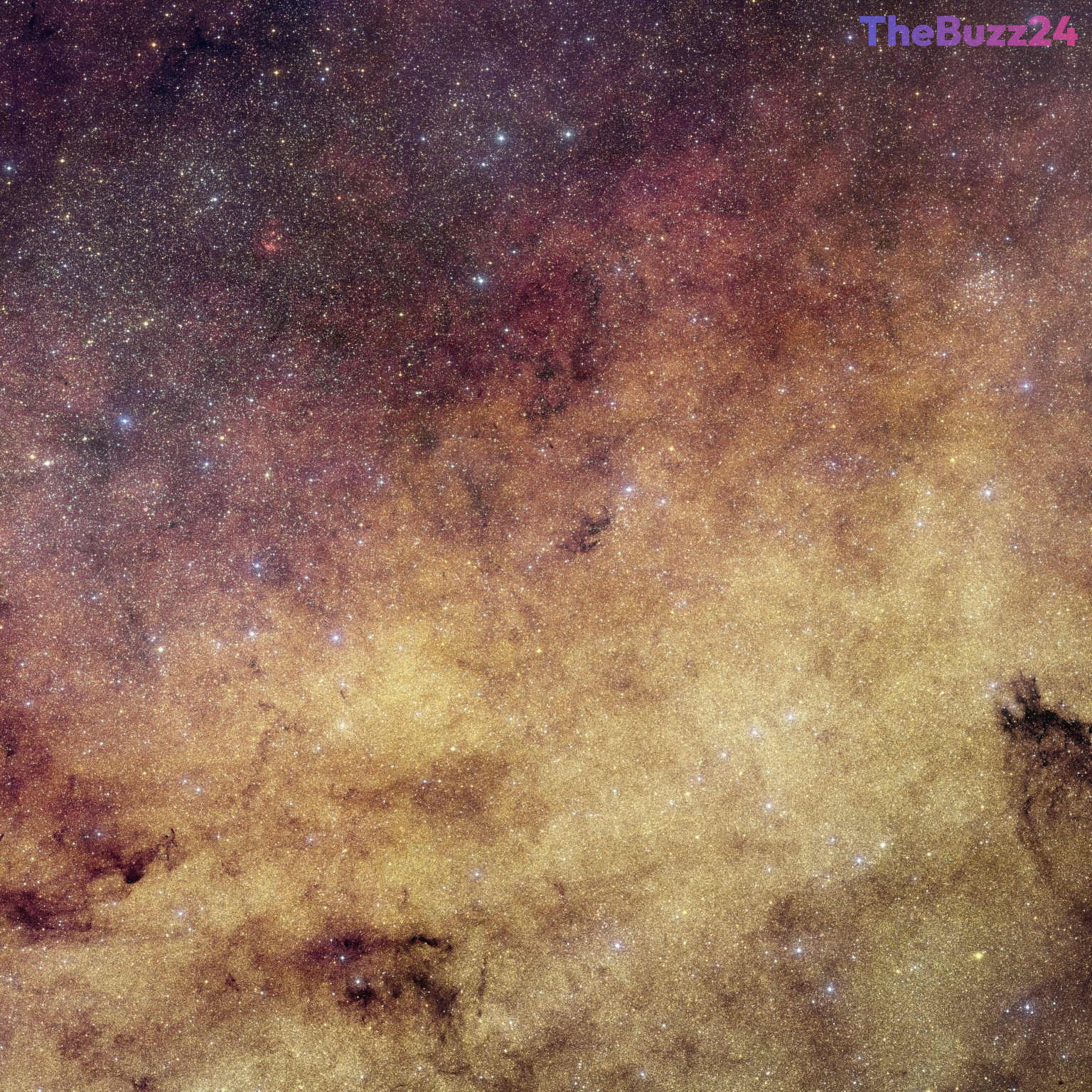
A groundbreaking collaboration between two major space missions is set to revolutionize our understanding of the Milky Way. By utilizing a rare, one-day observational detour from the Euclid mission, astronomers have captured a high-resolution snapshot of the galactic heart. This data serves as a critical precursor to the upcoming Galactic Bulge Time-Domain Survey, which will be conducted by the Nancy Grace Roman Space Telescope. By combining these datasets, researchers are effectively extending the observation timeline, providing a deeper and more comprehensive view of the galaxy’s center than previously possible.
The primary goal of this joint effort is to enhance the detection of elusive cosmic phenomena, such as isolated black holes and rogue planets. These objects are notoriously difficult to spot because they do not emit their own light. However, through a process known as gravitational microlensing—where the gravity of a massive object bends the light of a distant star—scientists can identify these hidden gems. The extended observation window provided by the Euclid data allows researchers to track the subtle movements of these objects over time, making it easier to calculate their mass and confirm their nature.
Beyond searching for exotic objects, this partnership is helping scientists refine models of the Milky Way’s structure. Mapping our own galaxy from within is a significant challenge, often compared to mapping a human body from the perspective of a single cell. By analyzing how stars move across the sky over several years, astronomers can better categorize stellar populations and understand the complex dynamics of the galactic plane. This coordinated approach establishes a new standard for future space missions, demonstrating that inter-mission cooperation can unlock scientific potential far exceeding the capabilities of individual telescopes.
Key Takeaways
- The Euclid mission provided a one-day snapshot of the Milky Way's core to act as a baseline for the upcoming Nancy Grace Roman Space Telescope survey.
- Combining data from both telescopes allows for a longer observation period, which is essential for detecting rogue planets and isolated stellar-mass black holes via gravitational microlensing.
- The collaboration helps astronomers better map the Milky Way's structure and test existing galactic models by tracking the long-term movement of stars.
Editor’s Analysis & Impact
The integration of data from Euclid and the Roman Space Telescope represents a paradigm shift in observational astronomy. By moving away from siloed mission operations, space agencies are maximizing the return on investment for multi-billion dollar hardware. The ability to ‘stitch’ observations together creates a synthetic long-term record that would otherwise be impossible to achieve within the constraints of a single mission’s lifespan. This strategy is particularly vital for time-domain astronomy, where the duration of observation is directly proportional to the quality of the data. As we look toward the future, this model of coordinated, multi-mission surveys will likely become the standard for deep-space exploration, enabling the discovery of transient events and low-luminosity objects that have historically remained hidden in the vastness of the galactic bulge.
Frequently Asked Questions
Q: What is gravitational microlensing?
A: It is a phenomenon where the gravity of a massive object, such as a star or black hole, acts like a lens, bending and magnifying the light of a more distant star as it passes behind it.
Q: Why is it difficult to map the Milky Way?
A: Mapping the Milky Way is challenging because we are located inside the galaxy, meaning our view is often obscured by thick dust and gas, and we lack the perspective of an external observer.
AI Disclosure: This article is based on verified data and official reports. Our Team and AI have cross-referenced every financial detail with primary sources to ensure total accuracy.
More from this Category