Curiosity Rover Commences New Drilling Campaign at Martian Site ‘Campo Marte’
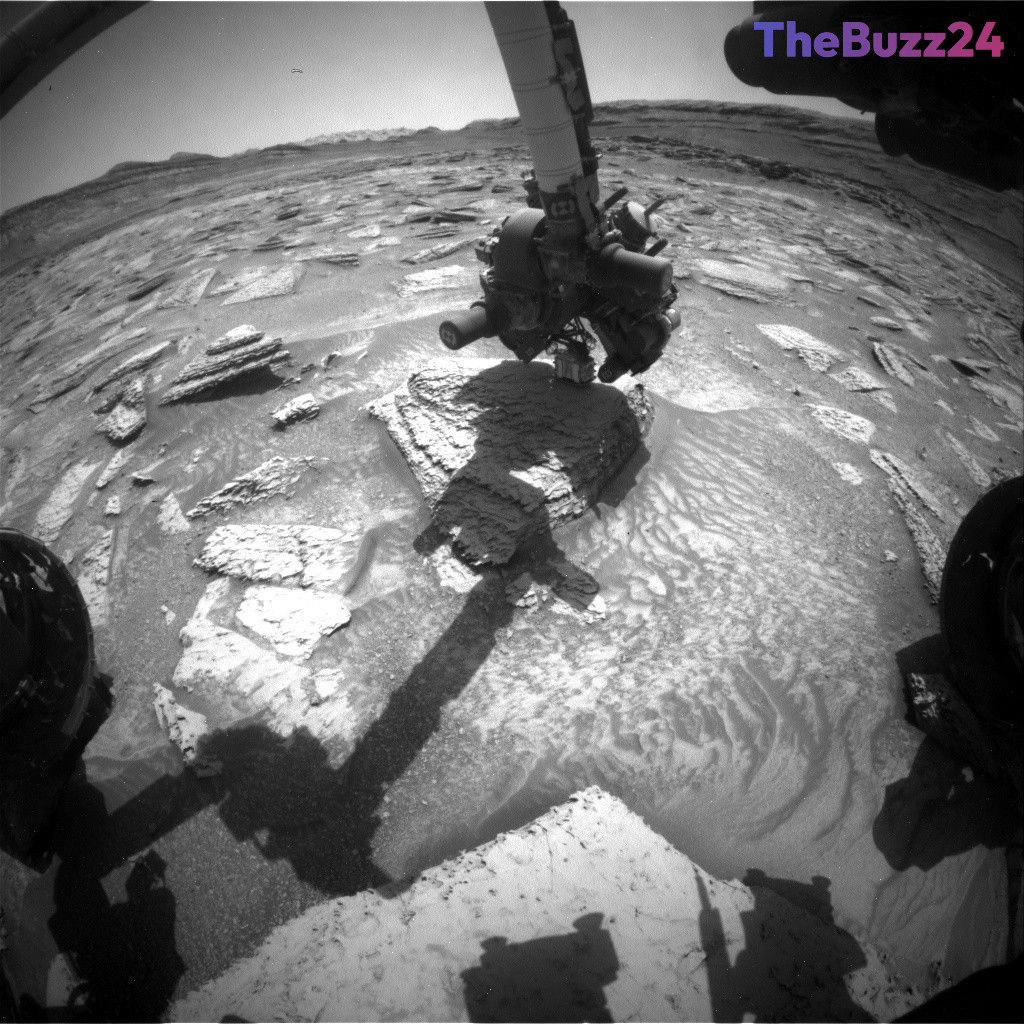
The Curiosity rover has officially initiated a fresh drilling campaign at a Martian location identified as ‘Campo Marte.’ Following the successful conclusion of research activities at the Atacama block, the rover has repositioned itself to this new site, which is characterized by a prominent layer of sulfate-bearing rock. Researchers anticipate that the geological data gathered here will provide deeper insights into the region’s environmental history, noting that the site’s structural thickness offers a more stable environment for drilling operations compared to previous targets.
To ensure the site is viable for sample extraction, the rover deployed its sophisticated instrument suite, including the Alpha Particle X-ray Spectrometer and the ChemCam laser-induced breakdown spectroscopy tool. These instruments performed a detailed chemical mapping of the rock, while the Mast Camera captured high-resolution imagery to verify the site’s integrity. The team expects the increased thickness of the Campo Marte layer to simplify the drilling process and ensure the safe retrieval of geological samples.
In addition to its primary research objectives, Curiosity recently served a vital supporting role during the Psyche spacecraft’s gravity-assist flyby of Mars. As the spacecraft maneuvered past the planet on its trajectory toward the asteroid 16 Psyche, the rover conducted synchronized atmospheric observations. By monitoring cloud patterns and measuring atmospheric opacity, Curiosity provided essential ground-truth data that allowed for the calibration of instruments aboard the passing spacecraft, further proving the rover’s enduring value to broader planetary science initiatives.
Key Takeaways
- Curiosity has begun a new drilling campaign at 'Campo Marte' to analyze sulfate-rich rock layers.
- The rover utilized advanced onboard sensors to map the site's chemical composition and ensure structural stability for drilling.
- Curiosity provided critical atmospheric data to help calibrate instruments on the Psyche spacecraft during its recent Mars flyby.
Editor’s Analysis & Impact
The ongoing operational success of the Curiosity rover underscores the immense value of long-term planetary exploration assets. By effectively balancing primary geological research with inter-mission support—such as the calibration assistance provided to the Psyche spacecraft—the rover remains a cornerstone of modern space exploration. The focus on sulfate-bearing rocks is particularly significant, as these minerals are key indicators of past water activity, which is essential to the search for signs of ancient habitability. As Curiosity continues to traverse the Martian surface, its ability to provide ground-truth data for orbital and flyby missions highlights the importance of a multi-layered approach to planetary science. This synergy between surface and orbital assets serves as a vital blueprint for future interplanetary missions, ensuring that data from various sources can be cross-referenced for greater accuracy.
Frequently Asked Questions
Q: Why is the Campo Marte site significant for the Curiosity mission?
A: Campo Marte contains sulfate-bearing rock layers that provide clues about the geological and environmental history of Mars, helping scientists understand the processes that shaped the planet's surface.
Q: How did Curiosity assist the Psyche spacecraft?
A: Curiosity performed synchronized atmospheric observations, such as recording cloud activity and measuring opacity, which helped validate the instruments and data-analysis pipelines on the Psyche spacecraft as it performed a gravity-assist flyby.
AI Disclosure: This article is based on verified data and official reports. Our Team and AI have cross-referenced every financial detail with primary sources to ensure total accuracy.
More from this Category