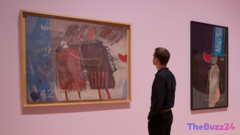
David Hockney’s Enduring Legacy: Art as a Bold Statement of Queer Identity and Joy
David Hockney, a towering figure in British art, made a profound statement early in his career with works that bravely depicted same-sex relationships at a time when homosexuality was still criminalized in the United Kingdom. His 1961 painting, “We Two Boys Together Clinging,” created as a second-year student at the Royal College of Art and inspired by a Walt Whitman poem, was a radical piece. It showcased a male couple, challenging societal norms and legal restrictions years before homosexuality was partially decriminalized in 1967, allowing private acts between men over 21.
Hockney continued to push boundaries throughout the 1960s, using his art to celebrate same-sex relationships and portray the quiet, everyday moments of gay domestic life. His style underwent a significant transformation after his first trip to California in 1964, leading to his iconic swimming pool series. Paintings like “Peter Getting Out of Nick’s Pool” (1966) and “Domestic Scene, Los Angeles” (1963) depicted nude men in serene, intimate settings, subtly normalizing queer sensuality and domesticity. These works, including the renowned “A Bigger Splash,” were lauded for their playful, joyous, and sensual qualities, presenting a vision of gay life that was both ordinary and beautiful.
Art commentators emphasize the crucial historical context of Hockney’s early work. At a time when popular culture often reduced gay men to isolated figures or caricatures, Hockney offered an alternative narrative of queer life as peaceful and domesticated. This act of artistic protest was vital in challenging stereotypes and providing new visual avenues for society to engage with ideas about homosexuality. His ability to depict gay relationships with such naturalness and affection helped to normalize experiences that were then largely unseen or misrepresented.
Throughout his career, Hockney remained an artist of unwavering radicalism. From his early depictions of gay love to his later explorations of humanity’s connection with nature and technology, his work consistently challenged cynicism and celebrated life’s beauty. Critics note that Hockney’s bold, curious, and colorful character remained consistent, ensuring that every iteration of his artistic output was as impactful and pioneering as his initial groundbreaking statements on queer identity.
Key Takeaways
- David Hockney's early art, like "We Two Boys Together Clinging" (1961), was a radical statement of queer identity at a time when homosexuality was illegal in the UK.
- His iconic swimming pool series, developed after his move to California, further normalized same-sex relationships by depicting everyday domesticity and joy.
- Hockney's work consistently challenged societal norms and stereotypes, offering a peaceful and authentic portrayal of gay life that profoundly impacted public perception and art history.
Editor’s Analysis & Impact
David Hockney’s pioneering work had a transformative impact on the art world, elevating queer themes into mainstream discourse and demonstrating the power of art as a tool for social commentary and change. His commercial success also proved the market viability of narratives that challenged traditional norms, influencing subsequent generations of artists to explore diverse identities and experiences. Looking ahead, Hockney’s legacy will continue to be a cornerstone in discussions about representation, identity, and the role of visual culture in shaping societal attitudes. As global conversations around LGBTQ+ rights evolve, his early, brave depictions remain a crucial historical reference, ensuring his works retain significant cultural and academic value. His contributions underscore how art can foster empathy and challenge prejudice, making his influence resonate far beyond the confines of galleries and museums.
Frequently Asked Questions
Q: Why was David Hockney's early work considered radical?
A: His early paintings, such as "We Two Boys Together Clinging" (1961), openly depicted same-sex relationships at a time when homosexuality was illegal in the UK, making them a bold act of protest and a challenge to prevailing social norms.
Q: How did his move to California influence his art?
A: After moving to California in 1964, Hockney's style evolved, leading to his famous swimming pool series. These works continued to explore themes of same-sex relationships but often with a focus on domesticity, sensuality, and the everyday joy of gay life, further normalizing these depictions.
Q: What is the lasting significance of Hockney's portrayal of queer life?
A: Hockney's art provided an alternative narrative to the often-stereotypical or isolated portrayals of gay men in popular culture. By depicting peaceful, domesticated, and joyful same-sex relationships, he helped to normalize queer lives and contributed significantly to the visibility and acceptance of the LGBT+ community in art and society.
AI Disclosure: This article is based on verified data and official reports. Our Team and AI have cross-referenced every financial detail with primary sources to ensure total accuracy.
More from this Category