Deep Space Discovery: TESS Mission Unlocks New Way to Find Distant Planets
In a significant breakthrough for space exploration, the Transiting Exoplanet Survey Satellite (TESS) has successfully identified a distant planetary system using a technique previously thought to be outside its operational capabilities. While the satellite is primarily designed to detect planets by monitoring the periodic dimming of stars as they pass in front of them, this latest discovery utilized gravitational microlensing—a phenomenon where the gravity of a foreground star acts as a cosmic magnifying glass to reveal the presence of a planet orbiting it.
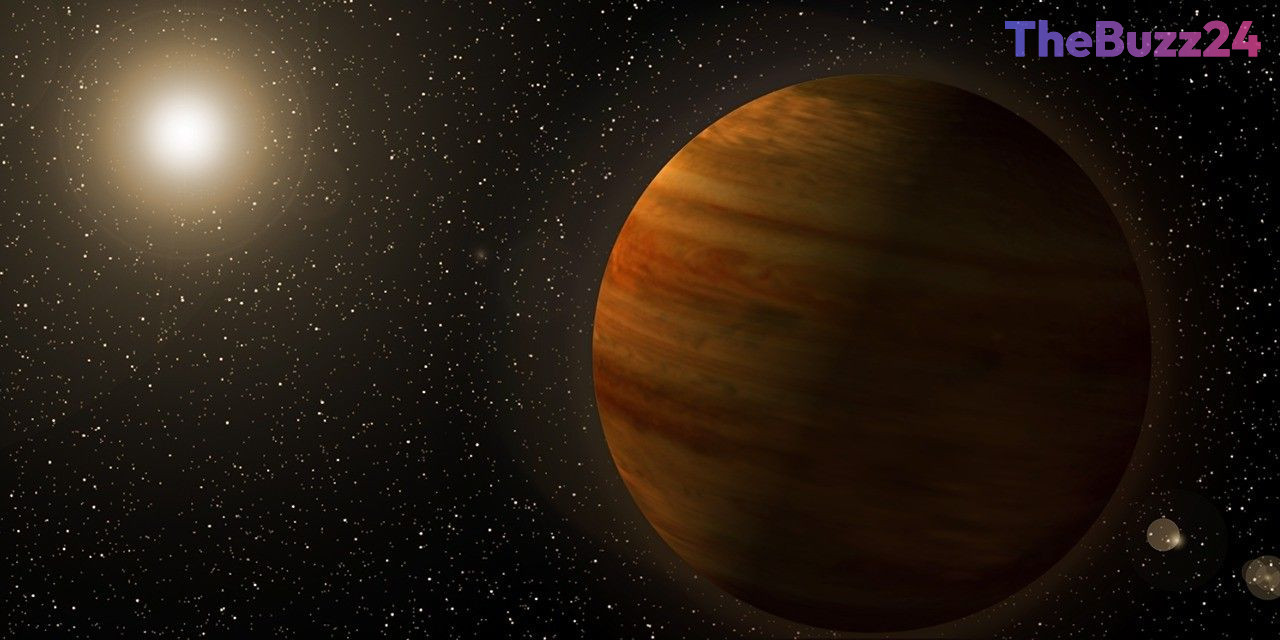
The newly discovered world, designated Gaia23bra b, is a super-Jupiter located approximately 40,000 light-years from Earth. This distance is vastly greater than the typical 150-light-year radius that TESS usually surveys. The planet was initially flagged by the Gaia space telescope, but it was the dense, high-frequency data collected by TESS that allowed researchers to confirm the presence of the planet by observing the specific light curve distortions caused by its gravitational influence.
This discovery marks a shift in how astronomers view the potential of existing space missions. By proving that TESS can effectively act as a tool for microlensing, researchers believe there may be a wealth of previously overlooked data waiting to be analyzed. This method provides a vital complement to the traditional transit technique, as it allows for the detection of planets at much greater orbital distances, offering a more comprehensive look at the diversity of planetary systems across the galaxy.
Looking ahead, this finding serves as a precursor to the capabilities of the upcoming Nancy Grace Roman Space Telescope. While the Roman mission will focus on the dense center of the Milky Way to conduct large-scale microlensing surveys, the ability of TESS to perform similar observations in different, less crowded regions of the galaxy provides a unique opportunity to study how planetary formation varies under different environmental conditions. This dual approach promises to significantly expand our understanding of how solar systems like our own are distributed throughout the universe.
Key Takeaways
- TESS successfully identified a distant planet using gravitational microlensing, a method outside its original primary mission scope.
- The planet, Gaia23bra b, is a super-Jupiter located 40,000 light-years away, far exceeding the satellite's standard 150-light-year search radius.
- This discovery demonstrates that TESS can complement future missions like the Nancy Grace Roman Space Telescope by surveying different regions of the galaxy.
Editor’s Analysis & Impact
The successful application of gravitational microlensing by TESS represents a major evolution in observational astronomy. By repurposing existing data streams to utilize a secondary detection method, the scientific community has effectively extended the lifespan and utility of current hardware without the need for additional launches. This development is particularly significant for the study of planetary demographics; while transit methods favor large planets close to their host stars, microlensing excels at finding planets at greater distances, including those in habitable zones. The broader implication is a more nuanced understanding of galactic planetary distribution. As we prepare for the Nancy Grace Roman Space Telescope, the ability to cross-reference data from different regions of the galaxy will be instrumental in determining how environmental factors, such as stellar density and radiation, influence the formation and stability of planetary systems.
Frequently Asked Questions
Q: What is gravitational microlensing?
A: Gravitational microlensing occurs when a foreground star passes in front of a more distant star from our perspective. The gravity of the nearer star bends the light of the background star, acting like a magnifying glass. If a planet is orbiting the foreground star, it creates a distinct, temporary spike in the brightness of the background star.
Q: Why is this discovery important for the TESS mission?
A: It proves that TESS is capable of detecting planets far beyond its intended 150-light-year search radius. This allows scientists to use TESS data to study planetary populations in diverse regions of the galaxy that were previously considered unreachable by the satellite.
AI Disclosure: This article is based on verified data and official reports. Our Team and AI have cross-referenced every financial detail with primary sources to ensure total accuracy.
More from this Category