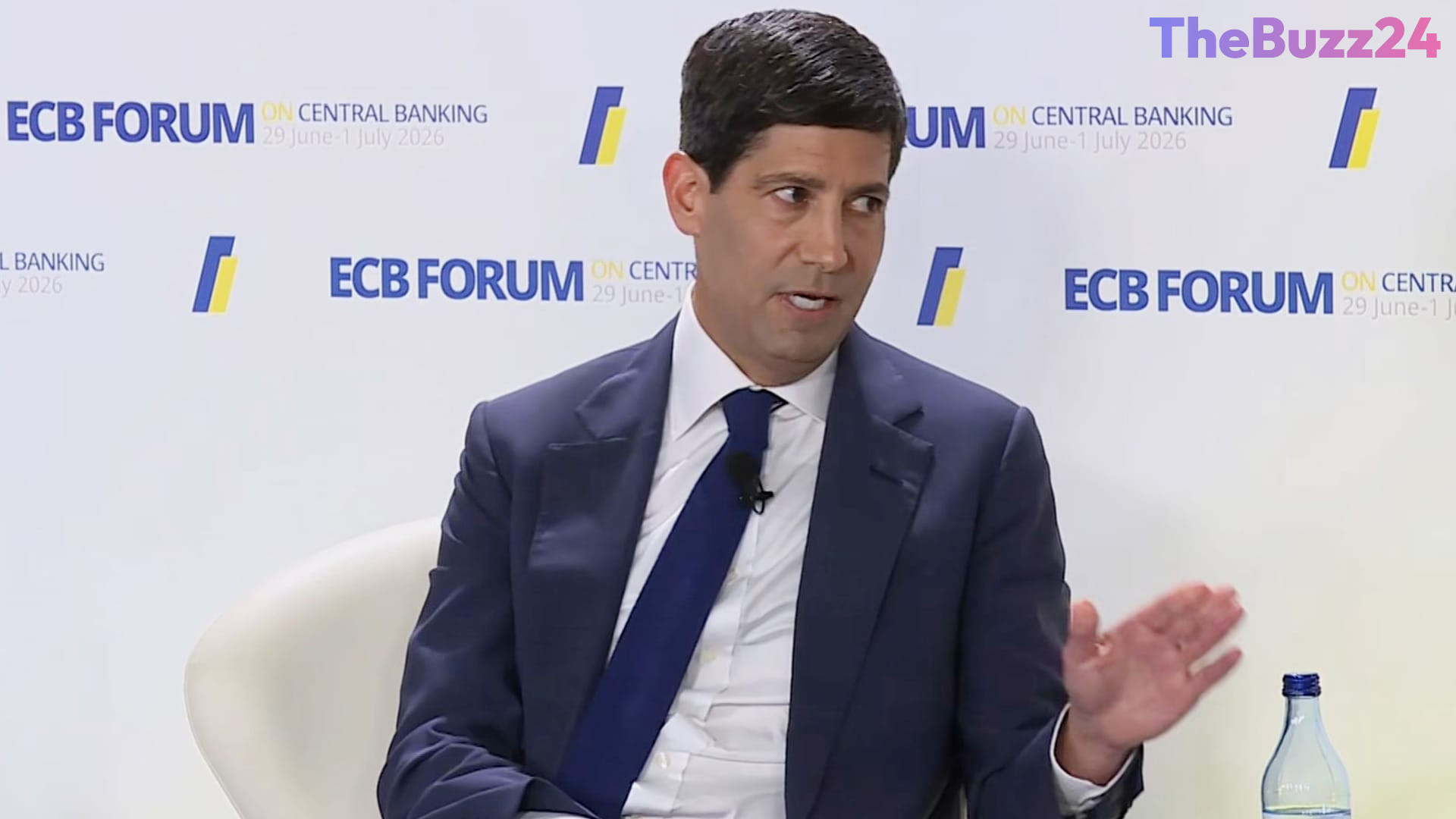
Federal Reserve Chief Warsh: Inflation ‘Too High,’ AI to Reshape Policy
Federal Reserve Chairman Kevin Warsh recently addressed the ECB Forum on Central Banking in Sintra, Portugal, emphasizing that inflation remains “too high” while deliberately refraining from signaling the central bank’s potential actions at its upcoming meeting later this month. Warsh underscored the universal commitment among central bankers to price stability, noting that despite open-mindedness towards advancements in AI and productivity, the current economic reality points to elevated prices.
In a significant move towards modernizing the institution, Chairman Warsh outlined his vision for a technologically advanced Federal Reserve. He announced that staffing for the five task forces, established last month to scrutinize various functions of the Fed, would be revealed next week. Warsh expressed an aspiration that within nine to twelve months, the central bank would be leveraging new technologies, including artificial intelligence, to achieve a real-time, contemporaneous understanding of the economy, thereby enabling more informed policy decisions. A long-standing critic of conventional data tools, Warsh aims to chart a new course for how the Fed utilizes data in its policy framework. He also firmly reiterated the Federal Reserve’s unwavering independence, asserting that its operational autonomy would remain unchanged despite any external pressures.
The forum also featured insights from other prominent central bank leaders. European Central Bank President Christine Lagarde highlighted the symbiotic relationship between Europe and the U.S. in the realm of AI, stating they are “hostage to each other” for progress, with Europe providing a crucial market for frontier companies. Lagarde also justified the ECB’s recent rate hike, citing a unanimous decision driven by an upward trend in inflation outlooks and core inflation. Bank of England Governor Andrew Bailey detailed the financial stability risks central bankers are actively monitoring, including increased leverage in core government bond and equity markets, as well as private credit. Bailey also noted the divergence between bond yields and equity markets, identifying frontier AI as a key factor influencing asset valuations and overall economic dynamics.
Key Takeaways
- Federal Reserve Chairman Kevin Warsh emphasized that inflation remains "too high" but refrained from signaling future interest rate decisions.
- Warsh announced plans to transform the Fed's data utilization, aiming to integrate new technologies like AI for real-time economic understanding and improved policy-making within 9-12 months.
- Other central bank leaders, including ECB President Christine Lagarde and BoE Governor Andrew Bailey, highlighted global economic challenges, the interconnectedness of AI development, and emerging financial stability risks.
Editor’s Analysis & Impact
Chairman Warsh’s remarks reinforce the Federal Reserve’s persistent focus on combating inflation, signaling that price stability remains a top priority despite broader economic considerations. His ambitious plan to integrate AI and new technologies into the Fed’s analytical framework could mark a significant paradigm shift, potentially leading to more agile and data-driven monetary policy decisions in the future. This move could also spur innovation in financial data and analytics sectors. The global central banking community’s discussions at the forum underscore a shared recognition of evolving challenges, from managing inflation in a complex geopolitical landscape to navigating the profound economic implications of artificial intelligence. The affirmation of the Fed’s independence is crucial for maintaining market confidence and policy credibility, especially in an environment of increasing political scrutiny.
Frequently Asked Questions
Q: What was Federal Reserve Chairman Kevin Warsh's main concern at the ECB Forum?
A: Chairman Warsh primarily expressed concern that inflation remains "too high" and reiterated the central bank's commitment to price stability, though he did not hint at specific upcoming policy decisions.
Q: How does Kevin Warsh plan to modernize the Federal Reserve's operations?
A: Warsh plans to establish five task forces and integrate new technologies, particularly artificial intelligence, to gain a more contemporaneous and real-time understanding of the economy, aiming for better policy decisions within 9-12 months. He also seeks to move away from conventional data tools.
Q: What did other central bank leaders discuss regarding global economic challenges?
A: ECB President Christine Lagarde highlighted the interdependence of Europe and the U.S. in AI development, while Bank of England Governor Andrew Bailey pointed to rising leverage in bond and equity markets and the need to monitor asset valuations and tail risks, with AI being a key factor.
AI Disclosure: This article is based on verified data and official reports. Our Team and AI have cross-referenced every financial detail with primary sources to ensure total accuracy.
More from this Category