Defense Secretary Hegseth Discloses Over $3.1 Million in Assets, Including Significant Bitcoin Holdings
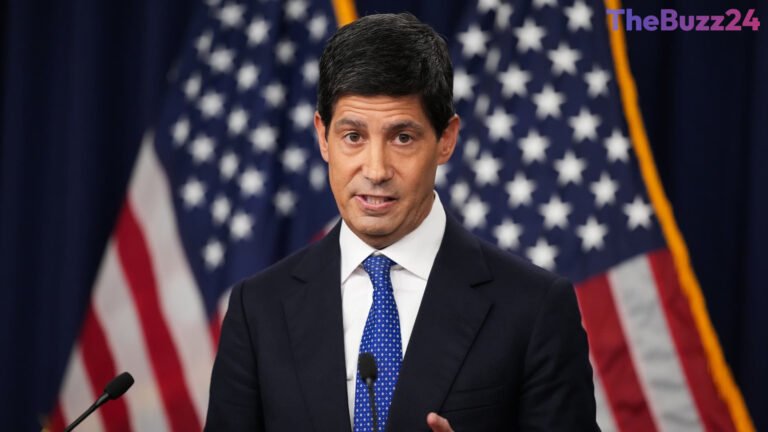
Defense Secretary Pete Hegseth has revealed a substantial financial portfolio, reporting a minimum of $3.1 million in cash, retirement investments, and Bitcoin in his latest annual financial disclosure for 2025. The filing, released by the Office of Government Ethics, offers a snapshot of the assets held by the former television personality who assumed his role as Defense Secretary in January 2025.
Among the disclosed assets, a single bank account holds over $1 million, a notable increase from the $15,001-$50,000 range reported for a similar account in his 2024 nominee filing. The family’s investment strategy also saw a significant shift, with the purchase of $1.41 million to $3.05 million in exchange-traded funds (ETFs) during 2025. This move followed the divestment of more than two dozen individual stocks, a common practice for high-ranking officials to mitigate potential conflicts of interest.
The disclosure further details five retirement accounts collectively valued between $2.05 million and $4.35 million. Hegseth’s personal retirement accounts comprise approximately $500,000 to $1.25 million of this total, while his wife, Jennifer Hegseth, holds an estimated $1.55 million to $3.1 million across two rollover individual retirement accounts. Additionally, the household reported three cash accounts, including the aforementioned account exceeding $1 million, and Bitcoin holdings estimated between $16,000 and $65,000.
While the broad ranges used in financial disclosures prevent an exact calculation of wealth changes, the new filing indicates a significant increase in readily available cash. The reshuffling of investments, including the sale of shares in defense contractors like Lockheed Martin and Northrop Grumman, aligns with typical ethical requirements for new cabinet members. The disclosure also lists two mortgages, each valued between $1 million and $5 million, with one on their primary residence carrying an 8.5% interest rate.
Key Takeaways
- Defense Secretary Pete Hegseth reported a minimum of $3.1 million in assets, including cash, investments, and Bitcoin.
- A significant portion of his disclosed assets is held in cash, with one bank account exceeding $1 million.
- Hegseth's family reshuffled investments in 2025, selling individual stocks and purchasing ETFs, a common practice to avoid conflicts of interest.
Editor’s Analysis & Impact
The financial disclosure from Defense Secretary Pete Hegseth highlights the significant personal wealth managed by high-ranking government officials and the common practice of portfolio adjustments to adhere to ethical standards. The substantial increase in cash holdings and the strategic shift towards ETFs suggest a proactive approach to managing assets and potential conflicts of interest. The inclusion of Bitcoin, though a relatively small portion of the total assets, reflects the growing presence of digital currencies in mainstream investment portfolios. This disclosure underscores the importance of transparency in public service and the complex financial landscapes navigated by those in positions of power.
Frequently Asked Questions
Q: What is an annual financial disclosure?
A: An annual financial disclosure is a report required by law for certain government officials, including cabinet secretaries, to disclose their financial interests. This includes assets, liabilities, and income, providing transparency and helping to identify potential conflicts of interest.
Q: Why do officials sell individual stocks when taking office?
A: Officials often sell individual stocks, particularly those of companies that might be regulated by or do business with their department, to avoid the appearance or reality of conflicts of interest. Investing in diversified funds like ETFs is a common alternative.
Q: What are exchange-traded funds (ETFs)?
A: Exchange-traded funds (ETFs) are a type of investment fund that holds assets such as stocks, bonds, or commodities. ETFs trade on stock exchanges, much like individual stocks, and offer diversification benefits.
AI Disclosure: This article is based on verified data and official reports. Our Team and AI have cross-referenced every financial detail with primary sources to ensure total accuracy.
More from this Category