Devastating 7.8 Magnitude Earthquake Claims Dozens in Southern Philippines
A powerful 7.8 magnitude earthquake struck off the coast of Mindanao, the Philippines’ second-largest island, resulting in at least 35 confirmed fatalities and widespread destruction. The seismic event, which occurred early Monday morning, triggered immediate tsunami alerts across the region, including warnings for Indonesia, Japan, and Australia, though these were later downgraded or lifted as the threat subsided.
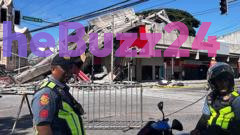
The impact on Mindanao, home to approximately 26 million people, has been severe. Local authorities report that at least 134 individuals have sustained injuries, and roughly 10,000 families have been displaced from their homes. Visual evidence from the affected areas shows significant structural damage, including the collapse of commercial buildings and reports of landslides. In response to the crisis, President Ferdinand Marcos Jr. has mobilized national disaster response agencies and ordered the suspension of classes across the impacted regions to ensure student safety.
Following the initial tremor, the region has been rattled by more than 130 aftershocks, with some reaching magnitudes as high as 6.7. While the Philippines is located along the geologically active ‘Ring of Fire’ and frequently experiences seismic activity, this event ranks among the more destructive in recent years. Disaster management teams continue to verify casualty figures and coordinate relief efforts, with the government pledging full support for the recovery and reconstruction of the affected communities.
Key Takeaways
- A 7.8 magnitude earthquake in Mindanao has resulted in 35 confirmed deaths and over 130 injuries.
- The disaster has displaced approximately 10,000 families and caused significant structural damage to buildings and infrastructure.
- Over 130 aftershocks have been recorded, complicating rescue efforts and keeping the region on high alert.
Editor’s Analysis & Impact
The earthquake in Mindanao highlights the persistent vulnerability of the Philippines to high-magnitude seismic events due to its location on the Pacific Ring of Fire. From an economic and infrastructure perspective, the destruction of commercial hubs and the displacement of thousands of families will place significant strain on local resources and the national budget for emergency relief. The immediate suspension of the school year underscores the disruption to social and educational stability. Moving forward, the focus will shift from search and rescue to long-term reconstruction. This event serves as a critical reminder for the region to bolster its disaster-resilient infrastructure and early-warning systems, as the frequency of such events necessitates a more robust, proactive approach to urban planning and emergency preparedness to mitigate future humanitarian and economic losses.
Frequently Asked Questions
Q: Was there a significant tsunami threat following the earthquake?
A: Yes, tsunami alerts were issued for the Philippines, Indonesia, Japan, and Australia immediately following the quake. However, these warnings were later downgraded or cancelled after only minor wave activity was observed.
Q: How is the government responding to the disaster?
A: President Ferdinand Marcos Jr. has mobilized national disaster response agencies to assist in the recovery, pledged government support for the affected areas, and ordered the suspension of classes to ensure the safety of students.
AI Disclosure: This article is based on verified data and official reports. Our Team and AI have cross-referenced every financial detail with primary sources to ensure total accuracy.
More from this Category