Curiosity Rover Resumes Ascent Up Mount Sharp Following Geological Detour
The Mars Curiosity rover has officially returned to its primary mission objectives, resuming its continuous ascent up Mount Sharp after taking a temporary diversion to investigate a fascinating erosional surface within Gale Crater. As the Martian landscape transitions into the autumn season, researchers are observing a steady drop in local temperatures alongside a favorable decrease in the likelihood of severe dust storms, though vigilant monitoring remains a top priority.
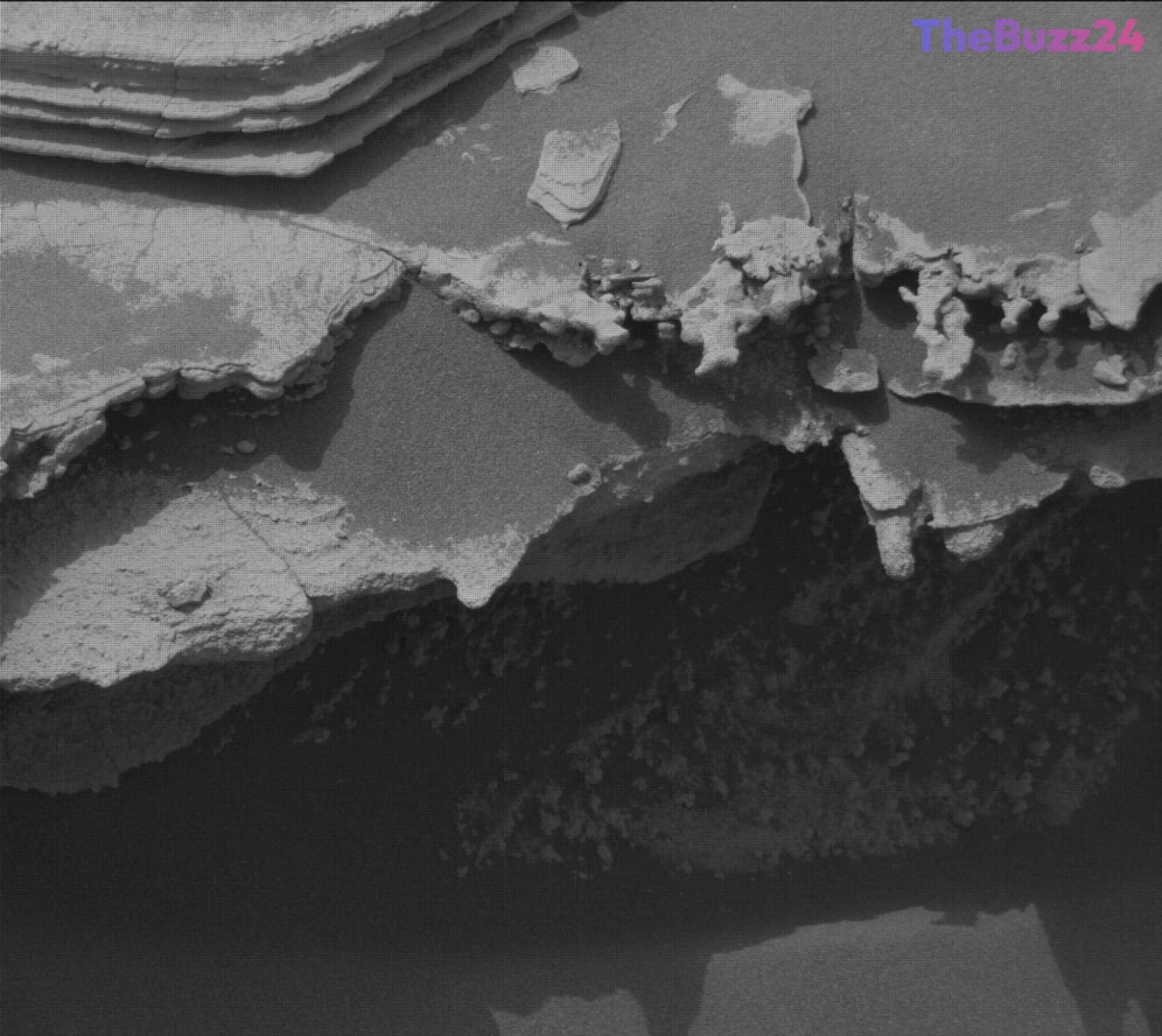
During recent operational cycles spanning Sols 4982 to 4987, the robotic explorer successfully executed a series of intricate geological analyses. Investigators utilized the Mars Hand Lens Imager (MAHLI) to capture detailed imagery of distinct features such as the underside of the ‘Tres Morros’ target. Meanwhile, the Alpha Particle X-ray Spectrometer (APXS) conducted vital compositional measurements on bedrock targets like ‘El Motacusal’ and ‘Alto de Carmen.’ The rover’s ChemCam instrument suite also performed extensive laser-induced breakdown spectroscopy on multiple rock formations, further expanding humanity’s understanding of the Martian crust’s mineralogical makeup.
Navigating the rugged terrain presented minor tactical challenges when the rover’s left-front wheel perched upon a small rock, necessitating careful safety calculations prior to deploying the robotic arm. Despite these postural constraints, the science team safely completed contact science on alternate bedrock targets including ‘Mamorecillo’ and ‘Aguas Claras.’ Following these analyses, Curiosity completed a successful drive of roughly 150 feet toward the southwest, maintaining its steady upward trajectory.
Environmental monitoring continues to play a critical role in the ongoing mission success. High-resolution Mastcam and Navcam operations have been deployed extensively to measure atmospheric optical depth and conduct thorough dust-devil surveys. By keeping a watchful eye on potential late-season atmospheric disturbances, mission operators ensure the rover remains well-protected as it pushes deeper into the stratigraphy of Mount Sharp.
Key Takeaways
- The Curiosity rover has resumed its journey up Mount Sharp after wrapping up a localized geological investigation.
- Mission specialists successfully conducted contact science and remote sensing on various bedrock targets despite minor terrain positioning challenges.
- Comprehensive atmospheric monitoring protocols remain active to detect any late-season Martian dust storms.
Editor’s Analysis & Impact
The ongoing mission of the Curiosity rover continues to provide invaluable geological and atmospheric data from Gale Crater, significantly enhancing our long-term understanding of Martian environmental history. As the rover navigates complex terrain like the foothills of Mount Sharp, engineering challenges such as wheel positioning offer continuous lessons in autonomous and remote robotic operations. These incremental discoveries not only feed into planetary science databases but also lay crucial groundwork for future human and robotic exploration initiatives across the red planet.
Frequently Asked Questions
Q: What is the primary mission of the Curiosity rover at this stage?
A: Curiosity is currently focused on ascending Mount Sharp within Gale Crater, analyzing geological strata, and monitoring the Martian atmosphere and climate.
Q: How do scientists monitor dust storms on Mars using Curiosity?
A: The rover utilizes its Mastcam, Navcam, and APXS instruments to measure atmospheric optical depth, capture suprahorizon cloud movements, and conduct extensive dust-devil surveys.
AI Disclosure: This article is based on verified data and official reports. Our Team and AI have cross-referenced every financial detail with primary sources to ensure total accuracy.
More from this Category