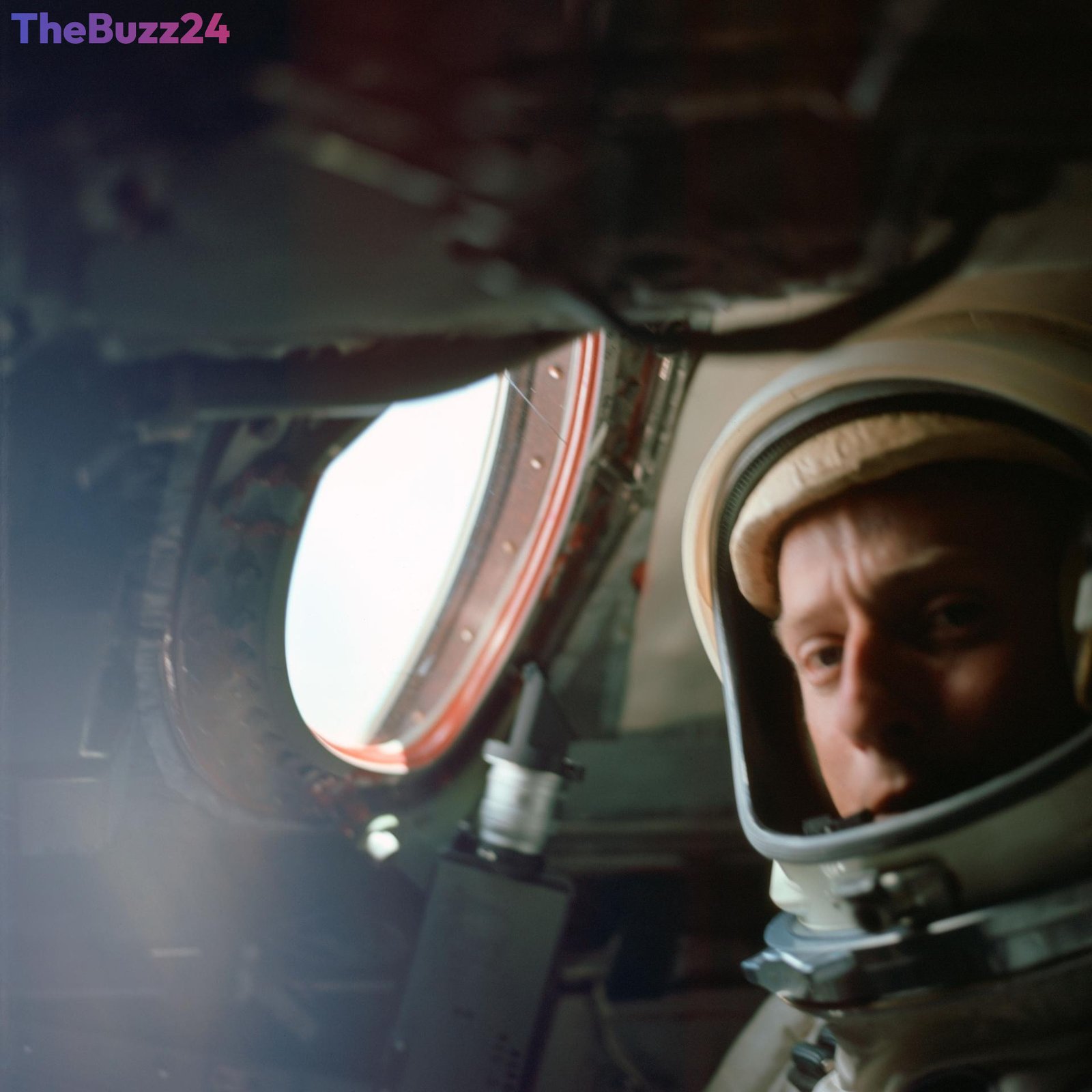
Did Early Astronauts Hallucinate? Gemini Missions Tested Earth Vision from Orbit
In the early days of space exploration, astronauts reported seeing remarkably detailed objects on Earth from orbit, leading some mental health professionals to question their sanity. Claims from astronauts like L. Gordon Cooper Jr. during the Mercury missions, who asserted he could see vehicles and trains from approximately 100 miles above the planet, were met with skepticism. Vision experts at the time estimated that individuals with standard 20/20 vision would be unable to discern objects smaller than 150 feet across at such altitudes, casting doubt on the astronauts’ extraordinary visual claims.
To address these concerns and scientifically validate the astronauts’ observations, NASA conducted specialized visual acuity experiments during the Gemini V and Gemini VII missions. These experiments involved two key components. One utilized an optical device, similar to binoculars, where astronauts identified the orientation of rectangles presented at varying contrast levels. The second, more ambitious part involved creating massive “Eye-Q” charts on the ground. These charts, composed of enormous white rectangles ranging from 150 to 600 feet in length, were strategically placed in Laredo, Texas, and near Carnarvon, Australia. Astronauts were tasked with identifying the orientation of these ground-based shapes from orbit.
Despite challenges such as cloudy weather, window glare, and unfavorable orbital alignments, the Gemini astronauts were able to observe portions of the Laredo “Eye-Q” site. Their reports, combined with the results from the in-flight vision testing instruments, confirmed that astronauts could indeed discern features like roads and ships with wakes from orbit. Crucially, these experiments also demonstrated that prolonged spaceflight, up to two weeks, did not negatively impact astronauts’ vision, dispelling fears of space-induced visual degradation.
The implications of these visual acuity experiments extended far beyond verifying astronaut reports. The ability to accurately observe and photograph Earth from space opened up significant possibilities for scientific disciplines like geology, geography, and oceanography. The data and images gathered fueled the development of advanced Earth-observing instruments and ultimately contributed to the creation of programs like the Earth Resources Technology Satellite (ERTS), later known as Landsat 1. This marked a pivotal step in utilizing space technology for comprehensive planetary monitoring, from crop inventories and geological mapping to disaster management and oceanographic studies, a mission NASA continues to pursue.
Key Takeaways
- Early astronauts' claims of seeing detailed objects on Earth from orbit were initially met with skepticism and concerns about their mental state.
- Gemini missions conducted visual acuity experiments, including ground-based "Eye-Q" charts, to scientifically test astronauts' ability to see details from space.
- The experiments validated astronauts' vision, confirmed their ability to see significant terrestrial features from orbit, and paved the way for Earth-observing satellite programs like Landsat.
Editor’s Analysis & Impact
The Gemini visual acuity experiments represent a critical, yet often overlooked, milestone in understanding human capabilities in space and the potential for Earth observation. By scientifically validating what astronauts could see, NASA not only debunked concerns about astronaut sanity but also laid the groundwork for a revolution in planetary science. The success of these tests directly influenced the development of sophisticated remote sensing technologies, transforming our ability to monitor Earth’s resources, environment, and changes from orbit. This historical validation underscores the profound connection between human spaceflight and our growing comprehension of our home planet.
Frequently Asked Questions
Q: What were the "Eye-Q" charts used for?
A: The "Eye-Q" charts were massive ground-based visual targets, composed of large white rectangles, created by Dow Chemical Corporation. They were used during the Gemini V and VII missions to test astronauts' ability to identify shapes and orientations of objects on Earth's surface from orbital altitudes.
Q: Did spaceflight negatively affect astronauts' vision according to the Gemini experiments?
A: No, the Gemini visual acuity experiments indicated that astronauts' vision did not deteriorate during spaceflights, even those lasting up to two weeks. This finding helped alleviate concerns about the long-term effects of space on human eyesight.
Q: How did these experiments influence future space programs?
A: The success of the Gemini visual acuity experiments in confirming astronauts' observational capabilities and the value of Earth imagery from space directly motivated the development of advanced Earth-observing instruments and led to the creation of satellite programs like Landsat, which revolutionized planetary monitoring.
AI Disclosure: This article is based on verified data and official reports. Our Team and AI have cross-referenced every financial detail with primary sources to ensure total accuracy.
More from this Category