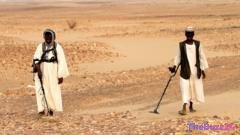
Dozens Feared Dead After Air Strikes Hit Gold Prospectors Near Egypt-Sudan Border
A human rights organization has reported that at least 72 individuals, engaged in artisanal gold prospecting, were killed in a series of air strikes near the Sudan-Egypt border. The incident occurred on Saturday in Sudan’s River Nile state, a region known for its gold mining activities. Emergency Lawyers, a group based in Khartoum, stated that jets targeted the miners at popular gold extraction sites. As of Sunday, neither the Egyptian government nor the Sudanese authorities have issued official comments on the matter.
This event brings to light previous allegations of similar deadly strikes along the border, which Cairo has previously faced accusations of conducting as part of efforts to curb illicit activities. Emergency Lawyers emphasized that these alleged attacks not only infringe upon Sudan’s territorial sovereignty but also highlight a perceived lack of governmental control in the region. The group issued a statement asserting that the deliberate targeting of unarmed civilians constitutes a violation of international humanitarian law and the right to life, potentially amounting to war crimes. They cautioned that the reported death toll is preliminary and may increase.
Reports from the Sudan Tribune suggest the actual number of casualties could be significantly higher, with a survivor indicating numerous injuries. Eyewitness accounts describe the attack commencing around 6:00 AM local time, involving multiple missiles striking miners’ camps and excavation pits, trapping individuals inside. This incident echoes claims from June, where Egyptian forces were reportedly involved in similar attacks using drones and artillery on artisanal mining sites in the same area, following earlier reports of Egyptian border guards using force to disperse mine workers.
In the wake of these allegations, Egypt’s border agency announced a comprehensive security operation along the border to combat illegal migration, drug smuggling, and illegal mining. Concurrently, Sudan’s de facto leader pledged an investigation into the alleged strikes. The underlying issue appears to be the significant role gold plays in the region, particularly with Sudan’s ongoing civil war fueling a rise in often dangerous artisanal mining. These mining sites are frequently located in remote, border areas with historical smuggling routes, raising concerns that artisanally mined gold could be feeding into illicit channels, potentially impacting legitimate markets and even providing income for armed groups.
Key Takeaways
- At least 72 artisanal gold prospectors were reportedly killed in air strikes near the Sudan-Egypt border.
- A human rights group has called the attacks potential war crimes and a violation of international law.
- The incident highlights ongoing tensions and security operations along the border, linked to illegal mining and smuggling.
Editor’s Analysis & Impact
This tragic incident underscores the volatile intersection of resource extraction, border security, and regional conflict. The alleged air strikes on artisanal miners near the Egypt-Sudan border raise serious questions about international humanitarian law and state responsibility. The surge in artisanal mining, exacerbated by Sudan’s civil war, creates a complex environment where illicit activities, including gold smuggling, can flourish. This can destabilize legitimate markets and potentially fund armed groups. Egypt’s stated focus on border security and combating illegal mining, coupled with Sudan’s internal conflict, suggests a continued risk of such violent confrontations. The lack of immediate official comment from either nation further complicates the situation, emphasizing the need for transparent investigations and adherence to international standards.
Frequently Asked Questions
Q: What is artisanal gold mining?
A: Artisanal gold mining refers to small-scale gold extraction typically carried out by individuals or small groups using basic tools and methods, often without formal permits or government oversight. It is common in many developing countries and can be a significant source of income but also carries substantial risks.
Q: Why is the border region between Egypt and Sudan significant for gold mining?
A: The border region is known to be rich in gold deposits. Historically, these porous borders have also been used for smuggling activities. The ongoing civil war in Sudan has led to an increase in artisanal mining in these remote areas, potentially creating a nexus between illicit mining, smuggling, and regional security concerns.
Q: What are the potential implications of illicit gold mining in the region?
A: Illicit gold mining and smuggling can undermine legitimate economies, deprive governments of revenue, and potentially provide funding for armed groups or criminal organizations. It also poses significant risks to the miners themselves due to dangerous working conditions and potential conflicts with authorities or other groups.
AI Disclosure: This article is based on verified data and official reports. Our Team and AI have cross-referenced every financial detail with primary sources to ensure total accuracy.
More from this Category