Drone Delivery Takes Flight: Uber Eats and Zipline Launch in Texas, Targeting Million Daily Deliveries by 2029
Uber Eats customers in a Houston suburb can now experience a new era of food delivery, as Zipline drones commence commercial operations. This marks the first official launch under a strategic partnership between Uber and the autonomous drone delivery innovator, initially rolling out in Spring, Texas, before expanding to Dallas. The collaboration harbors ambitious plans, aiming to introduce drone delivery services in dozens of additional U.S. cities and collectively achieve one million deliveries per day using Zipline’s advanced drones by the close of 2029.
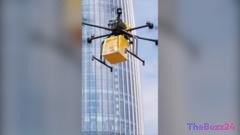
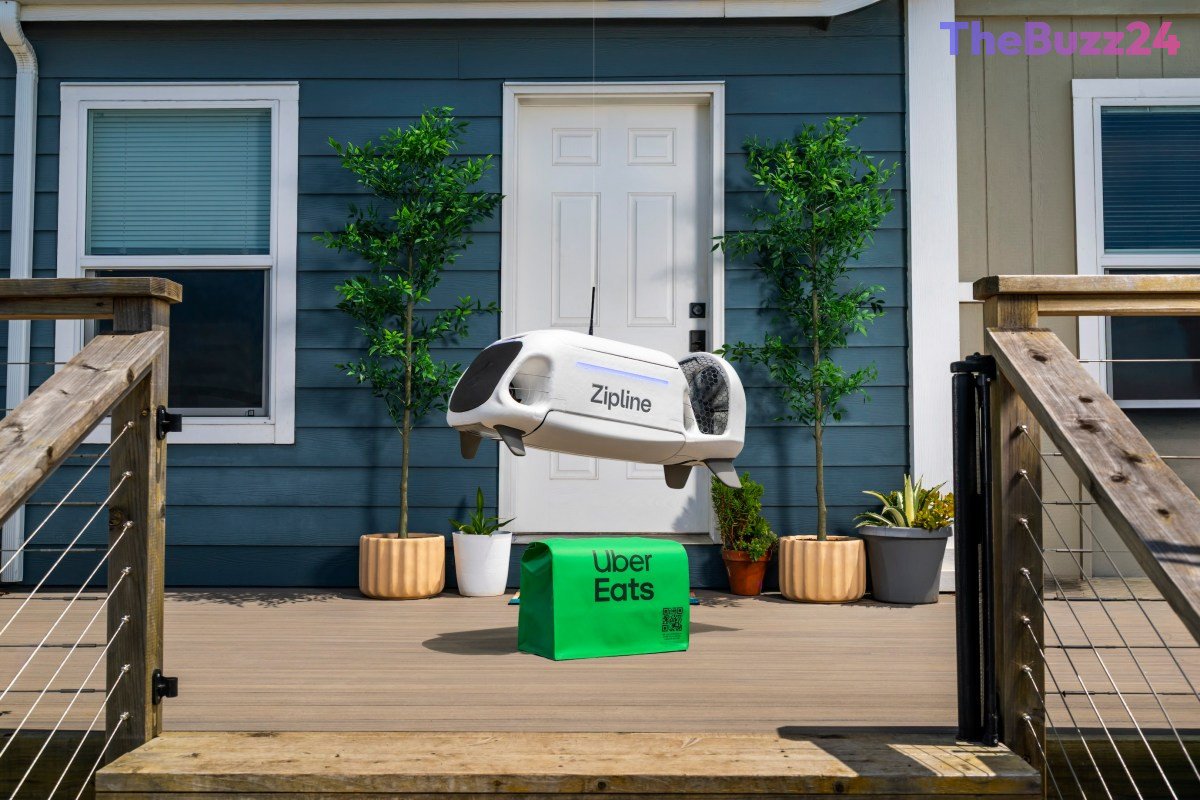
Zipline’s long-range autonomous drones are engineered to transport food orders weighing up to eight pounds, cruising approximately 300 feet above ground at speeds reaching 70 miles per hour. Uniquely, these drones do not land; instead, they precisely lower orders, encased in a protective pod, to the customer’s designated location via a tether system. Customers within service areas can easily access this option through a dedicated “drone” icon on the Uber Eats app. Initial offerings in the Houston area include popular national chains like Jersey Mike’s and Zaxby’s, alongside local favorites such as Urban Bird and Abu Omar Halal. Zipline CEO and co-founder Keller Cliffton expressed the partnership’s vision, stating it will “create a new expectation for delivery in America.”
This nationwide expansion mirrors the aspirations of other major players in the drone delivery sector, including Alphabet-owned Wing and Amazon’s Prime Air service. However, the burgeoning industry faces scrutiny, with residents in some areas voicing concerns over potential noise pollution, disruption to wildlife, and risks to safety and privacy. Proponents of drone delivery argue for its societal benefits, emphasizing advantages such as reduced traffic congestion and enhanced convenience for consumers, who can receive forgotten items or takeout orders without needing to drive.
Despite years of development by companies like Zipline, which was founded in 2014 and initially focused on delivering blood in Rwanda before expanding to the U.S., the industry remains in its early stages of widespread adoption. Zipline’s U.S. operations scaled significantly after securing its Part 135 air carrier certification from the Federal Aviation Administration in 2022, a crucial regulatory milestone. Uber’s involvement extends beyond a commercial agreement, as the ride-hailing giant has also invested in Zipline. While the specific investment amount remains undisclosed, Zipline recently announced a substantial $1.5 billion funding round, led by Paradigm, WCM Investment Management, and Layer Global, with Uber among the key backers.
Key Takeaways
- Uber Eats and Zipline have launched commercial drone delivery in Spring, Texas, with plans to expand to Dallas and dozens more U.S. cities.
- The partnership aims to achieve one million drone deliveries per day by the end of 2029 using Zipline's autonomous drones.
- The nascent drone delivery industry faces challenges like public concerns over noise and privacy, alongside competition from companies like Wing and Prime Air.
Editor’s Analysis & Impact
The launch of Uber Eats and Zipline’s drone delivery service marks a significant milestone in the evolution of last-mile logistics, potentially reshaping the e-commerce and food delivery landscape. This commercial rollout validates the viability of drone technology for urban environments and signals a strong commitment from major players to scale these operations. The ambitious target of one million daily deliveries by 2029 suggests a future where drone delivery is a common convenience, driving further innovation and investment in autonomous systems. However, the industry must effectively address public concerns regarding noise, privacy, and safety to ensure widespread acceptance and regulatory support. Success in these areas could lead to reduced traffic congestion, faster delivery times, and a more efficient supply chain, fundamentally altering consumer expectations for speed and convenience.
Frequently Asked Questions
Q: Where is Uber Eats and Zipline's drone delivery service currently available?
A: The service initially launched in Spring, Texas, a Houston suburb, and is slated to expand to Dallas.
Q: What types of items can be delivered by Zipline drones?
A: Zipline drones can deliver food orders weighing up to eight pounds, using a tether system to lower items to the customer's location.
Q: What are the long-term goals of the Uber and Zipline partnership?
A: The companies aim to expand drone delivery services to dozens of U.S. cities and achieve one million deliveries per day by the end of 2029.
AI Disclosure: This article is based on verified data and official reports. Our Team and AI have cross-referenced every financial detail with primary sources to ensure total accuracy.
More from this Category