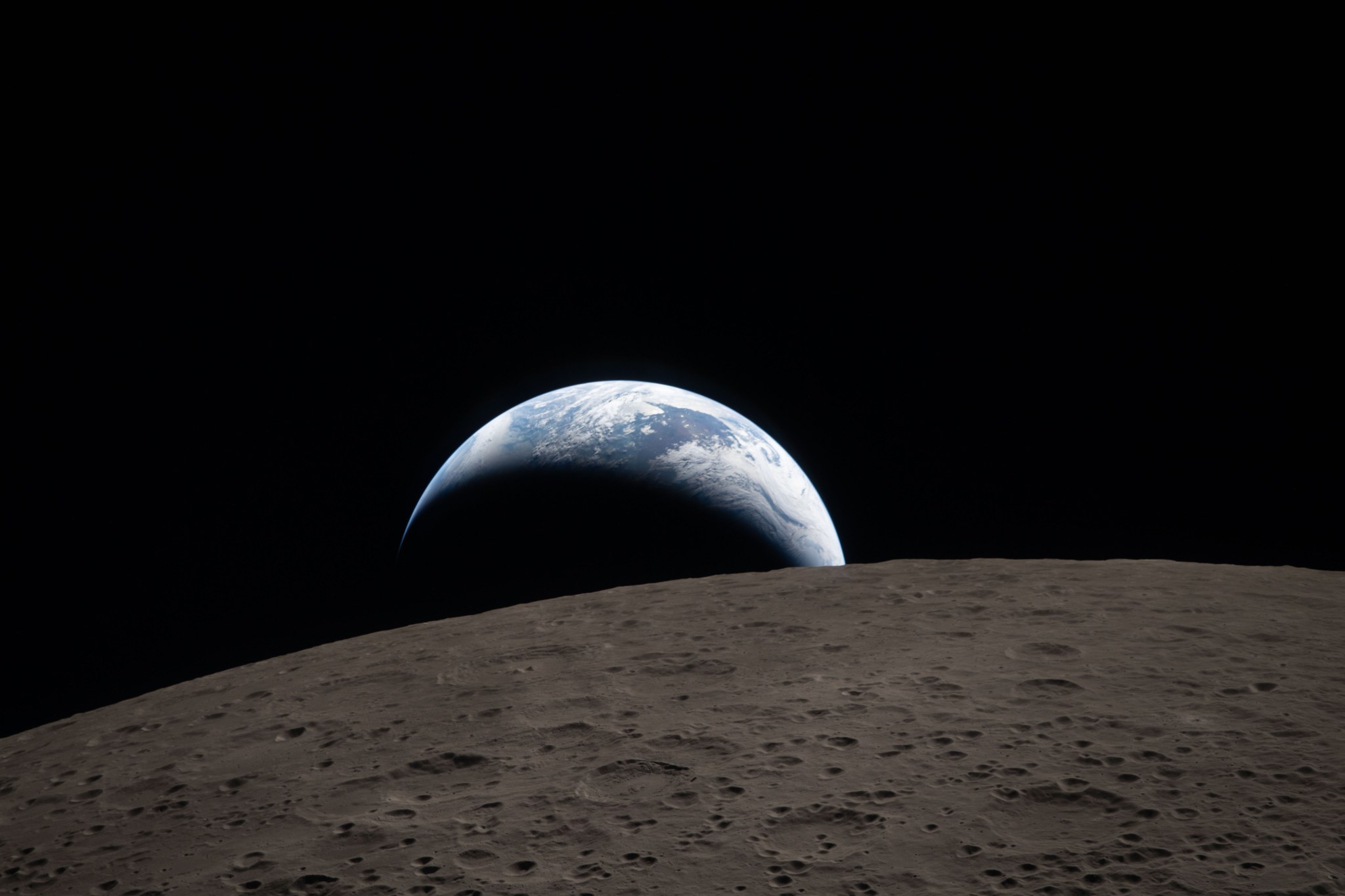
A New Dawn: Artemis II Crew Captures Breathtaking Earthset Over Lunar Horizon
On April 6, 2026, the crew of the Artemis II mission achieved a significant visual milestone, capturing a stunning image of Earth descending behind the lunar horizon. This perspective, recorded as the spacecraft navigated the far side of the Moon, offers a profound view of our home planet from the depths of space, marking a new chapter in lunar exploration.
Beyond the aesthetic beauty, the mission’s transit allowed for rigorous scientific observation. The astronauts documented various geological formations, including ancient lava flows, intricate surface ridges, and diverse impact craters. These high-resolution visual data points are vital for scientists attempting to decode the Moon’s mineralogical makeup and its long-term geological evolution.
This moment draws immediate parallels to the iconic ‘Earthrise’ photograph taken during the Apollo 8 mission decades ago. However, the Artemis II imagery utilizes modern sensor technology to provide even greater detail, bridging the gap between the pioneering era of spaceflight and the sophisticated era of deep-space research.
As humanity pushes further into the solar system, such imagery serves both as a scientific tool and a powerful reminder of our place in the cosmos. The mission continues to pave the way for sustained human presence on and around the Moon.
Key Takeaways
- Artemis II astronauts captured a historic 'Earthset' image while orbiting the Moon's far side.
- The mission provided critical geological data on lunar lava flows and crater structures.
- The imagery serves as a modern technological successor to the historic Apollo 8 'Earthrise' photo.
Editor’s Analysis & Impact
The successful capture of this imagery by the Artemis II crew signifies more than just a visual triumph; it represents the maturation of deep-space observational capabilities. By combining high-resolution geological mapping with the emotional resonance of seeing Earth from the lunar far side, the mission strengthens the scientific case for long-term lunar habitation. The ability to conduct real-time terrain analysis from orbit is a crucial precursor to more complex landing missions. As we move from merely visiting to establishing a presence, the data gathered regarding lunar mineralogy and surface stability will be the cornerstone of future lunar bases. This mission effectively bridges the gap between the experimental flights of the 20th century and the sustainable space economy of the 21st century.
Frequently Asked Questions
Q: What is the significance of the Earthset photo?
A: It provides a unique perspective of Earth from the lunar far side, similar to the historic Earthrise photo, while demonstrating modern imaging capabilities.
Q: How does this mission help scientific research?
A: The crew's observations of lunar ridges, craters, and lava flows provide essential data for understanding the Moon's geological history and composition.
AI Disclosure: This article is based on verified data and official reports. Our Team and AI have cross-referenced every financial detail with primary sources to ensure total accuracy.
More from this Category