Elon Musk’s Ambitious ‘Terafab’ Chip Foundry Faces $119 Billion Price Tag
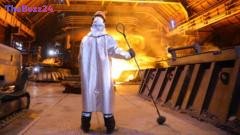
Elon Musk is moving forward with plans for an expansive semiconductor manufacturing complex in East Texas, known as the Terafab project. Recent public filings in Grimes County reveal that the initial phase of construction is estimated to cost $55 billion, with the potential for the total investment to balloon to $119 billion as the facility scales. The project, which was officially unveiled in March, aims to create a massive, centralized hub for logic, memory, and advanced chip packaging.
The proposed facility is designed to serve the hardware needs of Musk’s various ventures, including Tesla, SpaceX, and the artificial intelligence firm xAI. To support this massive undertaking, SpaceX has initiated discussions with local officials regarding property tax abatements, with a public hearing scheduled for early June. The strategic goal is to secure a reliable, domestic supply chain for high-performance chips, effectively insulating these companies from the geopolitical risks and capacity constraints currently plaguing global semiconductor markets.
Industry collaboration is already taking shape, with Intel confirmed to participate in the design and fabrication processes. This partnership marks a significant milestone for Intel’s foundry business, as it seeks to provide manufacturing capacity for external partners. By establishing Terafab, Musk intends to bypass the intense competition for manufacturing slots at major foundries like Taiwan Semiconductor Manufacturing Company (TSMC), where industry giants have already locked in production availability for years to come.
Key Takeaways
- The Terafab project in Texas is estimated to cost between $55 billion and $119 billion.
- The facility will serve as a centralized manufacturing hub for Tesla, SpaceX, and xAI to ensure supply chain independence.
- Intel has joined the project to assist in the design and fabrication of ultra-high-performance chips.
Editor’s Analysis & Impact
The Terafab project represents a bold vertical integration strategy that could fundamentally alter the semiconductor landscape. By moving from a consumer of chips to a manufacturer, Musk is attempting to solve the ‘bottleneck’ problem that currently limits the growth of AI and autonomous vehicle technologies. If successful, this move could set a precedent for other tech conglomerates to bring critical hardware production in-house, reducing reliance on third-party foundries. However, the sheer scale of the investment and the technical complexity of operating a world-class foundry present significant execution risks. The 15-year horizon suggests that this is not a short-term fix but a foundational shift in how Musk’s companies plan to maintain their competitive edge in an increasingly hardware-constrained global economy.
Frequently Asked Questions
Q: What is the primary purpose of the Terafab project?
A: Terafab is designed to manufacture high-performance chips for Tesla, SpaceX, and xAI, allowing these companies to control their own supply chain and mitigate geopolitical risks.
Q: Why is Intel involved in the Terafab project?
A: Intel is partnering with the project to provide its expertise in designing, fabricating, and packaging chips, marking a major expansion for Intel's foundry services.
AI Disclosure: This article is based on verified data and official reports. Our Team and AI have cross-referenced every financial detail with primary sources to ensure total accuracy.
More from this Category