ESCAPADE Pioneers New Path to Mars, Set to Unravel Martian Atmospheric Mysteries
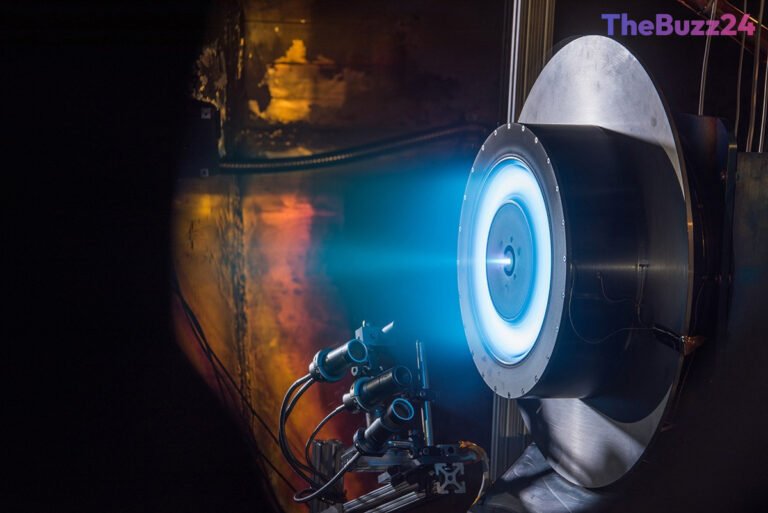
NASA’s twin ESCAPADE (Escape and Plasma Acceleration and Dynamics Explorers) spacecraft have successfully executed a series of powered Earth flybys, leveraging our planet’s gravity in conjunction with sustained engine burns to slingshot themselves towards Mars. These critical maneuvers, completed flawlessly within a two-day window, have set the spacecraft on course to reach the Red Planet by September 2027, marking a significant milestone in interplanetary mission design.
This mission employs a groundbreaking strategy for reaching Mars. Following their launch in November 2025, when Earth and Mars were on opposite sides of the Sun, the spacecraft initially entered a unique “loiter” orbit. This kidney-bean-shaped trajectory took them around Lagrange point 2, a gravitational balancing point approximately a million miles from Earth. This innovative approach allowed the spacecraft to return to Earth in November 2026, performing the powered flybys to gain the necessary momentum for their 10-month cruise to Mars. This method offers unprecedented flexibility in launch timing, circumventing the need to wait for specific planetary alignments.
Upon their arrival at Mars in September 2027, the two ESCAPADE spacecraft will fire their engines to enter orbit, then spend several months maneuvering into their scientific formation. Their primary objective is to conduct coordinated observations, studying how the solar wind – a million-mile-per-hour stream of material from the Sun – interacts with the Martian environment and drives atmospheric loss. This will be the first science mission to choreograph two orbiters around Mars, enabling simultaneous observations from different locations. Initial science operations are slated to begin in June 2028, with a subsequent shift into distinct orbits six months later to further analyze the solar wind’s impact.
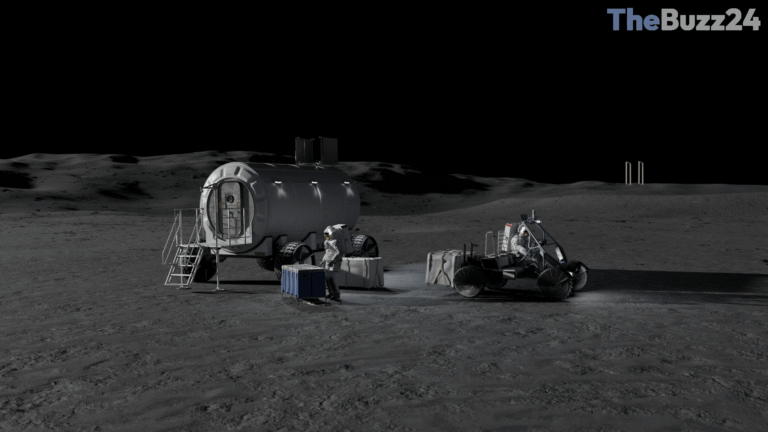
Insights gained from ESCAPADE’s findings are expected to be invaluable for planning future human exploration of Mars, particularly in understanding the planet’s atmospheric dynamics and potential challenges for long-duration stays. The mission, funded by NASA’s Heliophysics Division as part of the SIMPLEx program, exemplifies innovative approaches to solar system exploration with smaller budgets, pushing the boundaries of space travel and scientific discovery.
Key Takeaways
- NASA's ESCAPADE mission successfully completed powered Earth flybys, using gravity and engine burns to propel twin spacecraft toward Mars.
- The mission employs a novel "loiter" orbit strategy around Lagrange point 2, allowing flexible launch windows and a gravity-assist boost.
- Upon reaching Mars in September 2027, the spacecraft will conduct coordinated observations to study how solar wind affects the Martian atmosphere and contributes to atmospheric loss.
Editor’s Analysis & Impact
The ESCAPADE mission represents a significant leap in space mission design, demonstrating an innovative and cost-effective method for interplanetary travel. This ‘loiter’ orbit and powered Earth flyby technique could revolutionize how future missions, especially those with budget constraints or less rigid launch windows, are planned. Its success could pave the way for more frequent and diverse explorations of our solar system. From a broader perspective, the mission’s focus on understanding Mars’ atmospheric loss is crucial. Such data will not only deepen our scientific comprehension of planetary evolution but also directly inform strategies for future human missions, addressing vital concerns like radiation exposure and the potential for in-situ resource utilization on the Red Planet.
Frequently Asked Questions
Q: What is the primary goal of the ESCAPADE mission?
A: The primary goal of the ESCAPADE mission is to study how the solar wind interacts with the Martian environment and contributes to atmospheric loss, providing insights crucial for future human exploration.
Q: How does ESCAPADE's journey to Mars differ from previous missions?
A: ESCAPADE employs a unique 'loiter' orbit around Earth-Sun Lagrange point 2 and a powered Earth flyby maneuver. This strategy allows for more flexible launch windows and uses Earth's gravity for a slingshot boost, rather than waiting for direct planetary alignment.
Q: When are the ESCAPADE spacecraft expected to begin science operations at Mars?
A: The twin ESCAPADE spacecraft are scheduled to enter Mars orbit in September 2027, with science operations expected to commence in June 2028 after maneuvering into their initial science formation.
AI Disclosure: This article is based on verified data and official reports. Our Team and AI have cross-referenced every financial detail with primary sources to ensure total accuracy.
More from this Category