Firestorm Labs Secures $82M to Deploy Mobile 3D-Printed Drone Factories to the Front Lines
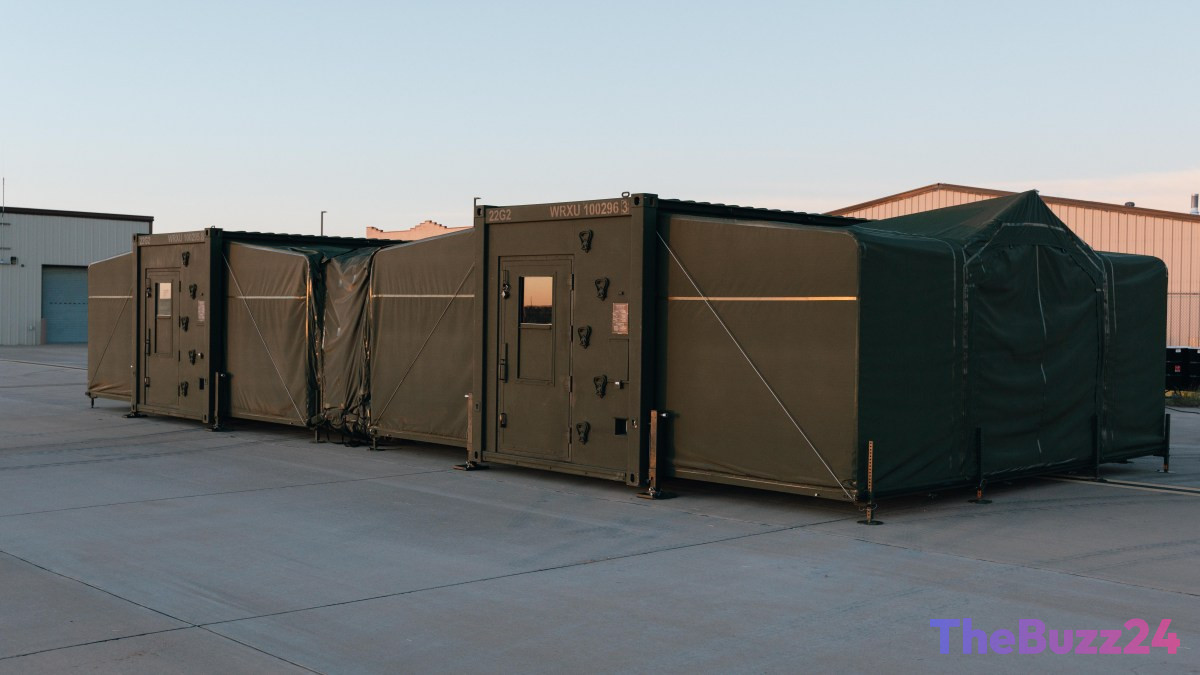
Defense technology startup Firestorm Labs has successfully raised $82 million in a Series B funding round, bringing its total capital raised to $153 million. Led by Washington Harbour Partners, the round saw participation from prominent venture firms and defense giants, including NEA, In-Q-Tel, Lockheed Martin, and Booz Allen Ventures. The San Diego-based company plans to use the capital to scale its innovative “xCell” platform—a mobile, containerized manufacturing unit capable of 3D-printing operational drone systems directly on the battlefield.
Originally founded as a drone manufacturer, Firestorm Labs pivoted its business model after military clients expressed a critical need to produce hardware closer to active combat zones. Led by serial entrepreneur Dan Magy, special operations veteran Chad McCoy, and 3D-printing expert Ian Muceus, the startup developed the xCell system. Housed inside standard shipping containers, each xCell unit utilizes industrial-grade HP 3D printers—under a five-year exclusive partnership—to manufacture drone bodies and shells in less than 24 hours. These highly adaptable unmanned aerial vehicles (UAVs) can be configured for reconnaissance, electronic warfare, or lethal missions, with weapon payloads integrated separately by military personnel.
The ability to manufacture equipment on-site addresses a major vulnerability in modern warfare: contested logistics. Traditional, centralized factories are prime targets for adversaries, and transporting supplies across vast distances, such as the Indo-Pacific, introduces severe bottleneck risks. Furthermore, lessons from recent conflicts demonstrate that drone designs must adapt in days rather than months. Beyond drones, the xCell platform has already demonstrated its versatility by 3D-printing replacement parts for Bradley Fighting Vehicles on-site, drastically reducing procurement times that would otherwise take months.
Firestorm Labs is already generating revenue through active government contracts across multiple branches of the U.S. military, including an Air Force contract with a $100 million ceiling. Currently, xCell units are deployed domestically at the Air Force Research Laboratory in New York and the Air Force Special Operations Command in Florida. The company is also actively operating in the Indo-Pacific region, with the ultimate goal of achieving full operational deployment there within the next two years to mitigate the complex logistical challenges of potential regional conflicts.
Key Takeaways
- Firestorm Labs raised $82 million in Series B funding to scale its xCell mobile manufacturing containers, which can 3D-print drones in under 24 hours.
- The startup's technology addresses 'contested logistics' by allowing military forces to manufacture highly adaptable UAVs and vehicle replacement parts directly on the front lines.
- Active deployments are already underway with the U.S. Air Force, and the company aims for full operational deployment in the Indo-Pacific region within two years.
Editor’s Analysis & Impact
Firestorm Labs’ successful funding round highlights a major paradigm shift in modern defense procurement, moving away from centralized, vulnerable manufacturing hubs toward decentralized, agile, and on-demand production. The Pentagon’s focus on ‘contested logistics’ underscores the strategic necessity of this transition. By enabling front-line forces to 3D-print customized drone fleets and critical spare parts within hours, Firestorm Labs addresses the rapid iteration cycles demanded by modern electronic warfare. The exclusive partnership with HP for industrial-grade 3D printing in mobile units provides a significant competitive moat. As geopolitical tensions rise in the Indo-Pacific, decentralized manufacturing platforms like xCell will likely become essential components of military readiness, paving the way for broader adoption of software-defined, localized defense manufacturing.
Frequently Asked Questions
Q: What is the xCell platform?
A: The xCell platform is a containerized, mobile manufacturing unit developed by Firestorm Labs. It uses industrial 3D-printing technology to produce customizable drone bodies and spare military parts on-site in under 24 hours.
Q: How are the 3D-printed drones used in military operations?
A: The drones can be rapidly configured for various mission requirements, including surveillance, electronic warfare, and lethal operations. While the drone bodies are 3D-printed, weapons and specialized payloads are added separately by military personnel.
Q: Why is decentralized manufacturing important for modern defense?
A: Centralized factories and long supply chains are highly vulnerable to disruption and attack during conflicts. Decentralized manufacturing allows military units to produce equipment and replacement parts directly at the front lines, adapting to changing battlefield conditions in real time.
AI Disclosure: This article is based on verified data and official reports. Our Team and AI have cross-referenced every financial detail with primary sources to ensure total accuracy.
More from this Category