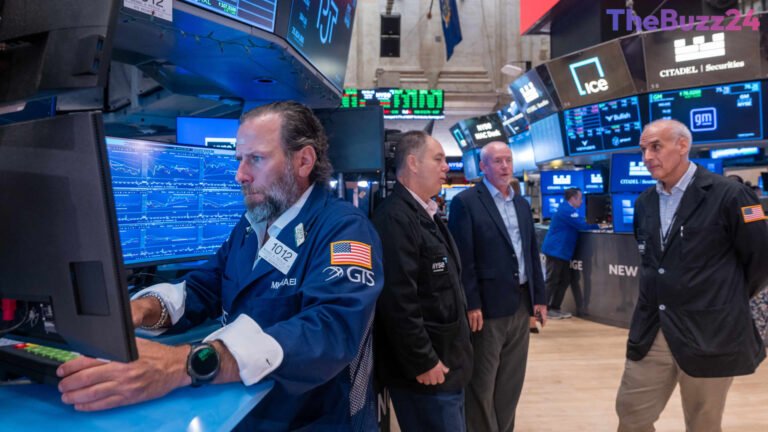
Global Markets Brace for Volatility as Economic Indicators Shift
Financial markets are currently navigating a period of heightened uncertainty as recent economic data suggests a cooling trend in major global economies. Investors are closely monitoring central bank policies, which remain focused on balancing inflation control with the need to sustain growth. The shift in sentiment has led to increased fluctuations in equity indices, reflecting a cautious approach among institutional and retail traders alike.
Analysts point to supply chain stabilization and fluctuating energy costs as primary drivers behind the current market behavior. While some sectors are showing resilience, others are grappling with reduced consumer spending and higher borrowing costs. This divergence is creating a complex landscape for portfolio managers who are recalibrating their strategies to mitigate risk while seeking opportunities in emerging market segments.
Looking ahead, the focus remains on upcoming labor market reports and corporate earnings guidance. These indicators are expected to provide further clarity on whether the global economy is heading toward a soft landing or if more aggressive fiscal interventions will be required. Market participants are advised to maintain a diversified stance as the economic narrative continues to evolve in real-time.
Key Takeaways
- Global markets are experiencing increased volatility due to shifting economic data and central bank policy uncertainty.
- Divergent performance across sectors is complicating investment strategies as consumer spending patterns change.
- Upcoming labor reports and corporate earnings will be critical in determining the trajectory of the global economy.
Editor’s Analysis & Impact
The current market environment reflects a transition phase where the post-pandemic recovery is giving way to a more normalized, albeit fragile, economic cycle. The primary implication for the industry is a move away from growth-at-all-costs strategies toward a focus on fundamental value and operational efficiency. As central banks maintain a ‘higher for longer’ interest rate stance, companies with high debt loads face significant headwinds, while cash-rich entities may find opportunities for strategic acquisitions. The broader outlook suggests that while a recession may be avoided, the era of easy capital is firmly in the rearview mirror. Investors should anticipate continued short-term volatility as the market digests conflicting signals regarding inflation and employment, necessitating a disciplined, long-term approach to asset allocation.
Frequently Asked Questions
Q: Why are global markets currently experiencing high volatility?
A: Volatility is driven by uncertainty regarding central bank interest rate decisions, shifting inflation data, and concerns over potential economic slowdowns.
Q: What should investors watch for in the coming weeks?
A: Investors should pay close attention to upcoming labor market reports and corporate earnings guidance, as these will provide key insights into the health of the economy.
AI Disclosure: This article is based on verified data and official reports. Our Team and AI have cross-referenced every financial detail with primary sources to ensure total accuracy.
More from this Category