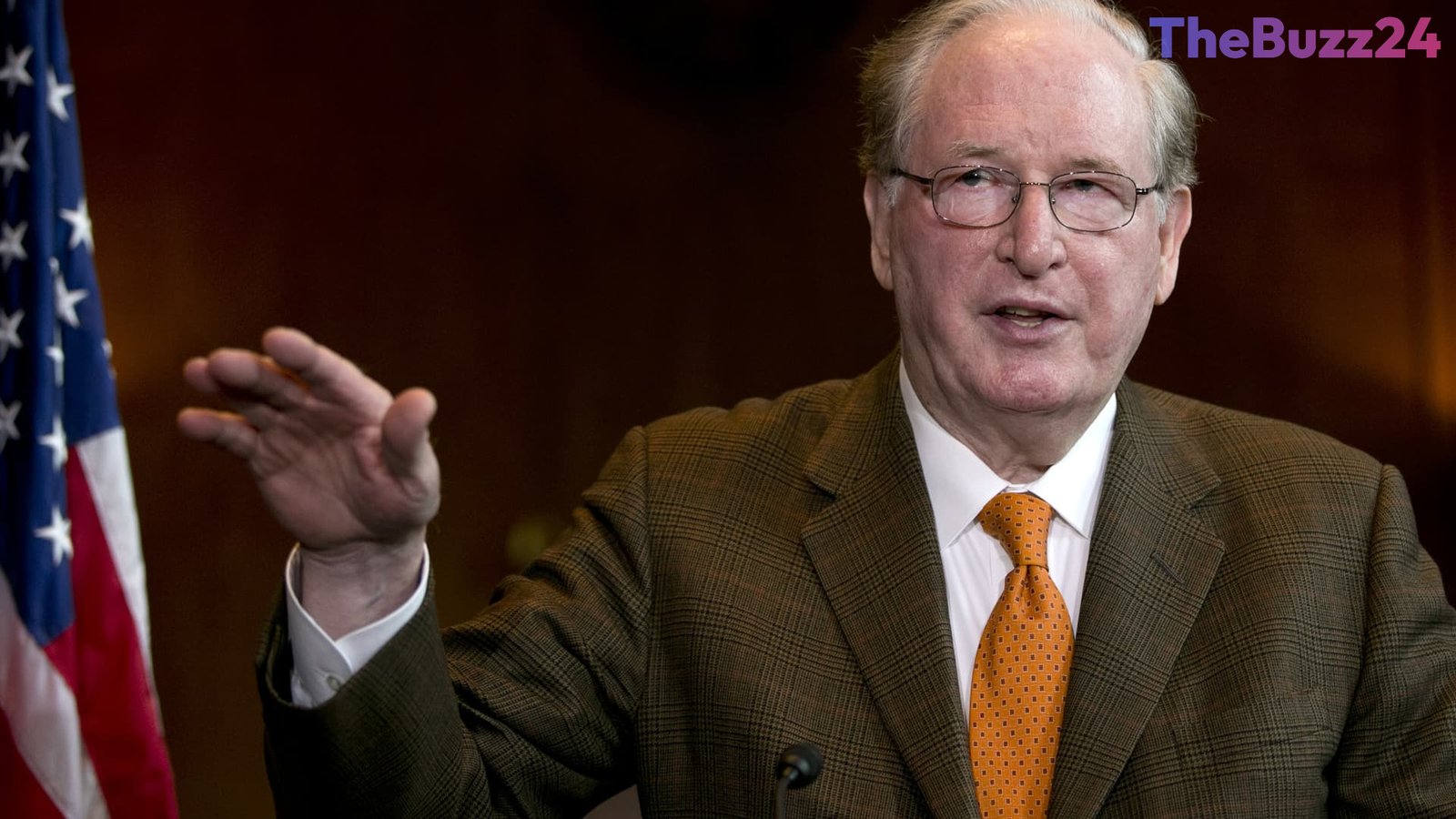
Former U.S. Senator Jay Rockefeller, Longtime Healthcare Advocate and Dynasty Scion, Dies at 89
John D. “Jay” Rockefeller IV, a prominent figure in American politics who dedicated decades to public service as both a U.S. Senator and Governor of West Virginia, has died at his home in Washington at the age of 89. Born into one of the nation’s most storied and wealthy families, Rockefeller charted a distinct political path as a dedicated Democrat, focusing heavily on expanding healthcare access for low-income families, coal miners, and veterans throughout his five terms in the Senate.
Rockefeller’s public service journey began after his work with a national service initiative in rural, impoverished West Virginia during the mid-1960s. That formative experience inspired him to enter public office, leading to his service in the state legislature, as secretary of state, and eventually as governor in 1976. First elected to the U.S. Senate in 1984, he became a major legislative force in national health policy. Notably, he played a pivotal role in establishing the Children’s Health Insurance Program (CHIP) in 1997 and was an ardent supporter of the landmark healthcare reform signed under President Barack Obama in 2010.
During his congressional tenure, Rockefeller also chaired the Senate Intelligence Committee. Though he initially voted in 2002 to authorize military action in Iraq, he later emerged as a chief critic of President George W. Bush’s administration regarding the intelligence used to justify the invasion. A comprehensive 2008 committee report led by Rockefeller concluded that senior administration officials had presented a fundamentally misleading case to the American public concerning weapons of mass destruction and foreign threat assessments.
As the great-grandson of oil magnate John D. Rockefeller and nephew of former Vice President Nelson Rockefeller, Jay Rockefeller navigated the heavy expectations of a legendary family while building an independent legacy focused on social welfare. Over nearly 30 years in the Senate, he also chaired the Commerce and Veterans Affairs committees before retiring from public office in early 2015. He is survived by his wife, Sharon Percy Rockefeller, and their four children.
Key Takeaways
- Former U.S. Senator and West Virginia Governor Jay Rockefeller has passed away at the age of 89.
- He was a central architect of key federal health policies, including the creation of the Children's Health Insurance Program (CHIP).
- As Senate Intelligence Committee chairman, he led landmark oversight investigations examining the pre-war intelligence used prior to the 2003 Iraq invasion.
Editor’s Analysis & Impact
Jay Rockefeller’s legacy highlights a unique intersection of private wealth and public service in modern American politics. Unlike many political figures born into extraordinary financial privilege, Rockefeller anchored his political career in representing West Virginia, an economically challenged state dependent on coal and heavy industry. His policy focus—most notably establishing the Children’s Health Insurance Program (CHIP) and fighting for broader medical access—left an indelible mark on U.S. healthcare policy. Politically, his aggressive oversight of intelligence agencies during the post-9/11 era demonstrated a rare willingness to challenge executive power and publicly re-examine his own legislative votes. His passing marks the conclusion of an influential era for traditional American political dynasties engaged in long-term legislative reform.
Frequently Asked Questions
Q: Who was Jay Rockefeller?
A: John D. 'Jay' Rockefeller IV was an American politician who served as Governor of West Virginia from 1977 to 1985 and as a U.S. Senator representing West Virginia from 1985 until his retirement in 2015.
Q: What were Jay Rockefeller's primary legislative accomplishments?
A: Rockefeller was instrumental in creating the Children's Health Insurance Program (CHIP) in 1997, aiding the passage of the 2010 Affordable Care Act, and championing healthcare benefits for coal miners and military veterans.
Q: What stance did Jay Rockefeller take regarding the Iraq War?
A: Although he initially voted in favor of the 2002 Iraq War authorization, Rockefeller later voiced deep regret over his vote and led investigative efforts as Intelligence Committee chairman that criticized the Bush administration's use of pre-war intelligence.
AI Disclosure: This article is based on verified data and official reports. Our Team and AI have cross-referenced every financial detail with primary sources to ensure total accuracy.
More from this Category