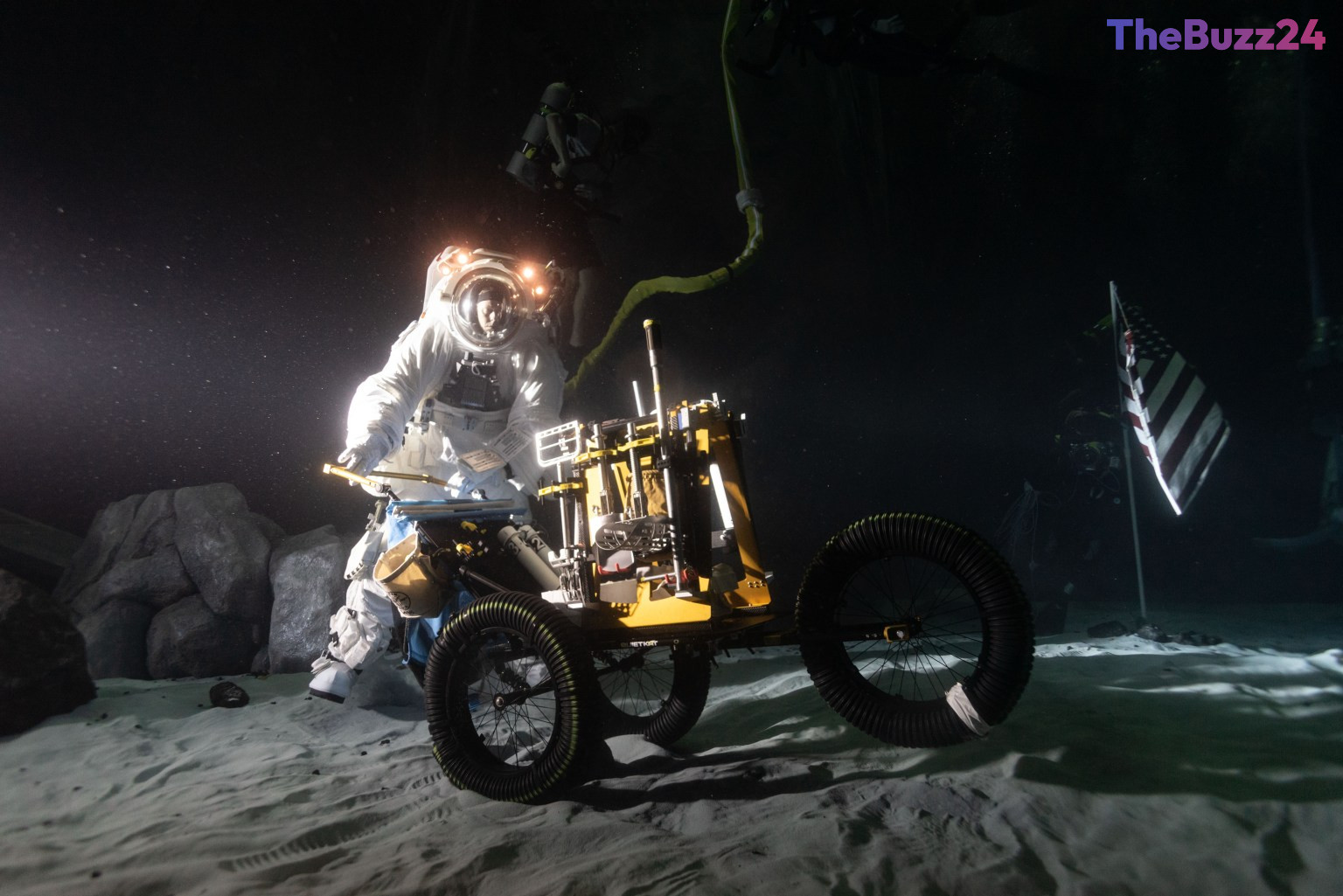
From Childhood Dreams to Lunar Frontiers: The Architect of Artemis Spacewalk Training
Scott Wray, the current Artemis EVA training lead, has spent over 16 years at the Johnson Space Center, transforming a lifelong fascination with space exploration into a career that defines the future of human spaceflight. His journey began in childhood, inspired by the Apollo missions, and evolved through rigorous academic training in aerospace engineering and hands-on experience with the Space Shuttle and International Space Station programs. Today, Wray is responsible for preparing the next generation of astronauts for the unique challenges of lunar surface operations.
As the lead for Artemis EVA training, Wray is tasked with developing curriculum and operational procedures for environments that have not been navigated by humans in over 50 years. Unlike the microgravity environment of the International Space Station, lunar exploration requires astronauts to master walking on a planetary surface while conducting complex geological research. Wray’s team utilizes a diverse array of training tools, including the Neutral Buoyancy Laboratory, virtual reality simulations, and specialized lighting labs that mimic the harsh conditions of the Moon’s South Pole.
Reflecting on his career, Wray emphasizes that the core of successful space exploration lies in adaptability and the ability to solve problems in real-time. Drawing from his background as an expeditionary guide in Alaska, he applies a ‘scrappy’ problem-solving philosophy to engineering challenges. Whether it is troubleshooting a malfunctioning spacesuit or integrating field science into astronaut training, Wray’s work serves as a critical bridge between current orbital operations and the long-term goal of human missions to Mars.
Beyond his technical contributions, Wray remains deeply committed to the human element of spaceflight. He views the Artemis program not merely as a return to the Moon, but as a foundational step in expanding human knowledge and capability. By fostering resilience and teamwork among the astronaut corps, Wray ensures that the individuals tasked with exploring the lunar surface are equipped to handle both the known and unknown variables of deep space exploration.
Key Takeaways
- Scott Wray oversees the comprehensive training program preparing astronauts for the unique physical and scientific demands of the Artemis lunar missions.
- Lunar EVA training differs significantly from ISS operations, requiring new skills in surface mobility, geology, and navigation under extreme lighting conditions.
- The training program integrates advanced technology, including virtual reality and specialized gravity-offload systems, to ensure astronauts are prepared for real-time troubleshooting in deep space.
Editor’s Analysis & Impact
The role of EVA (Extravehicular Activity) training is undergoing a paradigm shift as the industry transitions from low-Earth orbit to lunar and eventually Martian exploration. Scott Wray’s work highlights the critical intersection of engineering, geology, and human factors. As private and public sectors ramp up lunar activity, the ability to train astronauts to function as autonomous field scientists—rather than just systems operators—will be the primary determinant of mission success. The integration of diverse training environments, from underwater labs to VR, reflects a broader trend in the aerospace industry toward high-fidelity simulation. Looking forward, the methodologies developed by the Artemis team will likely set the global standard for deep-space operations, influencing how future commercial space stations and planetary bases manage human-machine interaction and emergency response protocols.
Frequently Asked Questions
Q: How does lunar EVA training differ from International Space Station training?
A: Lunar EVA training focuses on walking and surface mobility in a gravity environment, whereas ISS training focuses on microgravity translation using handrails and specialized tools.
Q: What is the primary goal of the Artemis EVA training program?
A: The program aims to prepare astronauts to become effective field scientists capable of performing complex geological research and surface operations on the Moon.
AI Disclosure: This article is based on verified data and official reports. Our Team and AI have cross-referenced every financial detail with primary sources to ensure total accuracy.
More from this Category