Germany’s Green Dilemma: Economic Pressures Challenge Coal Exit Plan
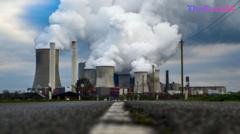
Germany, a global leader in renewable energy adoption, is facing a critical juncture regarding its commitment to phasing out coal power. Despite generating over half of its electricity from renewables last year and pledging to cease coal use entirely by 2038 – with lignite, its most polluting form, by 2030 – recent geopolitical events and soaring natural gas prices are prompting a re-evaluation of these ambitious timelines.
The nation’s energy strategy has long envisioned natural gas as a crucial transitional backup for intermittent wind and solar power, especially during winter months. However, the recent surge in global gas prices, exacerbated by international conflicts, has made this strategy economically challenging. While Germany possesses vast, cheap reserves of lignite, it imports approximately 95% of its natural gas. This stark contrast in supply security and cost has led other European and Asian nations, such as Japan, Italy, and India, to already loosen restrictions or delay closures on coal-fired plants. Chancellor Friedrich Merz has publicly questioned the realism of current phase-out plans, emphasizing the need to secure the country’s industrial core.
The potential shift has ignited a debate among stakeholders. LEAG, Germany’s second-largest lignite miner, has expressed support for a potential reprieve for coal, highlighting its proven ability to increase supply during past energy crises, such as the halt of Russian gas imports in 2022. Conversely, environmental research institutes like Öko, represented by senior researcher Hauke Hermann, advocate for an accelerated expansion of renewables rather than a return to fossil fuels. German industry, through figures like Wolfgang Große Entrup of the VCI, stresses the urgent need for reliable and competitively priced energy to ensure continued investment and stability.
Politically, the issue divides Germany’s grand coalition government. While the centre-right CDU/CSU parties show more openness to extending coal use, the left-wing SPD warns against creating new ‘fossil lock-in effects’ that would undermine the energy transition. A parliamentary committee is currently exploring compromises, including the possibility of allowing six hard coal power stations, which are less polluting than domestic lignite, to operate continuously rather than just as backup. The government is expected to publish a statutory review of the coal phase-out in August, which could potentially lead to a slowdown rather than an acceleration of the exit strategy, with a decision on the 2030 lignite deadline anticipated this year.
Key Takeaways
- Germany is reconsidering its ambitious coal phase-out timeline (2038 for all coal, 2030 for lignite) due to soaring global natural gas prices and energy security concerns.
- The nation's reliance on imported natural gas contrasts sharply with its abundant, cheap domestic lignite reserves, making a temporary return to coal financially appealing.
- The decision has sparked a significant debate within Germany's coalition government, industry, and environmental groups, highlighting the tension between climate goals and immediate economic stability.
Editor’s Analysis & Impact
Germany’s potential recalibration of its coal phase-out plan signals a broader challenge facing industrial nations: balancing ambitious climate targets with immediate energy security and economic stability. The market impact could see a temporary boost for coal producers and a dampening effect on natural gas demand if Germany reduces its imports. For the energy industry, it underscores the critical need for diversified and resilient energy infrastructure, accelerating investment in renewable energy storage and grid modernization. The future outlook suggests that while the long-term commitment to renewables remains, short-term pragmatism may necessitate a slower transition, potentially influencing other countries grappling with similar energy dilemmas. This situation highlights the geopolitical vulnerabilities of energy supply chains and the complex interplay between environmental policy, economic competitiveness, and national security.
Frequently Asked Questions
Q: Why is Germany reconsidering its coal phase-out?
A: Germany is reconsidering its coal phase-out primarily due to a significant increase in global natural gas prices, which makes its abundant and cheap domestic lignite coal a more financially attractive and secure energy source compared to imported gas.
Q: What is Germany's current energy mix?
A: Germany currently generates over half of its electricity from renewables (59% last year), with coal accounting for about 20% and natural gas for 13%. The long-term plan is to replace coal with more natural gas and renewables.
Q: What are the main arguments for and against extending coal use?
A: Proponents, including some industry leaders and conservative politicians, argue that extending coal use ensures energy security and affordability for Germany's industrial sector. Opponents, including environmental groups and left-wing politicians, warn that it would be counterproductive to the energy transition and lead to new 'fossil lock-in effects,' hindering climate goals.
AI Disclosure: This article is based on verified data and official reports. Our Team and AI have cross-referenced every financial detail with primary sources to ensure total accuracy.
More from this Category