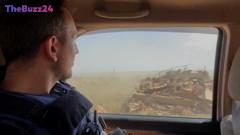
Humanitarian Convoy Reveals Devastation in Israeli-Occupied Southern Lebanon
A humanitarian convoy, organized by the Order of Malta, recently gained rare access to parts of southern Lebanon currently under Israeli occupation. The mission aimed to deliver crucial aid to Christian villages that have become isolated due to the ongoing conflict. This significant undertaking occurred just a day before a new ceasefire was announced between Israel and the Shia Muslim armed group Hezbollah.
During their journey, the team observed a notable Israeli military presence, though filming was largely restricted. The convoy traversed areas where the impact of the conflict was starkly visible. Predominantly Shia villages were found to be completely destroyed, a result of Israeli air strikes or demolitions. This widespread destruction has prompted human rights organizations to voice serious concerns, suggesting that some of these actions, particularly the deliberate destruction of civilian infrastructure, could constitute war crimes.
Israel has publicly stated its intention to maintain its troops in Lebanon, asserting that its objective is to establish a security zone along the border. This zone is designed to be free of Hezbollah, aiming to safeguard Israel’s northern communities from rocket and drone attacks originating from the group. The situation underscores the complex and volatile dynamics in the region, with humanitarian needs escalating amidst military operations and international legal scrutiny.
Key Takeaways
- A humanitarian convoy from the Order of Malta gained rare access to Israeli-occupied southern Lebanon to deliver aid to isolated Christian villages.
- The mission observed extensive destruction, particularly in Shia villages, attributed to Israeli air strikes and demolitions.
- Israel maintains its presence to create a Hezbollah-free security zone, while human rights groups are investigating potential war crimes related to the destruction of civilian infrastructure.
Editor’s Analysis & Impact
The recent access granted to a humanitarian convoy in Israeli-occupied southern Lebanon highlights the severe human cost of the ongoing conflict. The observed destruction of villages, particularly those predominantly Shia, underscores the devastating impact on civilian populations and infrastructure. This situation will likely intensify calls for international scrutiny regarding adherence to international humanitarian law, especially given the allegations of potential war crimes. For the region, the continued Israeli presence and its stated goal of a ‘security zone’ suggest prolonged instability and a heightened risk of renewed hostilities with Hezbollah. The humanitarian crisis will persist, requiring sustained international aid and diplomatic efforts to de-escalate tensions and protect civilians. The broader implications include a continued challenge to regional stability and international legal frameworks governing armed conflict.
Frequently Asked Questions
Q: What was the primary purpose of the humanitarian convoy in southern Lebanon?
A: The humanitarian convoy, organized by the Order of Malta, aimed to deliver essential aid to Christian villages in Israeli-occupied southern Lebanon that have become isolated due to the ongoing conflict.
Q: What kind of destruction was observed in the occupied areas?
A: The convoy observed widespread destruction, particularly in predominantly Shia villages, which were found to be completely destroyed by Israeli air strikes or demolitions.
Q: What is Israel's stated reason for its military presence in southern Lebanon?
A: Israel states its intention to maintain its troops in Lebanon to establish a Hezbollah-free security zone along the border, aimed at protecting its northern communities from rocket and drone attacks.
AI Disclosure: This article is based on verified data and official reports. Our Team and AI have cross-referenced every financial detail with primary sources to ensure total accuracy.
More from this Category