U.S. and China Leaders Convene in Beijing for High-Stakes Economic and Geopolitical Summit
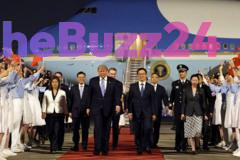
President Donald Trump arrived in Beijing on Wednesday for a pivotal two-day summit with President Xi Jinping, signaling a critical moment for U.S.-China relations. The arrival, marked by a formal reception led by Vice-President Han Zheng, highlighted the strategic importance Beijing has placed on the visit. The American delegation includes key industry leaders, such as Tesla CEO Elon Musk and Nvidia CEO Jensen Huang, underscoring the administration’s focus on integrating technology and trade into the diplomatic agenda.
The summit is expected to address a wide array of contentious issues, most notably the persistent trade imbalances between the two nations. President Trump is reportedly pushing for expanded Chinese procurement of U.S. agricultural goods, while Beijing is seeking relief from existing tariffs on its exports. Furthermore, the U.S. delegation is emphasizing the need for greater market access for American technology firms, aiming to foster a more open environment for innovation within China.
Beyond trade, the talks are set to cover significant geopolitical challenges, including the instability in Iran. As a major importer of Iranian oil, China is currently navigating supply chain disruptions caused by regional blockades, and the U.S. is urging Beijing to leverage its influence over Tehran to promote stability. The summit also addresses the delicate status of Taiwan, with the U.S. balancing its ongoing arms support for Taipei against the backdrop of an increasingly assertive Chinese foreign policy. This meeting represents a significant shift in the bilateral dynamic since the last high-level visit in 2017.
Key Takeaways
- President Trump and President Xi Jinping are meeting in Beijing to negotiate trade imbalances and market access for U.S. technology firms.
- The summit includes high-profile business leaders like Elon Musk and Jensen Huang, highlighting the focus on economic and tech-sector cooperation.
- Key geopolitical topics include the influence of China on Iranian stability and the ongoing complexities surrounding U.S.-Taiwan relations.
Editor’s Analysis & Impact
The summit between the U.S. and China represents a critical inflection point in global diplomacy. By bringing technology titans like Elon Musk and Jensen Huang to the table, the administration is signaling that the future of the U.S.-China relationship will be defined as much by corporate market access and supply chain integration as by traditional statecraft. The primary challenge lies in reconciling the U.S. demand for trade reciprocity with China’s desire for tariff relief, all while navigating the volatile geopolitical landscape of the Middle East and the Taiwan Strait. If successful, this summit could stabilize the global economy by reducing trade friction; however, the deep-seated ideological and strategic competition suggests that any agreements reached will likely be incremental rather than transformative, leaving the long-term trajectory of the relationship in a state of cautious tension.
Frequently Asked Questions
Q: Who accompanied President Trump to the summit in Beijing?
A: The delegation included Eric Trump and prominent technology industry leaders, specifically Tesla CEO Elon Musk and Nvidia CEO Jensen Huang.
Q: What are the primary economic goals of the U.S. during these talks?
A: The U.S. is seeking to address trade imbalances by increasing Chinese purchases of American agricultural products and advocating for greater market access for U.S. innovation and technology firms.
AI Disclosure: This article is based on verified data and official reports. Our Team and AI have cross-referenced every financial detail with primary sources to ensure total accuracy.
More from this Category