Hubble Telescope Paves the Way for Nancy Grace Roman Space Telescope Observations
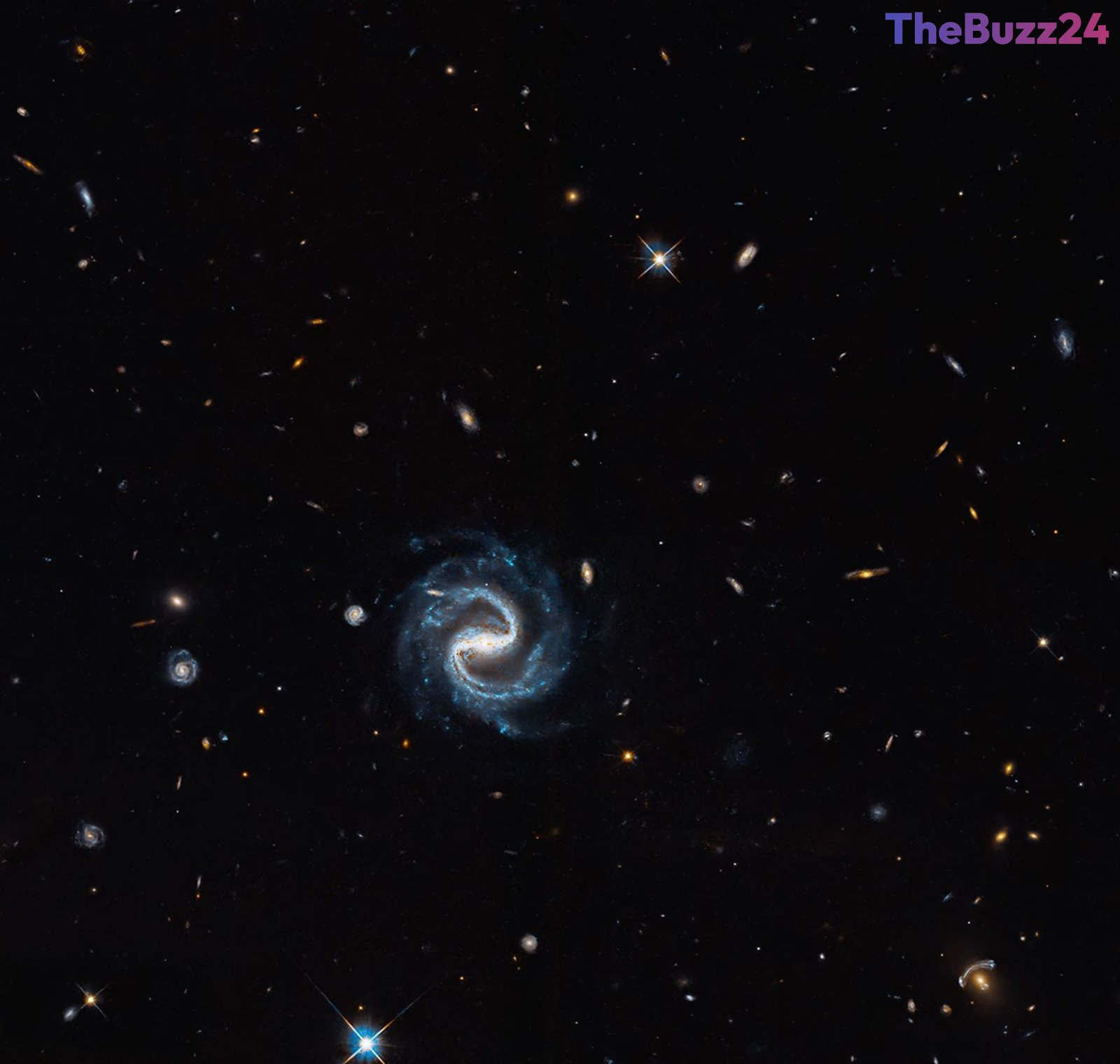
The Hubble Space Telescope has captured a striking new image featuring a prominent barred spiral galaxy alongside a vivid gravitational lens. This observation serves as a critical precursor to the upcoming scientific operations of the Nancy Grace Roman Space Telescope, highlighting the collaborative potential between the two observatories.
By focusing on these gravitational distortions, astronomers are gaining essential insights into the distribution of dark matter within foreground galaxies. These detailed images act as a foundational dataset, allowing researchers to refine their techniques and prepare for the more expansive survey capabilities that the Roman Space Telescope will provide upon its deployment.
This synergy between Hubble and the Roman Space Telescope represents a significant step forward in modern astrophysics. As the scientific community prepares for the next generation of space exploration, these preparatory observations ensure that researchers can maximize the efficiency and impact of future missions, ultimately deepening our understanding of the complex structure of the universe.
Key Takeaways
- Hubble is capturing gravitational lensing images to prepare for the Nancy Grace Roman Space Telescope mission.
- The data helps astronomers study dark matter distribution in foreground galaxies.
- The collaboration between Hubble and the Roman Space Telescope aims to create a more comprehensive map of the cosmos.
Editor’s Analysis & Impact
The strategic use of the Hubble Space Telescope to calibrate and prepare for the Nancy Grace Roman Space Telescope mission underscores a shift toward integrated, multi-observatory astronomical research. By utilizing Hubble’s established high-resolution imaging to map gravitational lenses, scientists are effectively ‘de-risking’ future observations and ensuring that the Roman Space Telescope can hit the ground running upon launch. This approach not only optimizes the scientific output of expensive space assets but also accelerates our understanding of dark matter—a fundamental mystery in cosmology. As we move toward an era of wide-field space surveys, the ability to synthesize data across different platforms will be the primary driver of discovery, likely leading to breakthroughs in our understanding of galactic evolution and the large-scale structure of the universe.
Frequently Asked Questions
Q: What is the primary purpose of these Hubble observations?
A: The observations are designed to analyze gravitational distortions to better understand dark matter and to prepare the scientific community for future data collection by the Nancy Grace Roman Space Telescope.
Q: How will the Roman Space Telescope differ from Hubble?
A: While Hubble provides high-resolution, targeted imagery, the Nancy Grace Roman Space Telescope is designed for wide-field surveys, allowing it to capture much larger portions of the sky to study dark energy and dark matter on a grander scale.
AI Disclosure: This article is based on verified data and official reports. Our Team and AI have cross-referenced every financial detail with primary sources to ensure total accuracy.
More from this Category