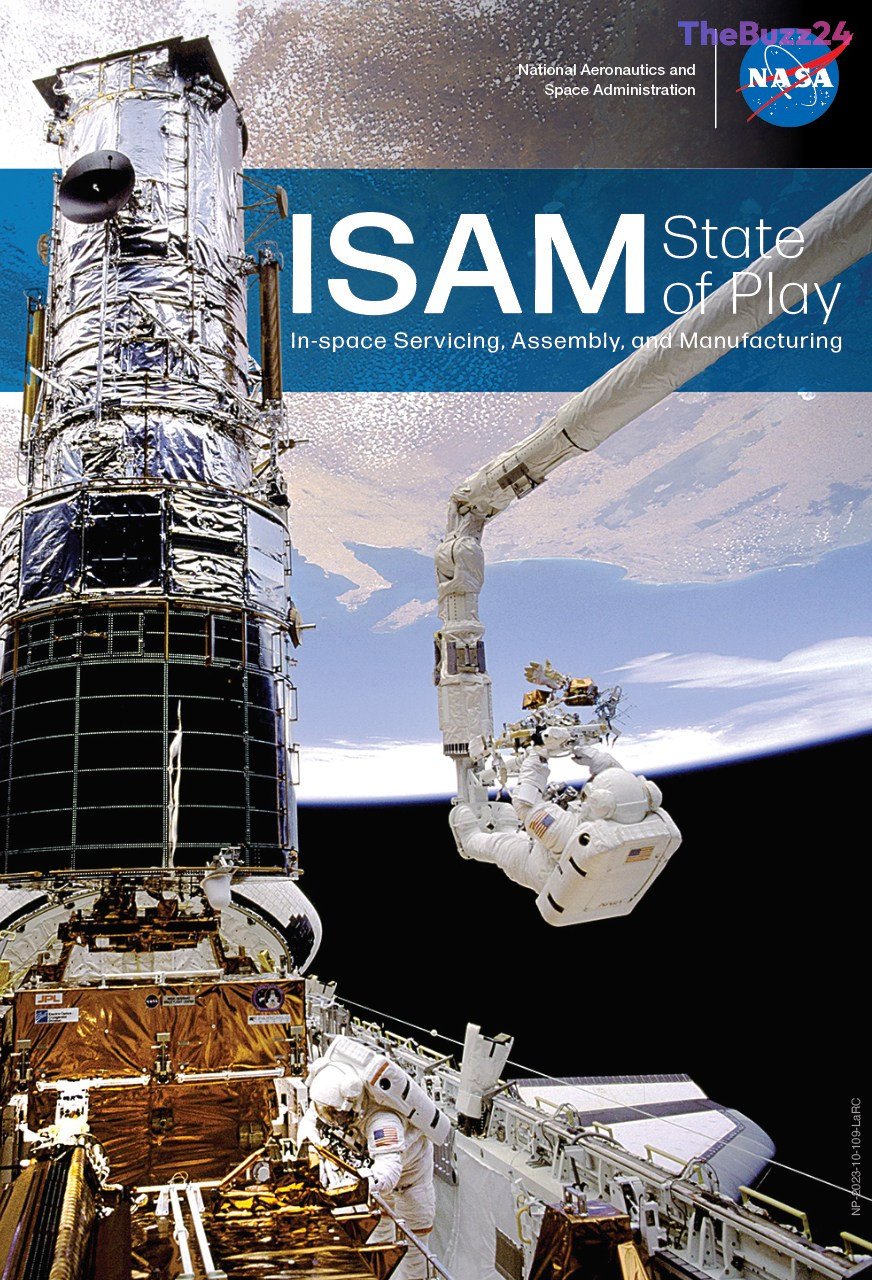
NASA Unveils 2026 ISAM State of Play: Setting the Benchmark for In-Space Assembly, Manufacturing, and Servicing
As space operations evolve beyond simple satellite launches toward complex orbital infrastructure, in-space servicing, assembly, and manufacturing (ISAM) technologies have become a critical focal point for space agencies and commercial enterprises alike. The newly released 2026 edition of the ISAM State of Play document provides a comprehensive overview of existing hardware capabilities, serving as both an industry roadmap and an authoritative technical directory. Developed through collaborative efforts led by NASA’s Langley Research Center alongside multiple field centers and international partners, the updated 368-page report highlights functional areas ranging from autonomous robotic manipulation and orbital refueling to structural assembly.
The demand for accurate intelligence on orbital capabilities has surged in recent years as commercial firms actively seek reliable benchmarks. What initially began as an internal reference tool to align space centers has rapidly expanded into an indispensable resource for the broader aerospace sector. Senior portfolio leaders emphasize that the document maintains strict entry criteria: technologies must have physical hardware prototypes tested on the ground or demonstrated in flight. Conceptual ideas and unverified proposals are explicitly excluded, ensuring that the report strictly reflects tangible, real-world technological progress rather than speculative designs.
This rigorous documentation is essential for enabling future space missions that exceed traditional rocket fairing capacities and operational lifespans. Emerging mission profiles—including massive space telescopes, adaptable national security satellites, and modular commercial habitats—rely heavily on the ability to repair, upgrade, or manufacture assets directly in orbit. The 2026 publication goes beyond technical specs by incorporating developer profiles, operational facility details, and active project locations, giving mission planners a clear picture of who is building key systems and where development is occurring.
By capturing contributions from key centers—including Ames, Glenn, Marshall, Kennedy, and Johnson—alongside private industry, the ISAM State of Play reflects a rapidly growing ecosystem moving toward sustained orbital presence and lunar infrastructure. As space exploration shifts from single-use launches to dynamic, reusable assets, this baseline publication ensures that government and commercial entities operate from a shared technical foundation, paving the way for the next generation of off-planet infrastructure.
Key Takeaways
- The 2026 ISAM State of Play expands to 368 pages detailing existing capabilities across 11 functional space servicing and assembly sectors.
- Strict entry criteria require physical hardware prototypes or flight demonstrations, filtering out unproven conceptual designs.
- The benchmark report aids mission planners in designing next-generation orbital platforms, off-world manufacturing, and dynamic satellite servicing.
Editor’s Analysis & Impact
The release of the latest ISAM State of Play underscores a fundamental paradigm shift in the space sector—moving from static, single-launch missions toward dynamic, persistent in-orbit infrastructure. By enforcing strict hardware-validation criteria, the publication serves as an essential filter against industry hype, giving investors, defense contractors, and commercial space firms a reliable assessment of true technological readiness. As orbital congestion grows and the cost of launching massive payloads remains a factor, in-space refueling, repair, and modular assembly will dictate the economics of future space operations. Companies that establish early positions in standardized ISAM interfaces and robotic servicing are poised to lead the next era of commercialization, lunar exploration, and satellite life extension.
Frequently Asked Questions
Q: What does ISAM stand for in the context of space operations?
A: ISAM stands for In-Space Servicing, Assembly, and Manufacturing. It encompasses technologies that allow spacecraft to be repaired, refueled, assembled, or built directly in orbit rather than launched as fully completed structures.
Q: Why is the ISAM State of Play report significant for the space industry?
A: The report acts as the definitive benchmark and directory for verified orbital capabilities. By requiring physical hardware or flight demonstrations for inclusion, it provides transparent competitive intelligence and technical baselines for commercial and government space planners.
Q: Which entities contribute to the ISAM State of Play report?
A: The document is spearheaded by NASA's Langley Research Center, with input from multiple NASA field centers—including Ames, Glenn, Marshall, Kennedy, and Johnson—alongside commercial developers and international space partners.
AI Disclosure: This article is based on verified data and official reports. Our Team and AI have cross-referenced every financial detail with primary sources to ensure total accuracy.
More from this Category