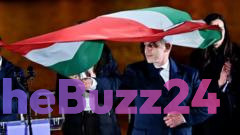
Hungary Faces Historic Power Shift as Péter Magyar Prepares to Assume Premiership
Hungary is standing on the precipice of a significant political evolution as Prime Minister-elect Péter Magyar prepares to take the oath of office. This transition signals the conclusion of a 16-year tenure under Viktor Orbán, whose Fidesz party experienced a sharp decline in support during the most recent parliamentary elections. Magyar’s Tisza party, a relatively new political entity formed only two years ago, achieved a decisive victory by capturing 141 of the 199 available parliamentary seats, reflecting a clear public desire for a systemic overhaul of the nation’s governance.
As the country readies itself for a transition of power, the incoming administration is immediately confronted with the fiscal challenges inherited from the previous regime. Economic analysts and government officials have highlighted a severely strained national budget and the urgent need to address long-standing allegations of systemic corruption. To address these concerns, the new government intends to launch a specialized office tasked with the recovery of misappropriated state assets, ensuring that those involved in financial misconduct are held accountable through rigorous and transparent legal proceedings. In a notable development, many high-ranking members of the outgoing Fidesz party have opted not to occupy their parliamentary seats, casting uncertainty over their future political roles.
Beyond domestic fiscal recovery, the new leadership faces the delicate task of recalibrating Hungary’s relationship with the European Union. A top priority for the incoming government is the release of billions of euros in frozen EU funds, a process currently hindered by ongoing disputes regarding migration policies and adherence to European Court of Justice mandates. Despite these geopolitical complexities, the administration has expressed confidence in its ability to mend diplomatic ties and stabilize the national economy.
While the incoming government acknowledges the severity of the economic and institutional hurdles it faces, it maintains that its primary objective is public service rather than political vengeance. As the administration begins to scrutinize past state contracts and media funding, it aims to distance itself from the governance style of the previous era. Magyar and his cabinet have emphasized their commitment to restoring institutional integrity, promising to navigate the current fiscal difficulties while honoring the mandate provided by the Hungarian electorate.
Key Takeaways
- Péter Magyar and the Tisza party have secured a supermajority of 141 seats, ending 16 years of Fidesz party rule.
- The new administration plans to establish an office dedicated to recovering stolen state assets and investigating past financial misconduct.
- A primary diplomatic goal for the new government is to resolve disputes with the European Union to unlock billions in frozen funding.
Editor’s Analysis & Impact
The political transition in Hungary represents a watershed moment for Central European politics. The rise of the Tisza party from a nascent movement to a dominant parliamentary force suggests a profound shift in voter sentiment, likely driven by economic fatigue and a desire for institutional reform. The immediate market impact will likely hinge on the new government’s ability to unlock EU funds, which is essential for stabilizing the national budget and restoring investor confidence. However, the administration faces a difficult balancing act: it must pursue accountability for past corruption without triggering prolonged political instability. If successful, this transition could lead to a significant improvement in Hungary’s standing within the European Union and a more transparent fiscal environment, though the process will undoubtedly be fraught with legal and diplomatic friction in the short term.
Frequently Asked Questions
Q: What is the primary goal of the new government regarding past corruption?
A: The new government plans to establish a dedicated office to recover stolen assets and conduct transparent investigations into past financial misconduct by the previous administration.
Q: Why are EU funds currently frozen for Hungary?
A: The funds are frozen due to long-standing disputes between the previous government and the European Union concerning migration policies and compliance with European Court of Justice rulings.
AI Disclosure: This article is based on verified data and official reports. Our Team and AI have cross-referenced every financial detail with primary sources to ensure total accuracy.
More from this Category