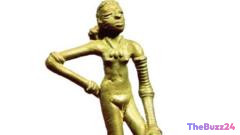
Indian Textbook Restores Original Image of Ancient ‘Dancing Girl’ After Censorship Backlash
India’s National Council of Educational Research and Training (NCERT) has reversed its decision to alter an image of the famous “Dancing Girl” sculpture of Mohenjo-daro in a grade nine textbook. The move comes after intense criticism from historians, educators, and the public, who accused the educational body of censoring a globally recognized historical artifact. The digital version of the textbook has already been updated with the original, unedited image, and upcoming print editions will also feature the authentic photograph.
The controversy erupted when the newly released textbook, part of a new Arts Education Series under the National Education Policy, featured a modified version of the bronze figurine. In the altered image, the sculpture’s torso was obscured with dark shading, effectively hiding its anatomical features. Historians and commentators quickly condemned the modification, arguing that altering a 4,500-year-old artifact to conform to modern standards of modesty undermines the integrity of historical education.
NCERT Director Dinesh Saklani confirmed the reversal, stating that the decision to restore the original image was made following consultations with experts. While the council did not officially state why the image was modified in the first place, observers speculate it was driven by concerns over nudity. The “Dancing Girl” has been a staple of Indian history curricula for decades without ever facing censorship, celebrated worldwide for its artistic value and depiction of advanced metallurgy in the ancient Indus Valley Civilization.
Discovered at the ancient site of Mohenjo-daro, the bronze figurine depicts a young woman standing confidently with one hand on her hip, adorned with bangles and ornaments. Currently housed in the National Museum in New Delhi, the artifact is widely regarded by archaeologists as a masterpiece of ancient art. Critics of the censorship emphasized that education should prepare students to engage with historical realities rather than imposing contemporary moral frameworks on ancient heritage.
Key Takeaways
- The National Council of Educational Research and Training (NCERT) restored the original, uncensored image of the 'Dancing Girl' of Mohenjo-daro in Indian textbooks following widespread public and academic backlash.
- The controversy began when a new grade nine textbook featured a digitally altered version of the 4,500-year-old bronze sculpture with its torso shaded to cover its anatomical features.
- Historians and educators criticized the modification as an unnecessary act of censorship that compromised the educational and artistic integrity of one of the Indus Valley Civilization's most iconic artifacts.
Editor’s Analysis & Impact
The controversy surrounding the “Dancing Girl” sculpture highlights a growing tension in educational policy between historical preservation and contemporary cultural sensitivities. By attempting to censor a globally recognized, 4,500-year-old artifact, educational authorities risked undermining the credibility of the national curriculum. The swift reversal demonstrates the power of academic and public oversight in preserving historical accuracy. However, this incident raises broader concerns about the creeping influence of revisionism and moral policing in educational materials. For policymakers and educators worldwide, the lesson is clear: attempts to sanitize history often backfire, drawing more scrutiny to the act of censorship than to the subject itself. Moving forward, maintaining a strict boundary between objective historical representation and subjective modern standards of modesty will be crucial for preserving educational integrity.
Frequently Asked Questions
Q: What is the 'Dancing Girl' of Mohenjo-daro?
A: The 'Dancing Girl' is a famous 4,500-year-old bronze sculpture discovered at the ancient Indus Valley Civilization site of Mohenjo-daro. It is highly regarded for its artistic detail, confident posture, and demonstration of advanced ancient metallurgy.
Q: Why was the image altered in the textbook?
A: While the National Council of Educational Research and Training (NCERT) did not provide an official explanation, observers and media reports suggest the torso was shaded due to concerns over nudity and modern standards of modesty.
Q: Where is the original sculpture located?
A: The original bronze figurine is preserved and displayed at the National Museum in New Delhi, India.
AI Disclosure: This article is based on verified data and official reports. Our Team and AI have cross-referenced every financial detail with primary sources to ensure total accuracy.
More from this Category