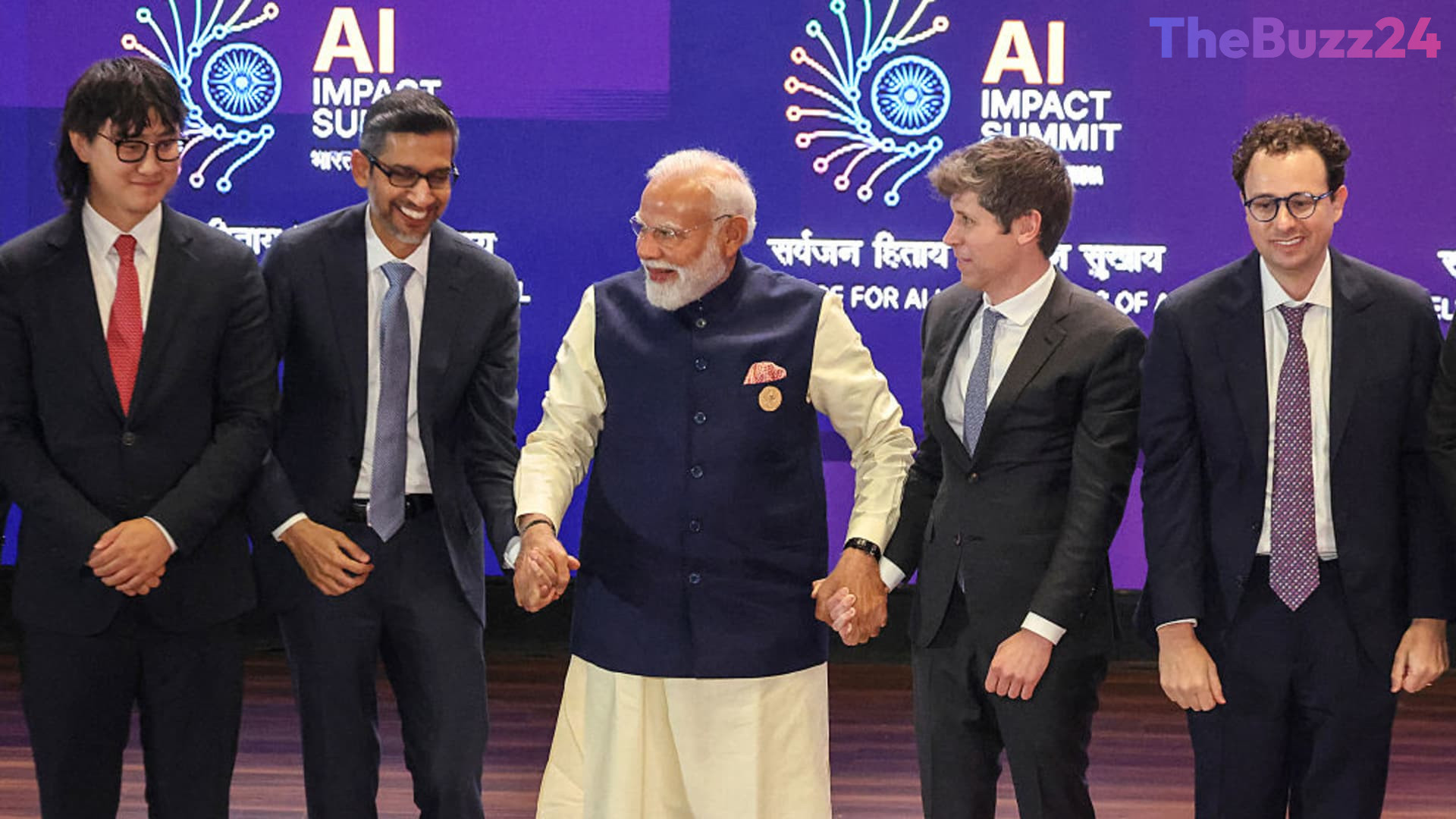
India’s AI Ambitions Face Reality Check Amid Export Restrictions
India’s strategy to become a global artificial intelligence powerhouse is facing a critical inflection point. For years, the nation has focused on leveraging its massive pool of information technology talent to build sophisticated AI applications on top of foreign-developed foundational models. However, recent export-control directives from the United States, which saw Anthropic restrict access to its latest models for foreign nationals, have exposed the inherent vulnerabilities in this dependency-heavy approach.
Industry leaders are now sounding the alarm, arguing that relying on external infrastructure leaves Indian businesses susceptible to sudden disruptions. While Indian workers are among the most active users of AI globally, the lack of a domestic, sovereign AI stack—comprising locally produced chips, large-scale data centers, and indigenous foundational models—remains a significant hurdle. Critics suggest that current government initiatives, while moving in the right direction, are insufficient in scale and speed to compete with the rapid advancements seen in the U.S. and China.
To bridge this gap, the private sector has begun to mobilize, with companies like Sarvam AI securing significant funding to develop sovereign models. Yet, the broader ecosystem continues to struggle with a lack of deep-tech venture capital. Unlike the U.S. and China, where billions are funneled into foundational research, Indian investment remains largely concentrated in enterprise applications and fintech. Experts warn that without a massive, coordinated push for sovereign computing power and increased capital allocation, India risks remaining a consumer of foreign technology rather than a creator of its own.
As geopolitical tensions influence the global flow of technology, the pressure on New Delhi to accelerate its AI mission is mounting. Prominent voices in the tech community are calling for a more aggressive strategy, noting that access to advanced hardware, such as high-end AI chips, could be restricted at any time. For India to secure its digital future, it must transition from an application-layer hub to a nation capable of sustaining its own independent AI infrastructure.
Key Takeaways
- India's reliance on foreign AI models has been highlighted as a strategic vulnerability following recent U.S. export restrictions.
- There is a growing consensus that India must develop a sovereign AI stack, including domestic chip production and large-scale foundational models, to ensure long-term independence.
- A significant gap in deep-tech venture capital and computing infrastructure currently hinders India's ability to compete with the AI capabilities of the U.S. and China.
Editor’s Analysis & Impact
The situation in India reflects a broader global trend where nations are realizing that AI is not just a commercial product, but a strategic asset. India’s current predicament is a classic ‘middle-income trap’ of the digital age: it has the human capital to build applications but lacks the capital-intensive infrastructure to own the underlying technology. The market implication is a likely shift in government policy toward protectionism and heavy subsidies for domestic semiconductor and data center manufacturing. If India fails to bridge this gap, its tech sector will remain perpetually vulnerable to the geopolitical whims of foreign powers. Conversely, a successful pivot toward sovereign AI could unlock massive domestic value, though it will require a fundamental change in how Indian venture capital views deep-tech risk versus short-term software returns.
Frequently Asked Questions
Q: Why is India concerned about foreign AI models?
A: India is concerned because foreign governments can restrict access to these models via export controls, which can instantly disrupt Indian businesses that rely on them for their operations.
Q: What is a 'sovereign AI stack'?
A: A sovereign AI stack refers to a country's ability to develop and maintain its own AI infrastructure, including domestic foundational models, locally produced chips, and sufficient data center capacity, without relying on foreign technology.
AI Disclosure: This article is based on verified data and official reports. Our Team and AI have cross-referenced every financial detail with primary sources to ensure total accuracy.
More from this Category