China Accelerates Humanoid Robotics Integration to Dominate Global Manufacturing
China is aggressively scaling its robotics sector by launching specialized training hubs designed to transition humanoid machines from laboratory prototypes into active industrial participants. Central to this national strategy is the Humanoid Robot Data Training Center in Beijing, which serves as a cornerstone for the country’s ambition to lead global manufacturing and logistics by 2030. This state-backed initiative mirrors previous successful industrial pivots in the electric vehicle and artificial intelligence sectors, cementing robotics as a primary driver for future economic expansion.
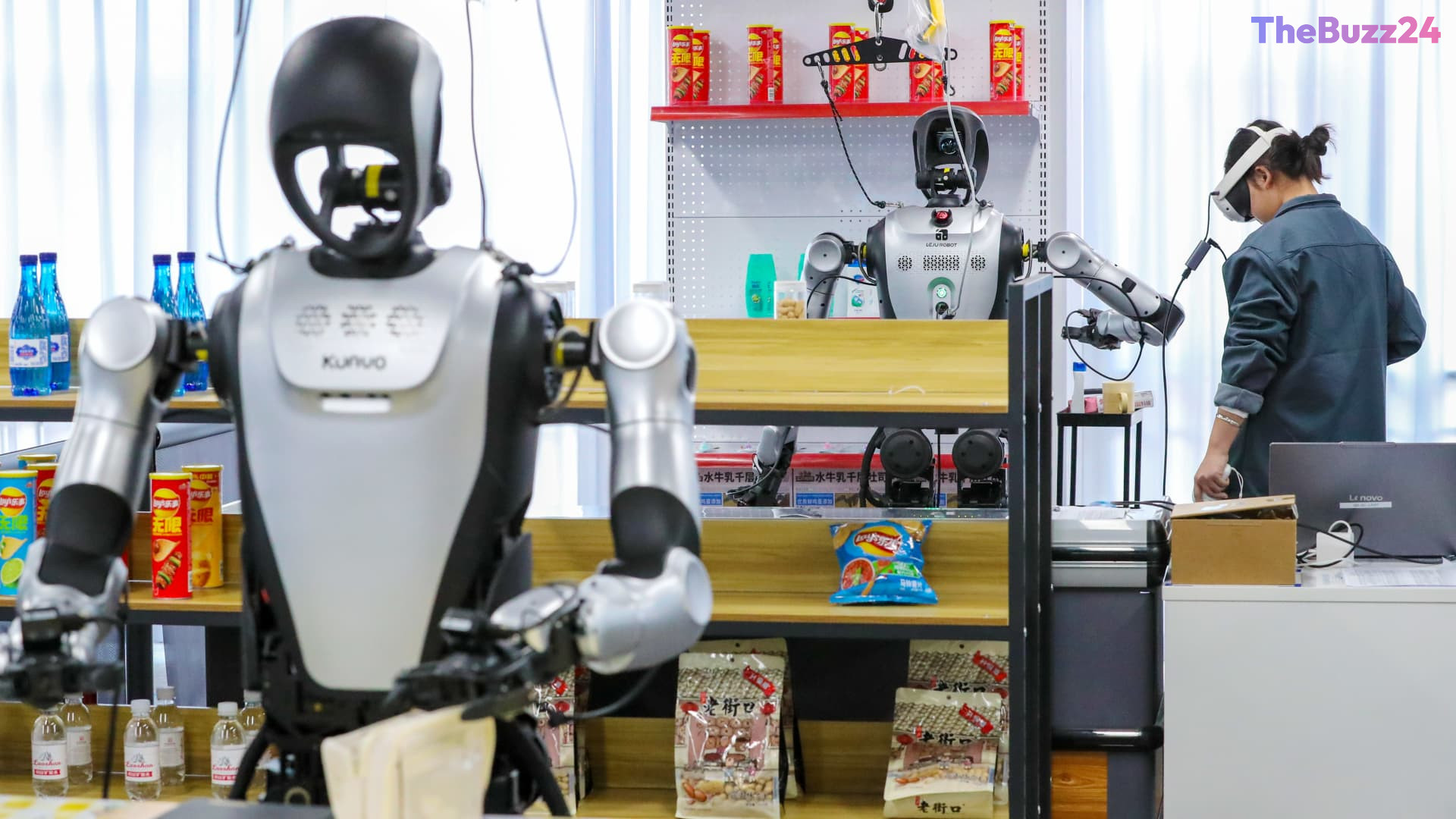
At these training facilities, robots undergo rigorous instruction using a blend of motion capture technology, sophisticated sensors, and direct human guidance. Technicians and skilled mentors perform complex tasks, allowing the artificial intelligence to record and eventually replicate these movements autonomously. Current training programs are remarkably diverse, covering everything from precision factory assembly and retail inventory management to intricate repair work and general housekeeping duties.
While current iterations still require human supervision, the pace of innovation is accelerating rapidly. Companies like Beijing Inspire-Robots Technology are achieving breakthroughs in mechanical dexterity, with robotic hands undergoing thousands of iterations to mimic human fine motor skills. This progress has drawn international attention, with industry leaders like Elon Musk noting that China’s manufacturing efficiency could provide a decisive advantage in the global race to scale humanoid robotics. Proponents emphasize that the initiative aims to automate hazardous or repetitive tasks, with the ultimate goal of refining autonomous functionality across sectors ranging from hospitality to traffic management.
Key Takeaways
- China is deploying specialized training centers to integrate humanoid robots into the industrial workforce as part of a 2030 national strategy.
- Robots are trained using motion capture and manual guidance to replicate human tasks, including assembly and delicate repairs.
- The initiative focuses on automating monotonous or dangerous labor to boost manufacturing efficiency and global competitiveness.
Editor’s Analysis & Impact
The rapid advancement of humanoid robotics in China signals a pivotal shift in global industrial competition. By integrating robotics into national policy, China is effectively leveraging its massive manufacturing infrastructure to lower the barriers to entry for advanced automation. This approach creates a significant challenge for Western firms, which often prioritize high-end R&D over the integrated supply chain efficiency required for mass-market deployment. If this strategy succeeds, it could trigger a substantial productivity surge across manufacturing and service sectors. However, the broader implications include inevitable labor market disruptions and the urgent need for new regulatory frameworks to govern autonomous machines in public and industrial environments. Ultimately, the global race for humanoid dominance will be won by the nation that most effectively bridges the gap between laboratory-grade dexterity and scalable, real-world utility.
Frequently Asked Questions
Q: What is the primary objective of China's humanoid robot training centers?
A: The primary objective is to transition humanoid robots from experimental prototypes into functional members of the industrial workforce to secure global leadership in manufacturing and supply chain logistics by 2030.
Q: How are robots taught to perform tasks at these facilities?
A: Robots learn through a combination of motion capture technology, advanced sensors, and manual guidance, where human mentors perform tasks that the machines record and subsequently learn to replicate autonomously.
AI Disclosure: This article is based on verified data and official reports. Our Team and AI have cross-referenced every financial detail with primary sources to ensure total accuracy.
More from this Category