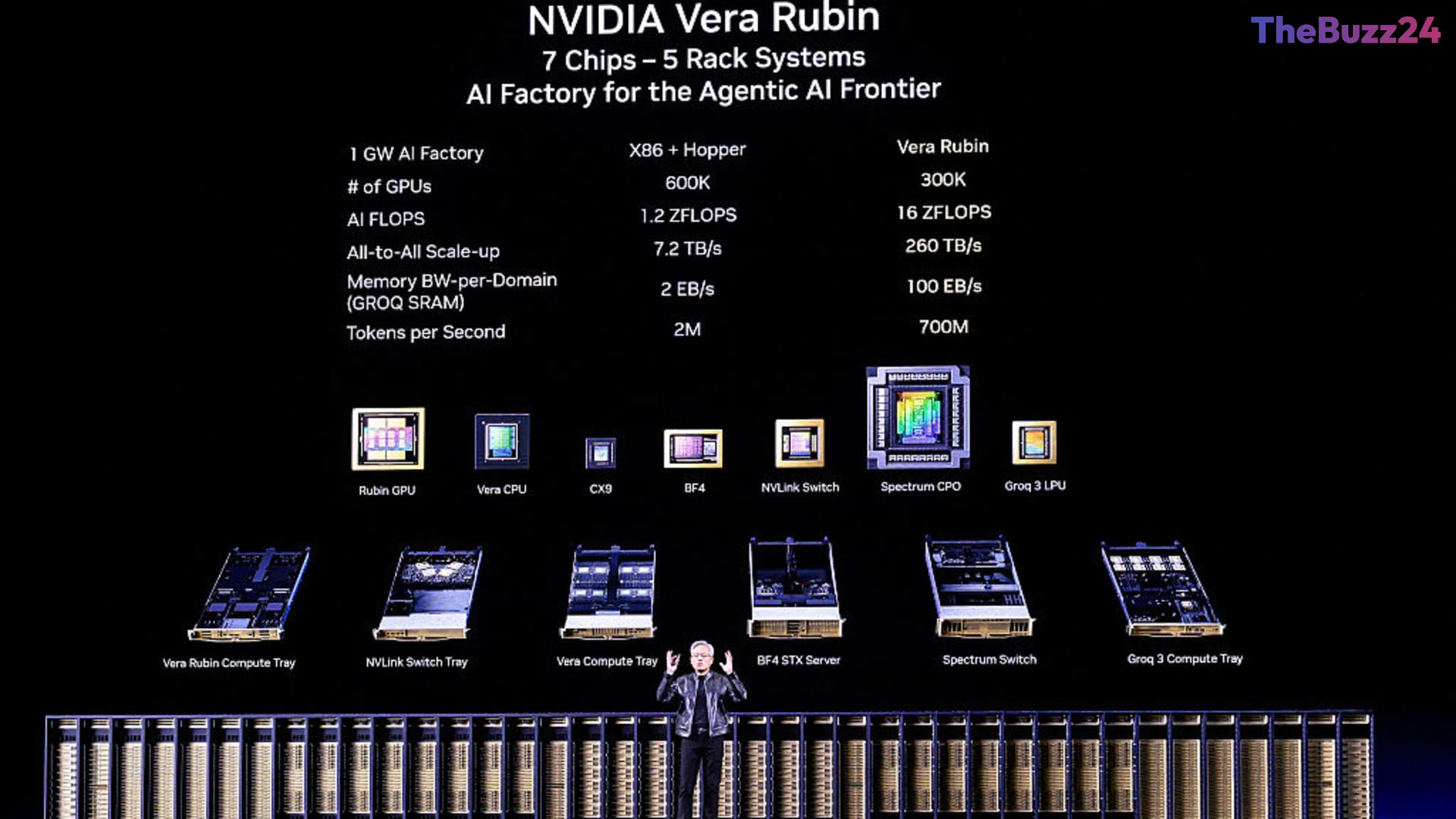
Nvidia CEO Predicts $4 Trillion AI Infrastructure Boom by 2030
Jensen Huang, the chief executive of Nvidia, has outlined a bold vision for the future of the global digital economy, forecasting that annual capital expenditure on artificial intelligence infrastructure could soar to $4 trillion by the end of the decade. This projection represents a significant departure from current market consensus, which largely anticipates hyperscaler spending to reach approximately $1 trillion within the next few years. Huang’s outlook is predicated on the massive, ongoing expansion of data centers and the specialized hardware necessary to power next-generation computing.
According to Nvidia’s leadership, the primary driver behind this surge is the rapid adoption of ‘agentic AI’ across various industrial sectors. Unlike traditional automation, these autonomous AI agents are designed to handle complex decision-making processes, necessitating a substantial increase in computational capacity. This demand is currently being fueled by strong cloud revenue growth among major technology firms, which provides the financial runway required to sustain such aggressive hardware deployment.
Despite the optimism surrounding this technological shift, the scale of the proposed investment has triggered a debate among economists regarding long-term return on investment. While supporters maintain that the productivity gains from AI will eventually justify the massive upfront costs, critics remain concerned about the current disconnect between infrastructure spending and measurable corporate output. As the global economy enters this critical phase, the industry is closely watching to see if the massive build-out will yield the transformative economic results that proponents have promised.
Key Takeaways
- Nvidia CEO Jensen Huang forecasts annual AI infrastructure spending will reach $4 trillion by 2030.
- The projection significantly outpaces current Wall Street estimates of $1 trillion by 2027-2028.
- The transition toward agentic AI is identified as the primary catalyst for the unprecedented demand for data center capacity.
Editor’s Analysis & Impact
Jensen Huang’s $4 trillion projection signals a fundamental shift in how the global economy views capital allocation toward digital infrastructure. If realized, this level of spending would cement AI as the primary engine of industrial growth for the next decade, effectively turning data centers into the ‘factories’ of the 21st century. The implications for the semiconductor and energy sectors are profound, as the power and hardware requirements for such an infrastructure build-out will necessitate unprecedented supply chain scaling. However, the market faces a ‘show me the money’ moment; investors are increasingly looking for tangible productivity metrics to justify these massive expenditures. If corporate efficiency does not scale in tandem with infrastructure investment, we may see a period of market correction as firms re-evaluate their AI budgets against actual bottom-line results.
Frequently Asked Questions
Q: Why does Nvidia believe AI infrastructure spending will reach $4 trillion?
A: Nvidia attributes this growth to the rapid proliferation of agentic AI, which requires significantly more computing power and data center capacity than traditional software applications.
Q: How does this forecast compare to current market estimates?
A: Huang's projection is significantly more aggressive than current Wall Street consensus, which generally estimates hyperscaler spending to reach approximately $1 trillion by 2027 or 2028.
AI Disclosure: This article is based on verified data and official reports. Our Team and AI have cross-referenced every financial detail with primary sources to ensure total accuracy.
More from this Category