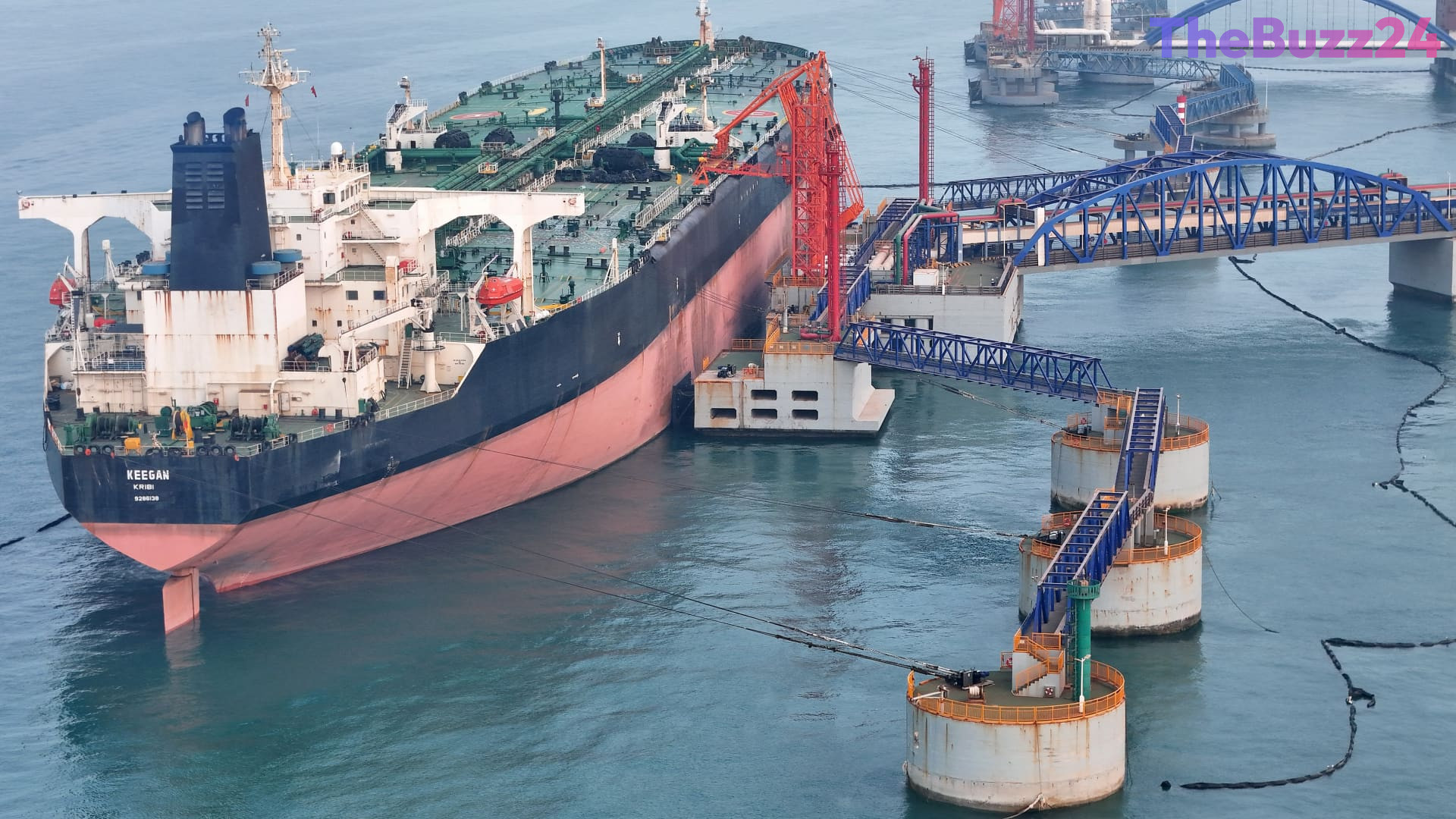
Iran Faces Uphill Battle to Clear Oil Inventories as Global Supply Surges and China Shifts Focus
Iran is poised to encounter significant hurdles in offloading its substantial oil inventories, even if international sanctions on its exports are eased. This challenge stems from a confluence of factors: its primary customer, China, is recalibrating its energy strategy, while the global market is simultaneously experiencing an influx of oil from other major suppliers.
China, historically the largest importer of Iranian crude, has shown a marked decrease in its overall oil purchases. This trend is partly attributed to the ongoing Middle East conflict, which analysts suggest has intensified Beijing’s strategic focus on energy security and accelerated its commitment to green transition initiatives. Chinese Premier Li Qiang has emphasized the importance of expanding non-fossil energy sources and developing a new energy system, alongside fostering innovation and quicker reforms. This strategic pivot has led to a notable decline in China’s crude imports, which in May, for instance, plummeted 29% year-on-year to 7.82 million barrels per day, reaching its lowest point since February 2018. Imports of Iranian crude specifically saw more than a 50% reduction in June compared to the previous month.
Compounding Iran’s difficulties is a surge in global oil supply. The OPEC+ alliance recently agreed to boost its output target for August by 188,000 barrels a day, part of a broader plan to reverse earlier production cuts. This increase contributes to a significant rise in quotas since the conflict began. Furthermore, other major producers are ramping up exports; Iran itself has shipped over 40 million barrels since a U.S. naval blockade was lifted, and Russian exports have also reached record levels, creating a substantial buildup of crude at sea.
While the market faces an oversupply, potential disruptions to oil flows through the Strait of Hormuz could introduce a complex variable. Iran has indicated a potential shift in its policy regarding passage through the strait, suggesting a tiered toll system could be implemented after a 60-day grace period, with preferential rates for “friendly” nations. This development could complicate global energy supply calculations, despite the current abundance.
Key Takeaways
- Iran faces significant challenges in selling its oil, even with potential sanctions relief, due to shifting global market dynamics.
- China, traditionally Iran's largest oil customer, has reduced its imports, driven by a strategic pivot towards green energy and the impact of regional conflicts.
- A global surge in oil supply from OPEC+ and other producers, including Russia and Iran's own accumulated crude, is creating an oversupplied market.
Editor’s Analysis & Impact
This situation underscores a significant shift in global energy markets, presenting a formidable challenge for Iran’s economic recovery post-sanctions. The confluence of China’s accelerated green transition and a robust global oil supply creates an intensely competitive environment, potentially depressing crude prices and making it difficult for Iran to regain its market share swiftly. For the broader industry, it highlights the increasing influence of demand-side shifts driven by climate goals, even amidst geopolitical tensions. The potential for Iran to impose tiered tolls in the Strait of Hormuz, while a risk factor for supply, also reflects a strategic leverage play that could further complicate international shipping and energy security, particularly for nations not aligned with Iran. This scenario suggests a future where traditional oil producers must navigate not just geopolitical headwinds but also fundamental changes in global energy consumption patterns.
Frequently Asked Questions
Q: Why is China reducing its oil imports?
A: China's reduced oil imports are primarily due to its strategic focus on accelerating green energy transition efforts and building a new energy system, a commitment reinforced by recent regional conflicts.
Q: How does increased global oil supply affect Iran?
A: An increase in global oil supply, particularly from OPEC+ and other major producers like Russia, creates an oversupplied market, intensifying competition and making it harder for Iran to sell its accumulated crude and regain market share.
Q: What is the significance of the Strait of Hormuz in this context?
A: The Strait of Hormuz is a critical chokepoint for global oil shipments. Iran's potential plan to impose tiered tolls for passage could introduce geopolitical complexity and disrupt energy supply calculations, despite the current global oversupply.
AI Disclosure: This article is based on verified data and official reports. Our Team and AI have cross-referenced every financial detail with primary sources to ensure total accuracy.
More from this Category