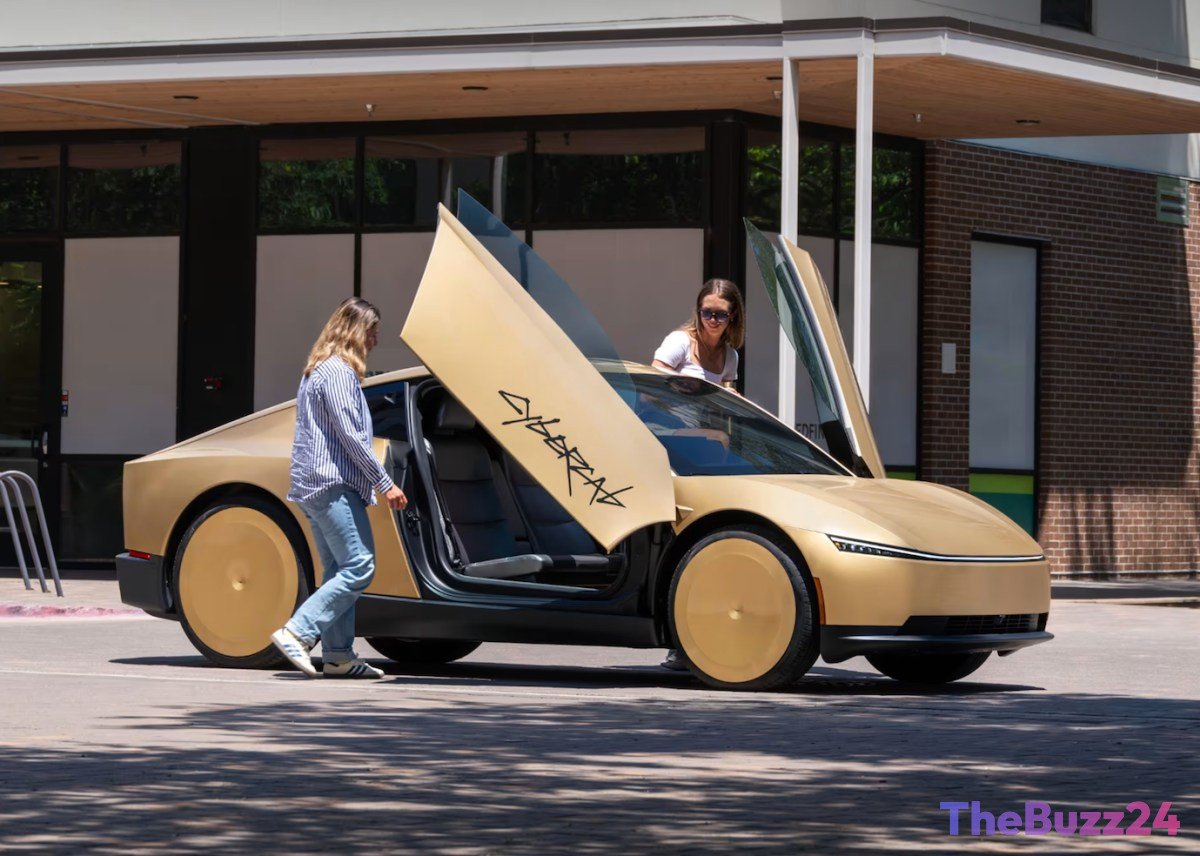
Inside Tesla’s Cybercab: New Details Reveal Age Restrictions, Safety Protocols, and Engineering Shifts
Tesla’s highly anticipated autonomous vehicle, the Cybercab, is drawing intense scrutiny as new operational and technical details emerge following its recent private debut. Designed as a fully self-driving vehicle relying solely on cameras and artificial intelligence, the Cybercab represents a major pillar of CEO Elon Musk’s long-term vision. However, as the company prepares to navigate regulatory hurdles—including an active investigation by the National Highway Traffic Safety Administration (NHTSA)—newly released documentation and application terms have shed light on the vehicle’s unique design choices and strict passenger limitations.
Among the most surprising revelations is a strict age restriction: Tesla is currently prohibiting children under the age of 13 from riding in the Cybercab. While minors aged 8 to 17 are permitted in the company’s autonomous Model Y SUVs, the Cybercab itself lacks standard LATCH anchors for child safety seats, requiring any child seats to be secured solely via seat belts. Additionally, all passengers under 18 must be accompanied by an adult. Other interior quirks include windows that cannot be fully opened at this time, alongside high-powered 90W USB-C charging ports designed to keep passenger devices powered during transit.
Addressing persistent safety concerns surrounding autonomous vehicles, Tesla has outlined specific automated protocols in the event of a collision. If a Cybercab crashes, the vehicle is programmed to deploy airbags, unlock doors, activate hazard and interior lights, disable the high-voltage battery, and slightly lower the windows to a “vent” position. Crucially, the automatic unlocking of doors and the inclusion of highly visible manual door releases on the armrests address previous criticisms regarding electronic door latches, which have historically drawn regulatory scrutiny and recalls in major markets like China and the United States.
From an engineering standpoint, the Cybercab continues Tesla’s trend of eliminating mechanical complexity to reduce manufacturing costs. The vehicle utilizes a brake-by-wire system, replacing traditional hydraulic lines and fluid with electronic actuators to control the brake calipers. This follows the steer-by-wire system introduced in the Cybertruck, further cementing Tesla’s shift toward fully digital, software-controlled mechanical systems.
Key Takeaways
- Tesla's Cybercab currently bans passengers under the age of 13 and lacks standard LATCH anchors for child safety seats.
- The vehicle features advanced post-crash safety protocols, including automatic door unlocking and highly visible manual door releases to address past safety criticisms.
- Engineering shifts include a cost-saving brake-by-wire system, replacing traditional hydraulic brakes with electronic actuators.
Editor’s Analysis & Impact
Tesla’s Cybercab represents a bold but highly calculated gamble on pure camera-and-AI autonomy, bypassing expensive LiDAR systems used by competitors like Waymo. By introducing brake-by-wire technology and removing traditional mechanical components, Tesla is doubling down on manufacturing efficiencies to make robotaxis financially viable for mass deployment. However, the strict age limits and the lack of standard child seat anchors suggest that Tesla is taking a highly cautious approach to liability and passenger safety in these early stages. Furthermore, the ongoing NHTSA investigation highlights the steep regulatory climb Tesla faces. To achieve widespread commercial success, Tesla must not only prove its technology is safer than a human driver but also convince skeptical local governments and federal regulators that its software-heavy, hardware-light approach is ready for public roads.
Frequently Asked Questions
Q: Why are children under 13 restricted from riding in the Cybercab?
A: Tesla's current guidelines prohibit minors under 13 from riding in the Cybercab, likely due to safety precautions and the vehicle's lack of standard LATCH anchors for securing child safety seats.
Q: How does the Cybercab's braking system differ from traditional cars?
A: The Cybercab utilizes a brake-by-wire system, which replaces traditional hydraulic fluid lines with electronic actuators to control the brakes, reducing mechanical complexity and manufacturing costs.
Q: What safety measures are triggered if the Cybercab is involved in an accident?
A: In a collision, the Cybercab is designed to automatically deploy airbags, unlock the doors, turn on hazard and interior lights, disable the high-voltage battery, vent the windows, apply the brakes, and establish a two-way communication link with Tesla's rider support team.
AI Disclosure: This article is based on verified data and official reports. Our Team and AI have cross-referenced every financial detail with primary sources to ensure total accuracy.
More from this Category