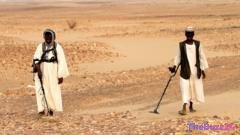
Inside the Taliban’s Afghanistan: A Look at Governance, Control, and Daily Life
Five years after the Taliban returned to power in Afghanistan, the nation remains defined by a rigid adherence to a strict interpretation of Sharia law, creating a stark divide between the ruling administration and the populace. Recent observations from within the country reveal a government composed of former insurgents and military commanders who are now navigating the complexities of statecraft while maintaining the same ideological foundations that characterized their rule in the 1990s. From provincial governors to high-ranking officials in Kabul, the leadership continues to prioritize traditional religious mandates over modern governance, particularly regarding the status of women.
In provincial offices, the day-to-day reality of this rule is often played out in personal disputes. In one instance, a young woman’s attempt to secure a divorce was met with resistance from local officials who dismissed her concerns and questioned her dignity. This reflects a broader systemic exclusion, where women are barred from higher education, restricted in their ability to travel, and largely removed from the workforce. Despite international pressure and internal dissent, government spokespeople maintain that these restrictions are necessary to preserve moral standards and align with their specific interpretation of Islamic law.
While some officials attempt to project an image of stability, the country faces significant economic challenges, including widespread poverty and a lack of basic infrastructure. Former fighters, now integrated into security roles, express hope for future development, yet the leadership remains focused on consolidating control. Public dissent is rare and often met with swift suppression, as the administration continues to monitor media outlets and restrict public discourse. For many Afghans, the current era is marked by a profound sense of uncertainty, as the government shows little sign of softening its stance on social restrictions or political freedoms.
Key Takeaways
- The Taliban government continues to enforce strict social restrictions, particularly against women, citing their interpretation of Sharia law as the primary justification.
- Many current government officials are former military commanders and insurgents who maintain a worldview largely unchanged from their previous stint in power.
- Afghanistan faces severe economic instability and poverty, yet the administration remains focused on ideological control rather than broad-based social or economic reform.
Editor’s Analysis & Impact
The current situation in Afghanistan represents a significant geopolitical challenge, as the Taliban’s governance model remains fundamentally incompatible with international human rights standards. The transition from an insurgency to a formal government has not resulted in the moderation many observers initially hoped for; instead, the regime has doubled down on its core ideological tenets. Economically, the country is suffering from isolation and a lack of investment, which is exacerbated by the regime’s refusal to integrate half of its population into the workforce. Looking ahead, the regime’s long-term stability is threatened by its inability to address basic humanitarian needs and the growing resentment among a population that is increasingly restricted. The international community faces a difficult dilemma: balancing the need for humanitarian aid with the refusal to legitimize a government that systematically denies fundamental rights to its citizens.
Frequently Asked Questions
Q: What is the current status of women's education in Afghanistan under the Taliban?
A: Women are currently banned from attending universities and secondary schools, with the government stating that these issues are under discussion and require a 'Sharia-based solution'.
Q: How does the Taliban government justify its restrictions on media and public speech?
A: The government claims that media must operate within the 'Sharia lens' and cannot broadcast content that they deem propaganda or contrary to Islamic laws and rites.
AI Disclosure: This article is based on verified data and official reports. Our Team and AI have cross-referenced every financial detail with primary sources to ensure total accuracy.
More from this Category