Israel’s Pivotal Election: A Tight Race Defined by Security, Alliances, and Potential Deadlock
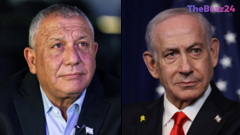
Israel is once again at a critical political juncture, heading to the polls in an election widely seen as a near neck-and-neck contest between incumbent Prime Minister Benjamin Netanyahu and former military chief Gadi Eisenkot. Current projections suggest that neither of their respective political blocs is likely to secure the 61 seats required to form a majority government, indicating that the nation could face weeks or even months of intricate political negotiations to establish a new ruling coalition.
The campaign has been heavily shaped by the issue of national security. The opposition bloc has sharply criticized Netanyahu over the unprecedented security failures that preceded the October 7 Hamas-led attacks on Israel, which resulted in nearly 1,200 deaths and 251 hostages taken to Gaza. They advocate for an independent commission of inquiry into these events, a proposal Netanyahu has consistently resisted, claiming it would be biased against him. Despite these criticisms, Netanyahu has reiterated his image as “Mr. Security,” highlighting what he describes as strategic victories in regional conflicts and his close ties with former US President Donald Trump. Other significant issues include Netanyahu’s ongoing corruption trial, which he denies, and his contentious plans for judicial system reforms that previously sparked widespread protests. Reports of Netanyahu allegedly pushing for pre-election military action against Iran, which he denied, and his use of an AI-generated image depicting a nuclear strike on Tel Aviv, further fueled campaign tensions. The divisive issue of conscription for ultra-Orthodox Jewish men, with Netanyahu’s government failing to enforce a Supreme Court ruling, also remains a central point of contention.
Israel’s proportional representation system historically necessitates coalition governments, and this election appears particularly challenging. Netanyahu’s path back to power hinges on forming an alliance with far-right and ultra-Orthodox parties, which constituted his previous government, considered the most right-wing in Israel’s history. Eisenkot, leading the recently formed Yashar Party, spearheads the “change bloc,” a diverse group united by the goal of ousting Netanyahu. While Arab parties, representing about one-fifth of Israel’s population, could theoretically act as kingmakers, most leading Jewish parties have ruled out working with them. Eisenkot’s stance on Gaza broadly aligns with Netanyahu’s, pledging to end Hamas rule within 18 months through a US-led peace plan or military force. He also supports Israeli settlements in the occupied West Bank but aims to curb extremist settler violence. The concept of a two-state solution has largely faded from mainstream Israeli political discourse.
With an unprecedented 70,000 expatriates reportedly returning to vote and half a million first-time voters, turnout is expected to be high. Exit polls will be released on Tuesday evening, offering an initial glimpse into voting trends, though final results, particularly those including ballots from hundreds of thousands of soldiers and reservists, will continue to trickle in over the following days. The complex electoral arithmetic and deep ideological divides mean that political deadlock, where no bloc can form a majority and a minority government proves unfeasible, remains a significant concern. Such a scenario would likely trigger new elections, with Netanyahu potentially remaining as interim prime minister, echoing the period between 2019 and 2022 when Israel held five separate elections due to persistent coalition struggles.
Key Takeaways
- The Israeli election is a tight contest between Benjamin Netanyahu and Gadi Eisenkot, with neither bloc expected to secure a majority, likely leading to complex coalition negotiations.
- Key campaign issues include national security (post-October 7), judicial reforms, conscription for ultra-Orthodox men, and the ongoing conflict in Gaza.
- The proportional representation system and deep ideological divides among parties raise the significant possibility of political deadlock and potentially another snap election.
Editor’s Analysis & Impact
The outcome of this Israeli election carries significant implications for both domestic stability and regional dynamics. A prolonged period of coalition building or the necessity of another snap election would exacerbate policy paralysis, particularly on critical issues such as judicial reform and ultra-Orthodox conscription. Economically, political uncertainty could deter foreign investment and impact market confidence. The election’s result will profoundly shape Israel’s approach to the Palestinian issue, its relations with international allies, and its strategy for regional security. A government leaning further right could strain international ties, while a more centrist coalition might seek to mend them, though the two-state solution remains largely off the table. The stability of the incoming government will be paramount in navigating complex geopolitical challenges and ensuring a clear policy direction.
Frequently Asked Questions
Q: Who are the main contenders in this Israeli election?
A: The primary contenders are incumbent Prime Minister Benjamin Netanyahu, leading the Likud party, and former military chief Gadi Eisenkot, who heads the newly formed Yashar Party and is a key figure in the "change bloc."
Q: What are the major issues defining this election?
A: The election is largely defined by national security concerns following the October 7 attacks, debates over judicial reforms, the contentious issue of conscription for ultra-Orthodox Jewish men, and the ongoing conflict in Gaza.
Q: What is the likelihood of a stable government forming after the election?
A: Given Israel's proportional representation system and current polling suggesting neither major bloc will achieve a clear majority, there is a high likelihood of prolonged coalition negotiations. The possibility of political deadlock, potentially leading to another snap election, is also significant, as seen in previous years.
AI Disclosure: This article is based on verified data and official reports. Our Team and AI have cross-referenced every financial detail with primary sources to ensure total accuracy.
More from this Category