Japan’s Ambitious AI Future: Nvidia Deepens Industrial Partnerships
Nvidia CEO Jensen Huang recently concluded a pivotal two-day visit to Tokyo, solidifying extensive partnerships across Japan’s industrial and chip-supply sectors. His trip underscored Nvidia’s strategic focus on integrating artificial intelligence into manufacturing and robotics, a vision Huang articulated as the “next chapter” for AI, centered on factory floors, robots, and machines. These collaborations are poised to redefine Japan’s industrial landscape, with major manufacturers aligning to build what is being termed the “physical AI” era.
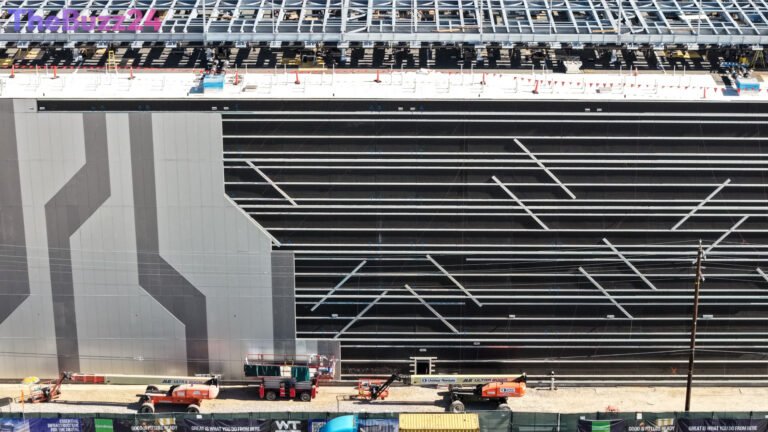
A cornerstone of this initiative is Noetra, Japan’s ambitious sovereign AI project. The nation aims to develop its own AI capabilities for robots, vehicles, and factory operations, reducing reliance on foreign technology. A consortium of approximately 44 domestic firms, including industry giants like SoftBank, Sony, NEC, and Honda, forms the core of Noetra. The Japanese government is committing up to 1 trillion yen (approximately $6.2 billion) over five years to foster homegrown “physical AI” foundation models designed to operate machinery. To support this, Nvidia is constructing a massive “Vera Rubin AI factory,” a data center slated for a 2028 launch, equipped with 13,750 Vera CPUs and 27,500 Rubin GPUs, providing substantial computational power for Noetra’s development efforts.
Beyond Noetra, a broad coalition of Japan’s leading robotics and manufacturing companies is embracing Nvidia’s technology. Firms such as Fanuc, Yaskawa, Kawasaki Heavy, Fujitsu, Hitachi, NEC, Sony, SoftBank, Kubota, and the AIRoA robotics group plan to leverage Nvidia’s Cosmos models. Nvidia further cemented these alliances by introducing Cosmos 3 Edge, a version optimized to run on its Jetson Thor chips directly within machines. This move is expected to accelerate the integration of advanced AI into industrial automation. Additionally, Toyota, a long-standing Nvidia partner, is expanding its use of Nvidia chips from next-generation vehicles and the Drive platform into manufacturing simulations, in-vehicle software, and traffic management systems, albeit with a focus on advanced driver assistance rather than fully autonomous driving.
Japan’s strategic pivot towards physical AI is driven by a long-term vision to address a shrinking workforce and capture a significant share of the global AI robotics market. The nation targets 10 million AI-equipped robots across 18 sectors by 2040, backed by an estimated $65 billion in public and private investment. This comprehensive strategy, which includes funding for domestic foundation models and the Nvidia-powered Noetra factory, aims to establish Japan as a leader in intelligent industries, securing its technological independence while contributing to a broader national growth plan centered on AI and semiconductors.
Key Takeaways
- Nvidia CEO Jensen Huang secured major partnerships in Japan to advance "physical AI" in manufacturing and robotics.
- Japan launched Noetra, a sovereign AI initiative backed by 1 trillion yen, aiming for homegrown AI models for industrial applications, with Nvidia building a dedicated AI factory.
- Leading Japanese industrial and robotics firms, including Toyota, are adopting Nvidia's AI platforms and chips to integrate advanced AI into their operations and vehicles.
Editor’s Analysis & Impact
Nvidia’s deepened engagement with Japan signifies a critical juncture in the global AI landscape, particularly for industrial automation and robotics. This collaboration positions Japan as a frontrunner in “physical AI,” leveraging its manufacturing prowess with cutting-edge AI hardware and software. The substantial government investment in Noetra underscores a strategic national imperative for technological sovereignty, aiming to reduce dependence on foreign AI infrastructure. For Nvidia, these partnerships open vast new markets, solidifying its dominance beyond data centers into real-world industrial applications. The long-term implications include a potential acceleration of smart factory adoption worldwide, increased competition in the AI hardware sector, and a shift in global supply chains as nations prioritize domestic AI capabilities. This move could also inspire other industrial powerhouses to pursue similar national AI strategies.
Frequently Asked Questions
Q: What is "physical AI" as discussed in the article?
A: "Physical AI" refers to artificial intelligence systems specifically designed to operate and interact with the physical world, such as robots, factory machinery, and autonomous vehicles, rather than purely digital applications.
Q: What is Noetra and what is its goal?
A: Noetra is Japan's sovereign AI initiative, a consortium of domestic firms backed by significant government funding. Its goal is to develop homegrown AI foundation models for industrial applications, ensuring Japan's technological independence in the AI era.
Q: How is Nvidia involved in Japan's AI strategy?
A: Nvidia is a key hardware and software partner, building a massive "Vera Rubin AI factory" data center for Noetra and providing its Cosmos models and Jetson Thor chips to a coalition of Japanese robotics and manufacturing companies.
AI Disclosure: This article is based on verified data and official reports. Our Team and AI have cross-referenced every financial detail with primary sources to ensure total accuracy.
More from this Category