Japan’s Kyushu Region Grapples with Over 100 Aftershocks After Deadly Quake
Japan’s southwestern Kyushu region is facing a severe crisis, having endured more than 100 aftershocks since a powerful earthquake struck on Tuesday, claiming at least 13 lives. Many more individuals were initially reported in “cardiopulmonary arrest,” a term frequently used in Japan for preliminary reports before official confirmation of death.
Rescue teams are working tirelessly amidst scorching temperatures, sifting through the debris of a paper factory and a shopping mall in Kumamoto prefecture. The Aeon Mall in Kashima, particularly hard-hit, experienced an explosion shortly after the initial tremor, with a significant portion of its second floor collapsing. Footage revealed white smoke billowing from the structure as people fled to the car park, exposing the building’s steel beams. Three employees of the mall remain unaccounted for, as confirmed by Aeon Mall president Akio Yoshida, who also stated that three people died in the mall explosion and several others were hospitalized.
Prime Minister Sanae Takaichi emphasized the critical nature of the situation, describing it as “truly a race against time” to locate and rescue those trapped. Over 4,600 personnel have been deployed to assist in the extensive search and rescue operations. Thousands of residents are currently housed in evacuation centers, many without access to electricity. Officials have also issued warnings for rescuers and survivors to take precautions against heatstroke, as temperatures soared to approximately 35C (95F). Defence Minister Shinjirō Koizumi announced that around 300 air conditioning units would be airlifted to Kumamoto’s most affected areas.
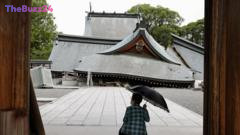
The Japan Meteorological Agency (JMA) has urged residents to remain vigilant for the possibility of further strong aftershocks, particularly over the next week, with a heightened alert for the coming two to three days for potential earthquakes reaching a maximum seismic intensity of 7. The initial quake, measured at magnitude 7.1 by the JMA (and 6.8 by the US Geological Survey), had a shallow epicentre of 10 km (six miles), located approximately 20km south of Kumamoto city. The widespread damage includes cracked roads, compromised bridges, and several buildings engulfed in flames, alongside the collapse of structures like the 19th-century Yatshushiro Shrine’s worship hall, underscoring the devastating impact on the region’s infrastructure and heritage.
Key Takeaways
- Japan's Kyushu region has experienced over 100 aftershocks following a powerful earthquake that killed at least 13 people.
- Rescue efforts are a 'race against time' amidst significant damage to infrastructure and buildings, including an explosion at the Aeon Mall, with thousands displaced and facing power outages.
- Authorities are warning residents to prepare for more strong aftershocks, with a high alert for potential seismic intensity of 7 in the coming days, while also addressing heatstroke risks for those involved in recovery.
Editor’s Analysis & Impact
The recent earthquake and subsequent aftershocks in Japan’s Kyushu region highlight the country’s ongoing vulnerability to seismic activity, despite its advanced disaster preparedness. The immediate market impact is likely localized, affecting regional businesses, supply chains, and tourism in Kumamoto prefecture. However, Japan’s robust infrastructure and rapid emergency response typically mitigate broader economic disruption. The focus on rescue and recovery, coupled with warnings of further seismic events, suggests a prolonged period of instability for affected communities. This event could prompt further investment in resilient infrastructure and early warning systems, potentially influencing construction and technology sectors. The human cost and the challenge of managing a disaster under extreme heat also underscore the complex demands on emergency services and public health infrastructure.
Frequently Asked Questions
Q: What was the magnitude of the main earthquake?
A: The Japan Meteorological Agency (JMA) measured the earthquake at magnitude 7.1, while the US Geological Survey (USGS) placed it at 6.8. These figures are often updated as seismologists gather and analyze more data.
Q: What are the primary challenges facing rescue efforts?
A: Rescue efforts are challenged by the sheer volume of debris, the ongoing threat of strong aftershocks, and extreme heat, with temperatures reaching around 35C (95F), posing a risk of heatstroke to both rescuers and survivors.
Q: How many people have been deployed for rescue operations?
A: More than 4,600 personnel have been deployed to assist with the extensive search and rescue efforts in the affected areas.
AI Disclosure: This article is based on verified data and official reports. Our Team and AI have cross-referenced every financial detail with primary sources to ensure total accuracy.
More from this Category