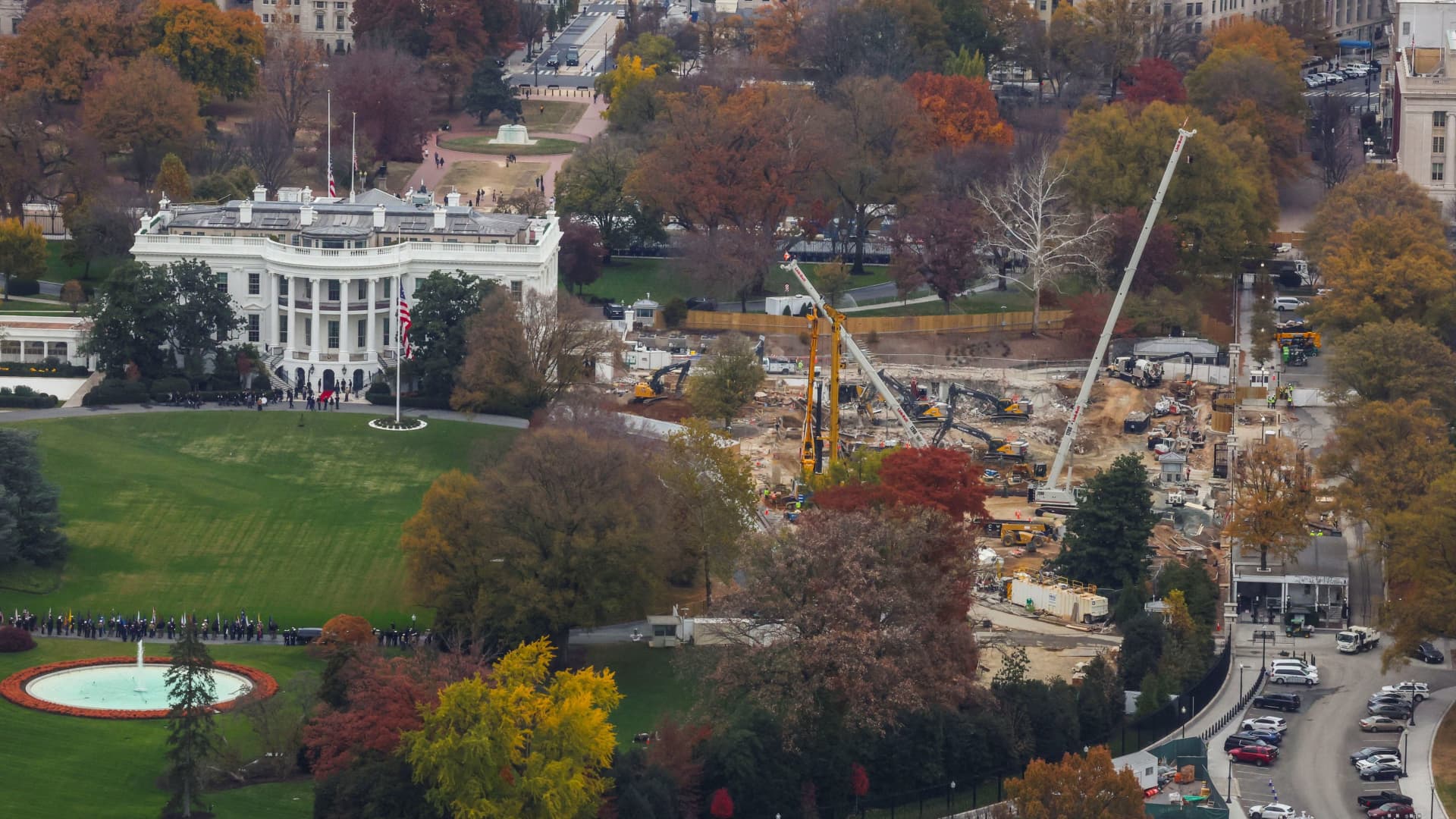
Federal Court Blocks Above-Ground Construction of White House Ballroom Project
A federal judge has issued a restrictive order halting the above-ground construction of a proposed 90,000 square-foot ballroom at the White House. The project, a centerpiece of Donald Trump’s architectural vision for federal properties, has faced intense legal scrutiny following a lawsuit brought by the National Trust for Historic Preservation. While the court has permitted the continuation of subterranean work related to national security infrastructure, the ruling effectively freezes the primary development of the $400 million structure.
Judge Richard Leon clarified the scope of the injunction after the U.S. Circuit Court of Appeals for the District of Columbia Circuit requested further justification regarding national security claims. In his ruling, Judge Leon emphasized that national security concerns do not grant the executive branch a ‘blank check’ to bypass standard authorization procedures. He maintained that the President acts as a steward of the White House rather than an owner, and therefore, large-scale structural changes require explicit congressional approval.
Following the decision, Donald Trump voiced his opposition to the ruling on social media, characterizing the judicial intervention as an obstruction of a significant national project. The administration has moved to appeal the decision, seeking to overturn the limitations placed on the construction. For now, the court’s order permits only the work strictly necessary to secure underground facilities, explicitly prohibiting any construction that would finalize the size or scale of the above-ground ballroom.
Key Takeaways
- A federal judge has blocked the above-ground construction of a proposed $400 million White House ballroom.
- The court ruled that national security claims do not exempt the project from requiring congressional authorization.
- Subterranean work related to security infrastructure is permitted to continue, but the overall scale of the ballroom remains in legal limbo.
Editor’s Analysis & Impact
This ruling highlights a critical tension between executive authority and the preservation of historic federal landmarks. By framing the President as a ‘steward’ rather than an owner, the court has set a significant precedent regarding the limits of presidential power over the White House grounds. The legal battle underscores the necessity of congressional oversight in large-scale federal infrastructure projects. Moving forward, the outcome of the appeal will likely serve as a litmus test for how much autonomy a president has in altering iconic government properties. If the administration fails to secure a reversal, the project may face indefinite delays or total cancellation, potentially influencing future debates on the balance of power between the executive and judicial branches regarding the management of national heritage sites.
Frequently Asked Questions
Q: Why was the construction of the White House ballroom halted?
A: The construction was halted because the court determined that the project lacked the necessary congressional authorization and that national security claims did not justify bypassing standard legal requirements.
Q: Is any work still allowed on the site?
A: Yes, the judge permitted work to continue on underground facilities that are strictly necessary for national security, provided that this work does not lock in the size or scale of the above-ground ballroom.
AI Disclosure: This article is based on verified data and official reports. Our Team and AI have cross-referenced every financial detail with primary sources to ensure total accuracy.
More from this Category