Trump Launches New Executive Orders Targeting Birthright Citizenship and Birth Tourism
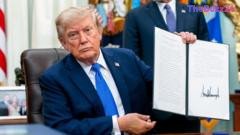
President Donald Trump has signed two new executive orders aimed at restricting birthright citizenship in the United States, marking a renewed push to alter immigration policies just weeks after a major setback in the Supreme Court. The first order narrows the scope of automatic citizenship for children born to non-citizen parents under specific circumstances, while the second targets “birth tourism”—the practice of foreign nationals traveling to the U.S. to give birth so their children automatically secure American citizenship.
Under the newly signed directives, automatic citizenship will be denied to babies born in the U.S. if neither parent is a citizen and at least one parent is affiliated with a foreign terrorist organization, is a foreign government employee, has committed immigration fraud, or resides in U.S. territories where federal statute does not grant citizenship. The administration defended the move as a necessary measure to protect national security and prevent foreign adversaries from exploiting American generosity. White House officials asserted that the executive branch holds the legal authority to restrict entry and set immigration limits under the Immigration and Nationality Act.
Opponents and legal experts have quickly raised questions regarding the constitutionality of these directives. While the administration claims that hundreds of thousands of births occur annually through birth tourism, data from the Migration Policy Institute suggests a much lower figure, estimating between 22,000 and 26,000 births per year. Legal scholars note that while the president may have the authority to restrict entry for pregnant foreign nationals, denying citizenship to a child once they are born on U.S. soil directly conflicts with the 14th Amendment, a position recently reinforced by the Supreme Court’s ruling against the administration’s previous attempts.
Key Takeaways
- President Trump signed two executive orders targeting birthright citizenship and birth tourism following a recent Supreme Court defeat on the issue.
- The orders restrict automatic citizenship for children of certain non-citizens, including foreign government employees and individuals linked to terrorist groups.
- Legal experts argue that while the administration can restrict entry, denying citizenship to children born on U.S. soil faces severe constitutional hurdles under the 14th Amendment.
Editor’s Analysis & Impact
This latest executive action underscores the administration’s determination to bypass judicial roadblocks and reshape U.S. immigration policy through executive decree. By framing birthright citizenship as a national security vulnerability, the administration is appealing directly to its core political base. However, the legal foundation of these orders remains highly precarious. Legal scholars point out that the 14th Amendment’s citizenship clause is robust, and the Supreme Court’s recent ruling suggests a low tolerance for executive overreach on this issue. The immediate impact will likely be a wave of new legal challenges, tying up the policies in federal courts. For businesses and international travelers, particularly from countries frequently accused of “birth tourism,” this could lead to stricter visa scrutiny and increased friction at border entry points, potentially impacting the tourism and hospitality sectors.
Frequently Asked Questions
Q: What is birth tourism?
A: Birth tourism refers to the practice of pregnant foreign nationals traveling to the United States on temporary visas specifically to give birth, ensuring their children receive automatic U.S. citizenship.
Q: How do these new executive orders differ from previous attempts?
A: Instead of a blanket ban on birthright citizenship, these orders target specific categories of non-citizens—such as foreign government employees or those with terrorist ties—and attempt to restrict entry for the purpose of birth tourism.
Q: Are these executive orders legally binding?
A: While signed by the president, they are expected to face immediate legal challenges in federal court, as legal experts argue that denying citizenship to children born on U.S. soil violates the 14th Amendment.
AI Disclosure: This article is based on verified data and official reports. Our Team and AI have cross-referenced every financial detail with primary sources to ensure total accuracy.
More from this Category