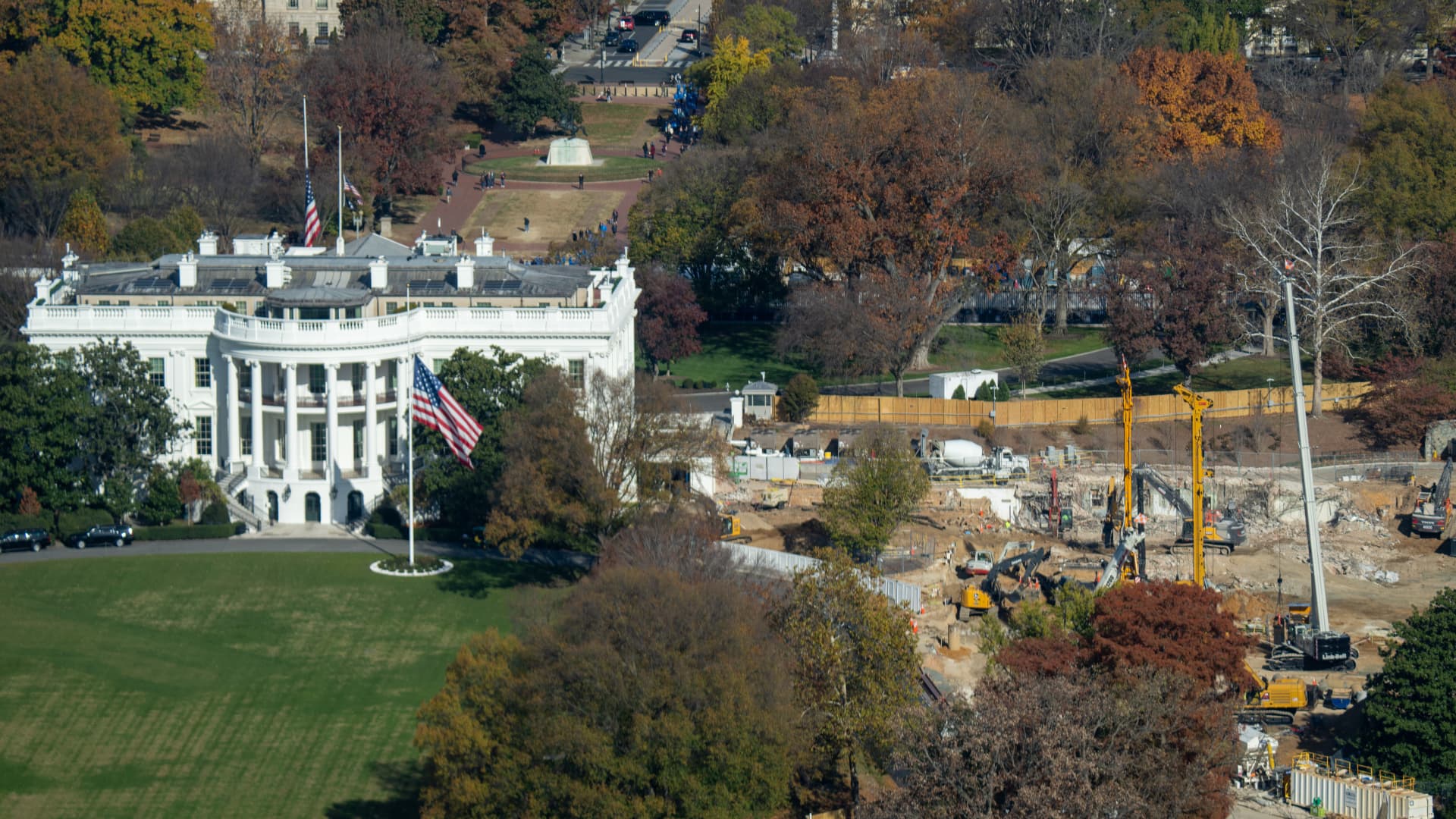
Appeals Court Reopens Legal Battle Over $400 Million White House Expansion
A federal appeals court has ordered a lower court to conduct a deeper investigation into the national security implications of a proposed $400 million ballroom expansion at the White House. The U.S. Court of Appeals for the District of Columbia Circuit determined that the current legal record is insufficient to conclude whether halting the construction would pose a genuine risk to the safety of the President and essential personnel. Consequently, the case has been remanded to U.S. District Judge Richard Leon, who had previously issued an injunction against the project due to a lack of formal congressional authorization.
The executive branch maintains that the expansion is essential for upgrading security infrastructure to mitigate modern threats, including drone incursions, ballistic missiles, and biological hazards. While government attorneys initially suggested that critical underground facilities, such as bunkers and medical suites, could be constructed independently of the ballroom, the administration has since shifted its stance. Officials now argue that these protective features are inextricably linked to the ballroom project, creating a complex legal challenge regarding the distinction between necessary security measures and discretionary architectural renovations.
The National Trust for Historic Preservation, which initiated the legal challenge, successfully argued that the administration failed to obtain the required legislative approval for the project. Although Judge Leon previously granted a limited exemption for work deemed strictly necessary for safety, the appeals court is now requiring a more granular analysis of how a full construction halt would impact protective protocols. The court has extended the current suspension of the lower court’s order until April 17, providing a window for further judicial review as the conflict between historic preservation and executive security mandates continues.
Key Takeaways
- The D.C. Circuit Court of Appeals has mandated a re-evaluation of the security risks associated with pausing the $400 million White House ballroom project.
- The administration has pivoted its legal strategy, now claiming that security upgrades and the ballroom construction are inseparable.
- The case has been returned to Judge Richard Leon to determine the specific impact a construction halt would have on presidential safety.
Editor’s Analysis & Impact
This case underscores the persistent friction between executive authority and the oversight powers of the judiciary and legislature. By characterizing the ballroom project as a critical security necessity, the administration is attempting to circumvent standard congressional approval processes, a move that has drawn significant pushback from preservationists. The administration’s tactical shift—moving from separating security features to claiming they are ‘inseparable’ from the ballroom—suggests an effort to insulate the project from further legal delays. If the courts ultimately determine that the project lacks proper authorization, it could establish a major precedent regarding the limits of executive power when modifying historic federal properties under the umbrella of national security. The final ruling will likely serve as a critical benchmark for future infrastructure projects involving sensitive government sites.
Frequently Asked Questions
Q: Why was the construction of the White House ballroom initially halted?
A: The project was halted by Judge Richard Leon because the administration failed to obtain the necessary congressional authorization required for such a construction project.
Q: What is the primary argument of the National Trust for Historic Preservation in this lawsuit?
A: The National Trust for Historic Preservation argues that the administration bypassed mandatory legislative approval processes and that the project threatens the historical integrity of the White House.
AI Disclosure: This article is based on verified data and official reports. Our Team and AI have cross-referenced every financial detail with primary sources to ensure total accuracy.
More from this Category