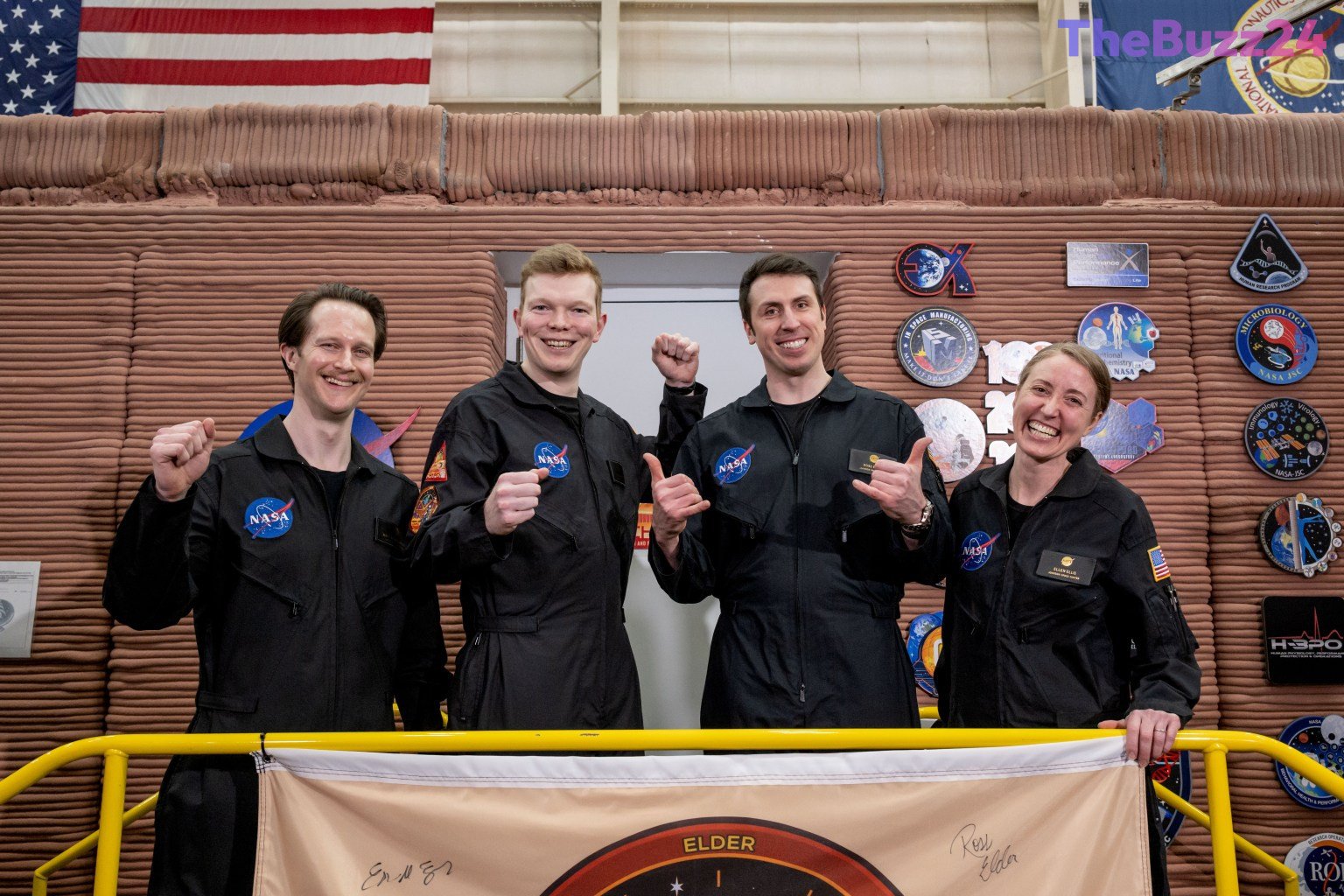
Life on the Red Planet: Crew Completes 378-Day Mars Simulation
Four volunteers have successfully concluded a grueling 378-day isolation experiment, stepping out of the Mars Dune Alpha habitat on October 31, 2026. The crew, consisting of Ross Elder, Ellen Ellis, James Spicer, and Matthew Montgomery, spent over a year living in a 1,700-square-foot, 3D-printed facility at the Johnson Space Center in Houston. The mission was designed to replicate the extreme conditions of a Martian environment, including limited resources, communication delays of up to 22 minutes, and the psychological strain of total isolation from the outside world.
Throughout the mission, the team engaged in a variety of tasks essential for future interplanetary travel, such as simulated Marswalks, robotic operations, and habitat maintenance. The crew also managed hydroponic crop cultivation and conducted rigorous health and performance monitoring. By operating under constraints similar to those expected on a real mission to Mars, the volunteers provided invaluable data regarding how humans adapt to long-term confinement and high-stress environments.
Each crew member brought specialized expertise to the project, ranging from military test piloting and systems engineering to robotics and hardware development. Their collective efforts were supported by a vast network of ground teams who monitored the data to better understand the physiological and psychological requirements for deep-space exploration. The success of this mission marks a significant milestone in the ongoing effort to prepare for future human exploration of the Moon and, eventually, the surface of Mars.
Following their egress, the crew will undergo two weeks of intensive debriefing and medical evaluations. The data collected during this yearlong study will be instrumental in helping researchers refine mission planning, optimize resource management, and ensure the safety and health of future astronauts. As humanity looks toward establishing a permanent presence on the Moon, the insights gained from this simulated Martian experience provide a critical foundation for the next generation of space travel.
Key Takeaways
- The CHAPEA Mission 2 crew spent 378 days in a simulated Martian habitat to test human performance and health under extreme isolation.
- The mission successfully replicated key challenges of space travel, including 22-minute communication delays and resource management.
- Data gathered from the experiment will directly inform future mission planning for lunar outposts and eventual human travel to Mars.
Editor’s Analysis & Impact
The completion of the second CHAPEA mission represents a vital step in the transition from theoretical space travel to practical, long-duration mission readiness. By isolating individuals for over a year, researchers have gained a clearer picture of the ‘human factor’—the psychological and physiological resilience required for deep-space missions. The industry impact is significant; as private and public entities push toward lunar and Martian colonization, the ability to manage limited resources and maintain crew cohesion under extreme latency is the primary bottleneck. Future outlooks suggest that these findings will dictate the design of life-support systems and crew selection protocols for the next decade of space exploration. The broader implication is that the success of interplanetary travel depends as much on behavioral science and resource sustainability as it does on rocket propulsion technology.
Frequently Asked Questions
Q: What was the primary goal of the CHAPEA Mission 2?
A: The mission aimed to collect data on human health and performance in an isolated, confined environment to help prepare for future long-duration missions to the Moon and Mars.
Q: How did the crew handle communication during the simulation?
A: The crew operated under communication delays of up to 22 minutes each way, which accurately simulates the time lag experienced when sending signals between Earth and Mars.
AI Disclosure: This article is based on verified data and official reports. Our Team and AI have cross-referenced every financial detail with primary sources to ensure total accuracy.
More from this Category